Atchou Kodzo, Ongus Juliette, Machuka Eunice, Juma John, Tiambo Christian, Djikeng Appolinaire, Silva Joana C, Pelle Roger
Institute for Basic Sciences, Technology and Innovation, Pan African University, Nairobi, Kenya.
Biosciences eastern and central Africa-International Livestock Research Institute (BecA-ILRI), Nairobi, Kenya.
Front Vet Sci. 2020 Jun 9;7:287. doi: 10.3389/fvets.2020.00287. eCollection 2020.
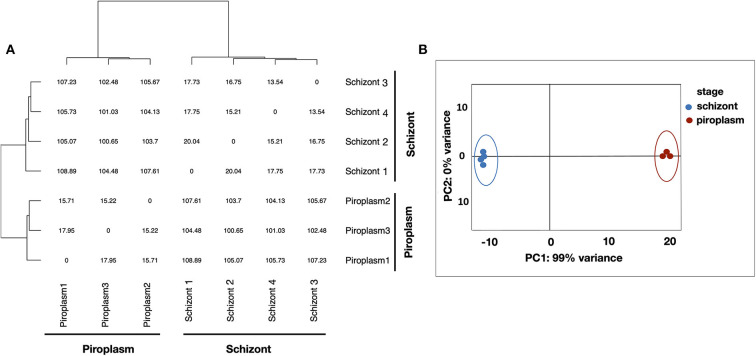
is a protozoan parasite that causes East Coast fever (ECF), an economically important disease of cattle in Africa. It is transmitted mainly by the tick . Research efforts to develop a subunit vaccine based on parasite neutralizing antibodies and cytotoxic T-lymphocytes have met with limited success. The molecular mechanisms underlying life cycle stages in the tick vector and bovine host are poorly understood, thus limiting progress toward an effective and efficient control of ECF. Transcriptomics has been used to identify candidate vaccine antigens or markers associated with virulence and disease pathology. Therefore, characterization of gene expression throughout the parasite's life cycle should shed light on host-pathogen interactions in ECF and identify genes underlying differences in parasite stages as well as potential, novel therapeutic targets. Recently, the first gene expression profiling of was conducted for the sporoblast, sporozoite, and schizont stages. The sporozoite is infective to cattle, whereas the schizont is the major pathogenic form of the parasite. The schizont can differentiate into piroplasm, which is infective to the tick vector. The present study was designed to extend the gene expression profiling to the piroplasm stage with reference to the schizont. Pairwise comparison revealed that 3,279 of a possible 4,084 protein coding genes were differentially expressed, with 1,623 (49%) genes upregulated and 1,656 (51%) downregulated in the piroplasm relative to the schizont. In addition, over 200 genes were stage-specific. In general, there were more molecular functions, biological processes, subcellular localizations, and pathways significantly enriched in the piroplasm than in the schizont. Using known antigens as benchmarks, we identified several new potential vaccine antigens, including TP04_0076 and TP04_0640, which were highly immunogenic in naturally -infected cattle. All the candidate vaccine antigens identified have yet to be investigated for their capacity to induce protective immune response against ECF.
是一种原生动物寄生虫,可引发东海岸热(ECF),这是非洲牛群中一种具有重要经济影响的疾病。它主要通过蜱传播。基于寄生虫中和抗体和细胞毒性T淋巴细胞开发亚单位疫苗的研究工作取得的成功有限。蜱传播媒介和牛宿主中寄生虫生命周期各阶段的分子机制了解甚少,因此限制了有效控制东海岸热方面的进展。转录组学已被用于识别与毒力和疾病病理相关的候选疫苗抗原或标志物。因此,对寄生虫整个生命周期中的基因表达进行表征应有助于揭示东海岸热中宿主与病原体的相互作用,并识别寄生虫不同阶段差异的潜在基因以及潜在的新型治疗靶点。最近,对成孢子细胞、子孢子和裂殖体阶段进行了首次基因表达谱分析。子孢子可感染牛,而裂殖体是寄生虫的主要致病形式。裂殖体可分化为梨形虫,可感染蜱传播媒介。本研究旨在将基因表达谱分析扩展至梨形虫阶段,并以裂殖体作为参照。成对比较显示,在可能的4084个蛋白质编码基因中,有3279个基因表达存在差异,相对于裂殖体,梨形虫中有1623个(49%)基因上调,1656个(51%)基因下调。此外,有200多个基因是阶段特异性的。总体而言,梨形虫中显著富集的分子功能、生物学过程、亚细胞定位和通路比裂殖体中更多。以已知抗原为基准,我们鉴定出了几种新的潜在疫苗抗原,包括TP04_0076和TP04_0640,它们在自然感染的牛中具有高度免疫原性。所有鉴定出的候选疫苗抗原诱导针对东海岸热的保护性免疫反应的能力还有待研究。