Department of Microbiology, College of Medicine, Ewha Womans University, Seoul 07804, Republic of Korea.
Department of Plastic and Reconstructive Surgery, College of Medicine, Ewha Womans University, Seoul 07804, Republic of Korea.
Int J Mol Med. 2020 Sep;46(3):1166-1174. doi: 10.3892/ijmm.2020.4657. Epub 2020 Jun 24.
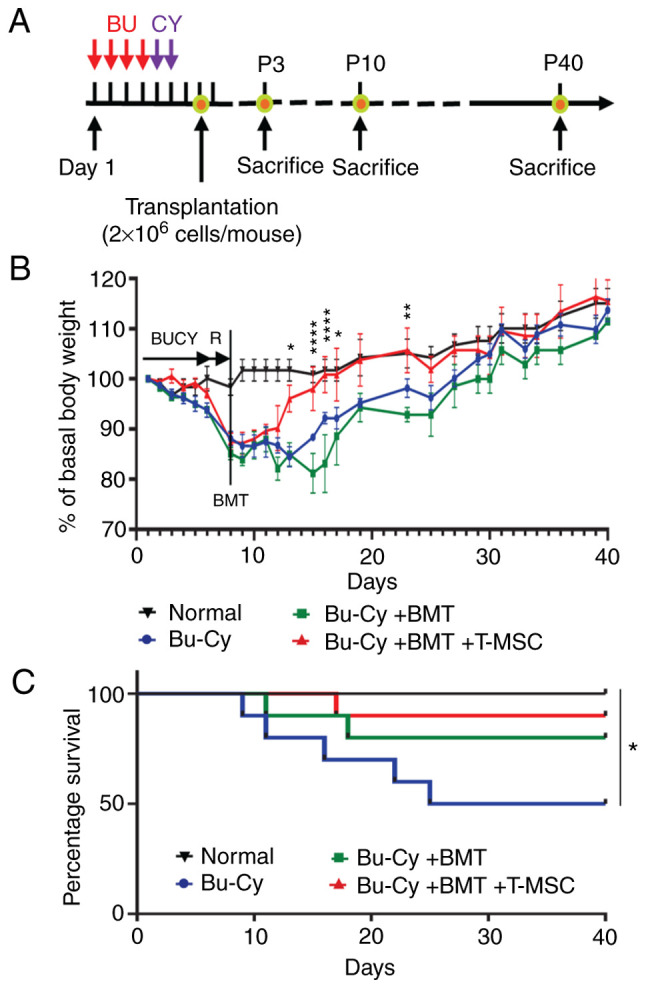
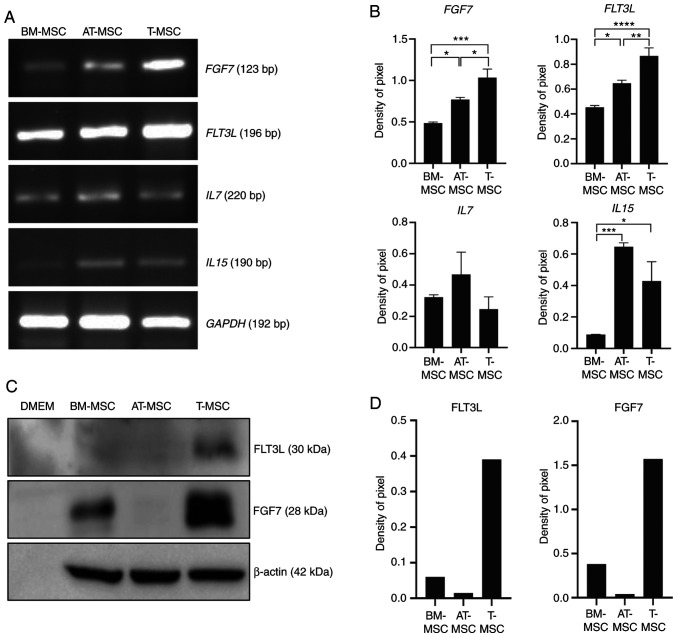
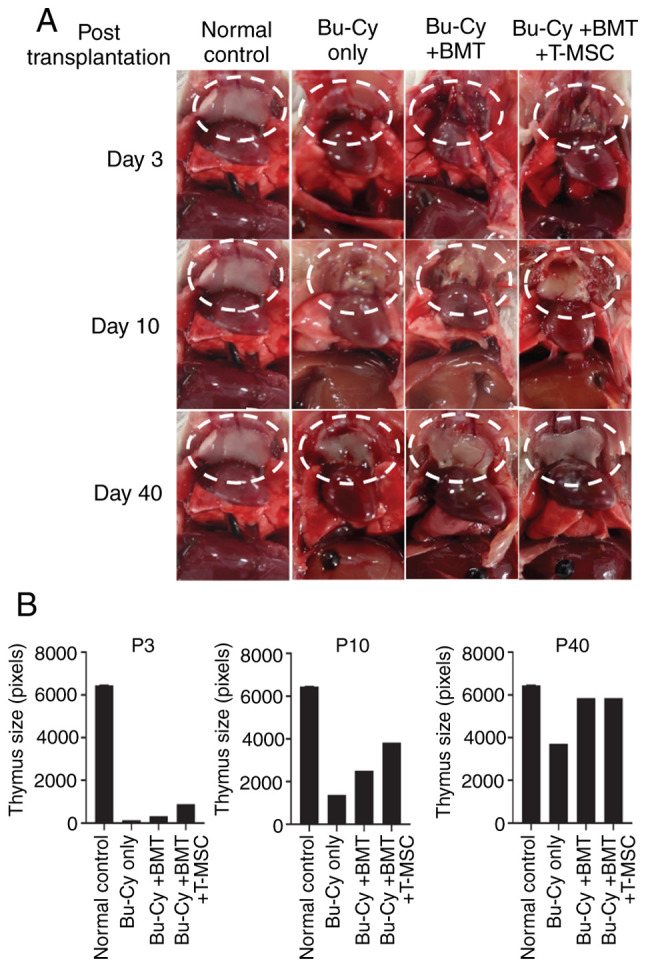
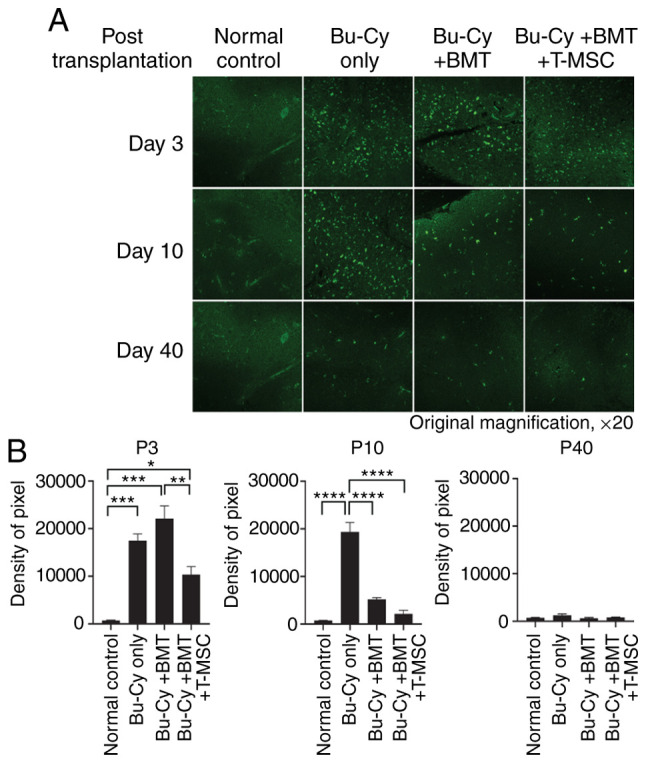
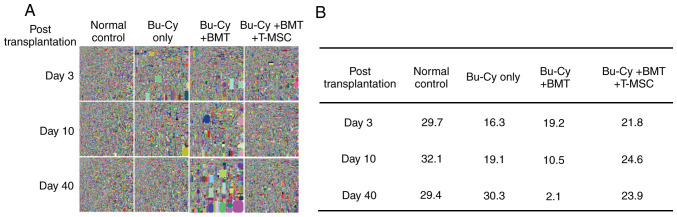
Bone marrow (BM) transplantation (BMT) represents a curative treatment for various hematological disorders. Prior to BMT, a large amount of the relevant anticancer drug needed to be administered to eliminate cancer cells. However, during this pre‑BMT cytotoxic conditioning regimen, hematopoietic stem cells in the BM and thymic epithelial cells were also destroyed. The T cell receptor (TCR) recognizes diverse pathogen, tumor and environmental antigens, and confers immunological memory and self‑tolerance. Delayed thymus reconstitution following pre‑BMT cytotoxic conditioning impedes de novo thymopoiesis and limits T cell‑mediated immunity. Several cytokines, such as RANK ligand, interleukin (IL)‑7, IL‑22 and stem cell factor, were recently reported to improve thymopoiesis and immune function following BMT. In the present study, it was found that the co‑transplantation of tonsil‑derived mesenchymal stromal cells (T‑MSCs) with BM‑derived cells (BMCs) accelerated the recovery of involuted thymuses in mice following partial pre‑BMT conditioning with busulfan‑cyclophosphamide treatment, possibly by inducing FMS‑like tyrosine kinase 3 ligand (FLT3L) and fibroblast growth factor 7 (FGF7) production in T‑MSCs. The co‑transplantation of T‑MSCs with BMCs also replenished the CD3+ cell population by inhibiting thymocyte apoptosis following pre‑BMT cytotoxic conditioning. Furthermore, T‑MSC co‑transplantation improved the recovery of the TCR repertoire and led to increased thymus‑generated T cell diversity.
骨髓(BM)移植(BMT)是治疗各种血液系统疾病的一种有治愈可能的治疗方法。在 BMT 之前,需要大量使用相关抗癌药物来消除癌细胞。然而,在这种 BMT 前细胞毒性调理方案期间,BM 和胸腺上皮细胞中的造血干细胞也被破坏了。T 细胞受体(TCR)识别各种病原体、肿瘤和环境抗原,并赋予免疫记忆和自身耐受。BMT 前细胞毒性调理后胸腺重建延迟会阻碍新的胸腺生成,并限制 T 细胞介导的免疫。最近有报道称,几种细胞因子,如 RANK 配体、白细胞介素(IL)-7、IL-22 和干细胞因子,可改善 BMT 后的胸腺生成和免疫功能。在本研究中发现,与 BM 来源的细胞(BMCs)共移植扁桃体来源的间充质基质细胞(T-MSCs)可加速经白消安-环磷酰胺预处理的部分 BMT 后小鼠退化胸腺的恢复,可能是通过诱导 T-MSCs 产生 FMS 样酪氨酸激酶 3 配体(FLT3L)和成纤维细胞生长因子 7(FGF7)。T-MSCs 与 BMCs 的共移植还通过抑制 BMT 前细胞毒性调理后的胸腺细胞凋亡来补充 CD3+细胞群。此外,T-MSC 共移植可改善 TCR 库的恢复,并导致胸腺生成的 T 细胞多样性增加。