Fagiolari Lucia, Bini Marzia, Costantino Ferdinando, Gatto Giordano, Kropf A Jeremy, Marmottini Fabio, Nocchetti Morena, Wegener Evan C, Zaccaria Francesco, Delferro Massimiliano, Vivani Riccardo, Macchioni Alceo
Department of Chemistry, Biology and Biotechnology, University of Perugia and CIRCC, Via Elce di Sotto, 8, I-06123 Perugia, Italy.
Department of Pharmaceutical Sciences and CEMIN, University of Perugia, Via Fabretti 48, I-06123 Perugia, Italy.
ACS Appl Mater Interfaces. 2020 Jul 22;12(29):32736-32745. doi: 10.1021/acsami.0c07925. Epub 2020 Jul 9.
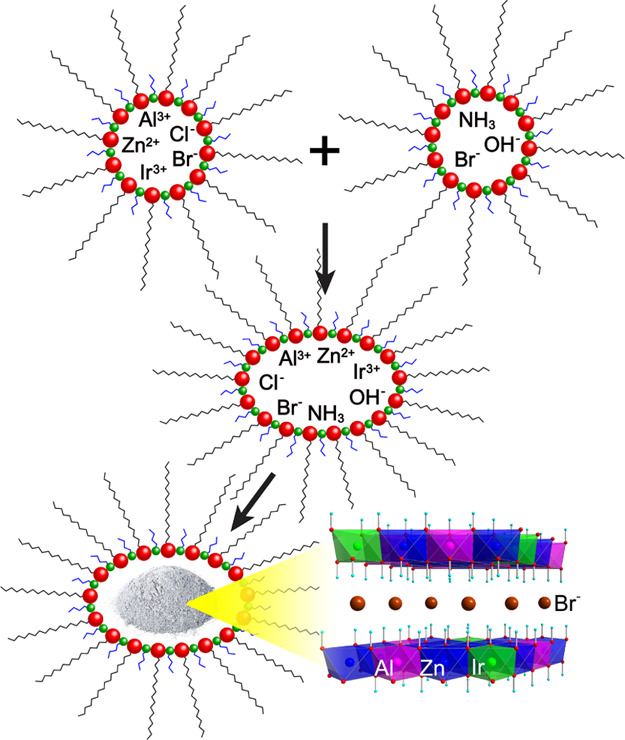
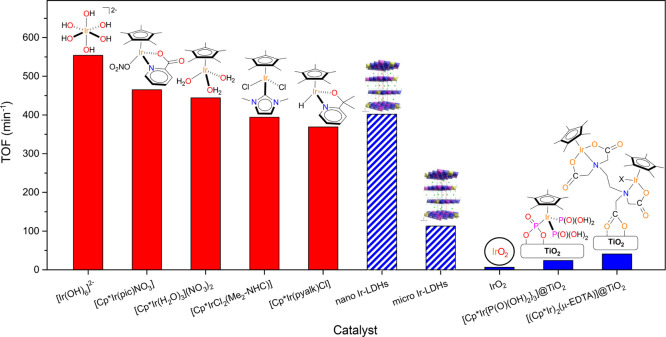
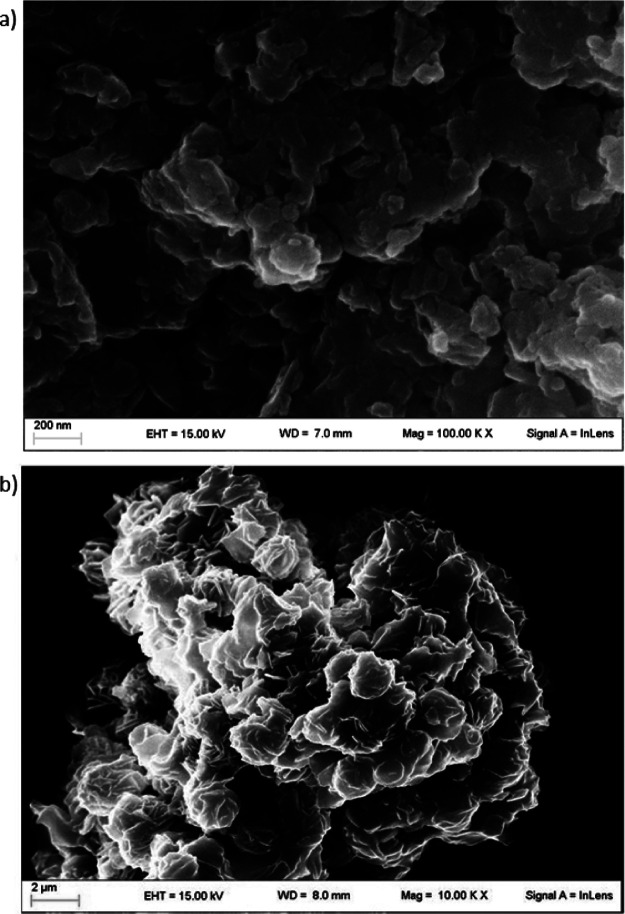
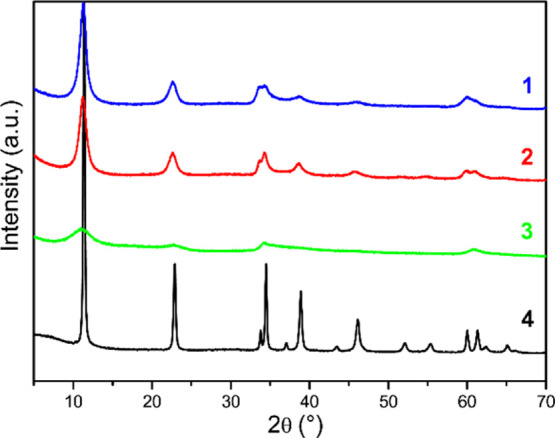
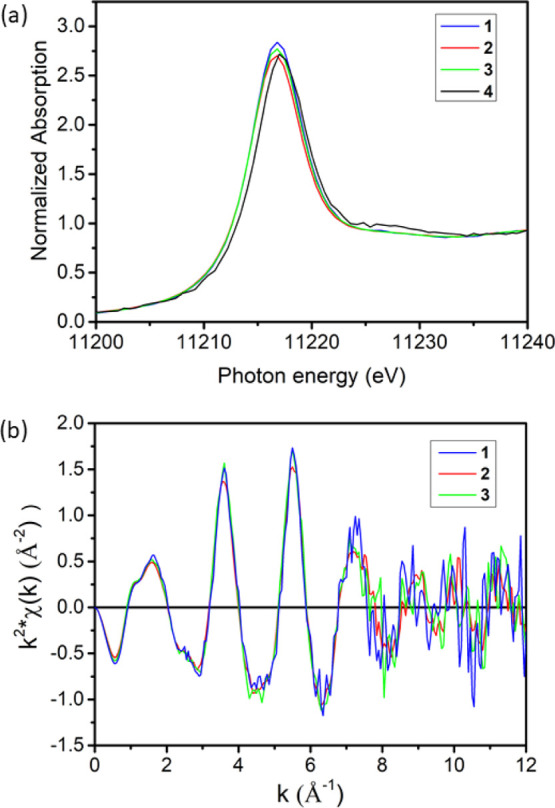
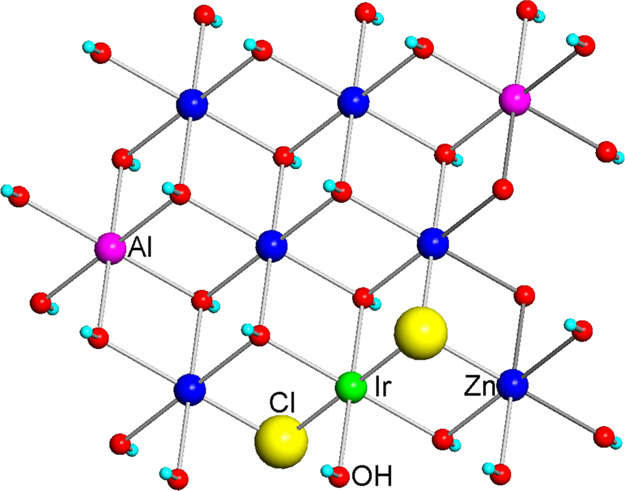
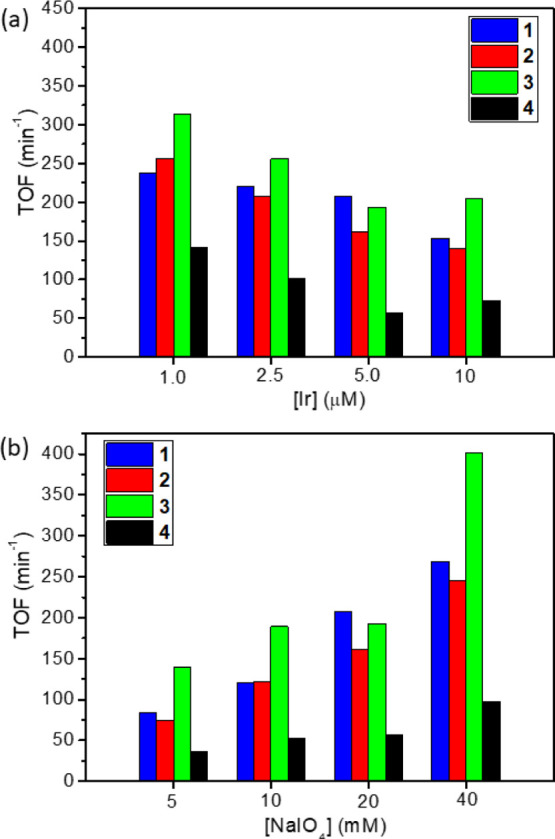
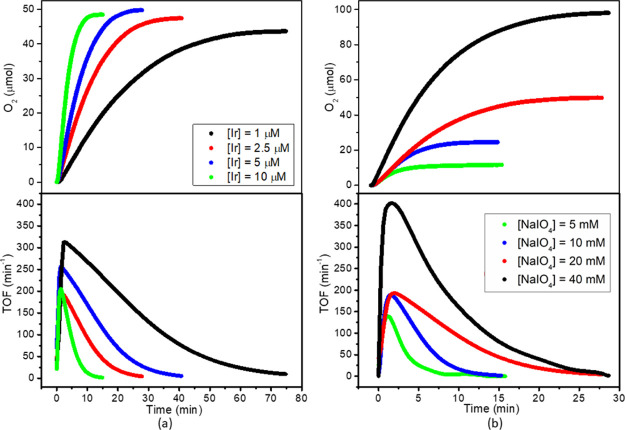
Layered double hydroxides (LDHs) are an ideal platform to host catalytic metal centers for water oxidation (WO) owing to the high accessibility of water to the interlayer region, which makes all centers potentially reachable and activated. Herein, we report the syntheses of three iridium-doped zinc-aluminum LDHs (Ir-LDHs) nanomaterials (, with about 80 nm of planar size and a thickness of 8 nm as derived by field emission scanning electron microscopy and powder X-ray diffraction studies, respectively), carried out in the confined aqueous environment of reverse micelles, through a very simple and versatile procedure. These materials exhibit excellent catalytic performances in WO driven by NaIO at neutral pH and 25 °C, with an iridium content as low as 0.5 mol % (∼0.8 wt %), leading to quantitative oxygen yields (based on utilized NaIO, turnover number up to ∼10,000). Nanomaterials display the highest ever reported turnover frequency values (up to 402 min) for any heterogeneous and heterogenized catalyst, comparable only to those of the most efficient molecular iridium catalysts, tested under similar reaction conditions. The boost in activity can be traced to the increased surface area and pore volume (>5 times and 1 order of magnitude, respectively, higher than those of micrometric materials of size 0.3-1 μm) estimated for the nanosized particles, which guarantee higher noble metal accessibility. X-ray absorption spectroscopy (XAS) studies suggest that nanomaterials, as-prepared and after catalysis, contain a mixture of isolated, single octahedral Ir(III) sites, with no evidence of Ir-Ir scattering from second-nearest neighbors, excluding the presence of IrO nanoparticles. The combination of the results obtained from XAS, elemental analysis, and ionic chromatography strongly suggests that iridium is embedded in the brucite-like structure of LDHs, having four hydroxyls and two chlorides as first neighbors. These results demonstrate that nanometric LDHs can be successfully exploited to engineer efficient WOCs, minimizing the amount of iridium used, consistent with the principle of the noble-metal atom economy.
层状双氢氧化物(LDHs)是承载用于水氧化(WO)的催化金属中心的理想平台,这是因为水对层间区域具有高可达性,使得所有中心都有潜在的可达性和活性。在此,我们报告了三种铱掺杂的锌铝LDHs(Ir-LDHs)纳米材料的合成(通过场发射扫描电子显微镜和粉末X射线衍射研究分别得出,平面尺寸约为80 nm,厚度为8 nm),该合成过程是在反胶束的受限水环境中通过非常简单且通用的程序进行的。这些材料在中性pH值和25°C下由NaIO驱动的水氧化反应中表现出优异的催化性能,铱含量低至0.5 mol%(约0.8 wt%),可实现定量的氧气产率(基于所使用的NaIO计算,周转数高达约10,000)。对于任何非均相和均相化催化剂,纳米材料展示出有史以来报道的最高周转频率值(高达402 min⁻¹),仅与在类似反应条件下测试的最有效的分子铱催化剂相当。活性的提高可归因于纳米尺寸颗粒的表面积和孔体积增加(分别比尺寸为0.3 - 1μm的微米级材料高5倍和1个数量级),这保证了更高的贵金属可达性。X射线吸收光谱(XAS)研究表明,纳米材料在制备后和催化后都包含孤立的单八面体Ir(III)位点的混合物,没有来自次近邻的Ir-Ir散射的证据,排除了IrO纳米颗粒的存在。XAS、元素分析和离子色谱结果的结合强烈表明铱嵌入在LDHs的水镁石状结构中,其第一近邻为四个羟基和两个氯原子。这些结果表明,纳米级LDHs可成功用于设计高效的水氧化催化剂,最大限度地减少铱的用量,这与贵金属原子经济性原则一致。