Wang Xiang-Yao, Chai Ning-Li, Linghu En-Qiang, Qiu Shao-Tian, Li Long-Song, Zou Jia-Le, Xiang Jing-Yuan, Li Xing-Xing
Department of Gastroenterology and Hepatology, Chinese PLA General Hospital, No. 28 Fuxing Road, Beijing, 100853, China.
BMC Gastroenterol. 2020 Jun 26;20(1):200. doi: 10.1186/s12876-020-01340-w.
To compare the outcomes of modified endoscopic mucosal resection (m-EMR) and endoscopic submucosal dissection (ESD) for rectal neuroendocrine tumors (NETs) and evaluate the value of endoscopic morphology classification in endoscopic resection (ER).
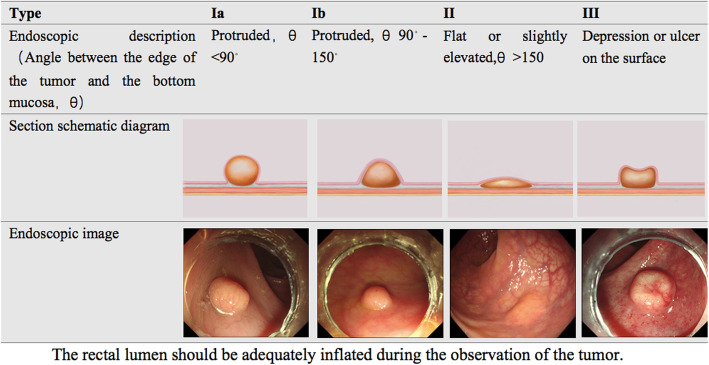
Patients with rectal NET diameters less than 2 cm who were treated between April 2007 and January 2019 were enrolled. The endoscopic morphology of rectal NETs was classified based on the endoscopic views. Patients who underwent ESD and m-EMR were compared. Baseline characteristics as well as en bloc resection, complete resection, the procedure time, adverse events and the risk factors associated with incomplete resection were analyzed.
A total of 429 patients with 449 rectal NETs were enrolled for the classification of endoscopic morphology and were classified into four types (Ia, IIb, II, and III). There were 79 patients in the m-EMR group and 259 patients in the ESD group before matching. Propensity score matching created 77 pairs between the two groups that were well balanced. The mean procedure time was significantly shorter for m-EMR than for ESD (9.1 ± 4.4 min vs 16.0 ± 7.9 min, P = 0.000). The rates of en bloc resection (98.7% vs 100%; P = 1.000), complete resection (90.9% vs 93.5%, P = 0.548) and adverse events (2.6% vs 2.6%, P = 1.000) were similar between the two groups. Univariate and multivariate analyses showed that histopathological grade and endoscopic morphology were associated with incomplete resection.
Both ESD and m-EMR are effective and safe for the treatment of rectal NETs. Endoscopic morphology should be considered along with histopathological grade for ER.
比较改良内镜黏膜切除术(m-EMR)与内镜黏膜下剥离术(ESD)治疗直肠神经内分泌肿瘤(NETs)的效果,并评估内镜形态学分类在内镜切除(ER)中的价值。
纳入2007年4月至2019年1月期间接受治疗的直肠NET直径小于2 cm的患者。根据内镜所见对直肠NETs的内镜形态进行分类。比较接受ESD和m-EMR的患者。分析基线特征以及整块切除、完整切除、手术时间、不良事件和与不完全切除相关的危险因素。
共纳入429例患有449个直肠NETs的患者进行内镜形态学分类,分为四种类型(Ia、IIb、II和III)。匹配前,m-EMR组有79例患者,ESD组有259例患者。倾向评分匹配在两组之间产生了77对,平衡良好。m-EMR的平均手术时间明显短于ESD(9.1±4.4分钟对16.0±7.9分钟,P = 0.000)。两组之间的整块切除率(98.7%对100%;P = 1.000)、完整切除率(90.9%对93.5%,P = 0.548)和不良事件发生率(2.6%对2.6%,P = 1.000)相似。单因素和多因素分析表明,组织病理学分级和内镜形态与不完全切除有关。
ESD和m-EMR治疗直肠NETs均有效且安全。内镜切除时应结合组织病理学分级考虑内镜形态。