Riaz Muhammad Suleman, Kaur Anuvinder, Shwayat Suha Nadim, Behboudi Shahriar, Kishore Uday, Pathan Ansar Ahmed
Division of Biosciences, College of Health and Life Sciences, Brunel University London, Uxbridge, United Kingdom.
Department of Biotechnology, Abdul Wali Khan University, Mardan, Pakistan.
Front Microbiol. 2020 Jun 10;11:1046. doi: 10.3389/fmicb.2020.01046. eCollection 2020.
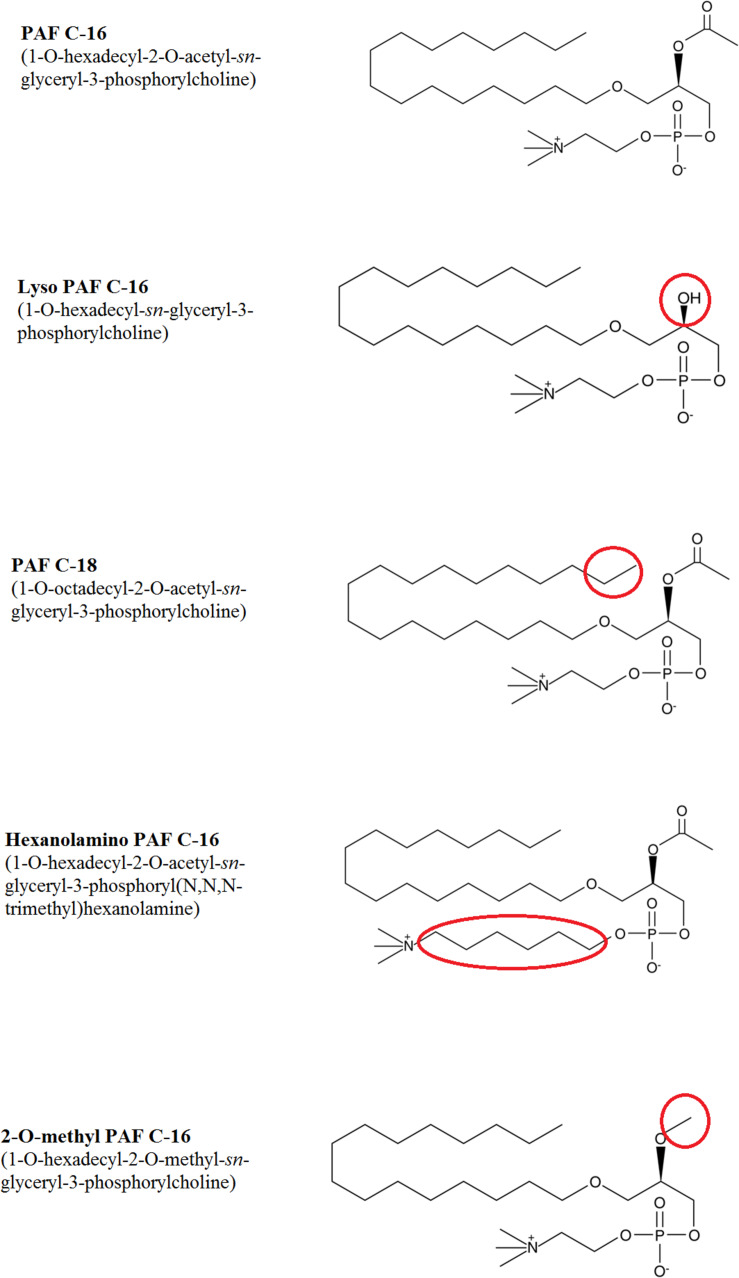
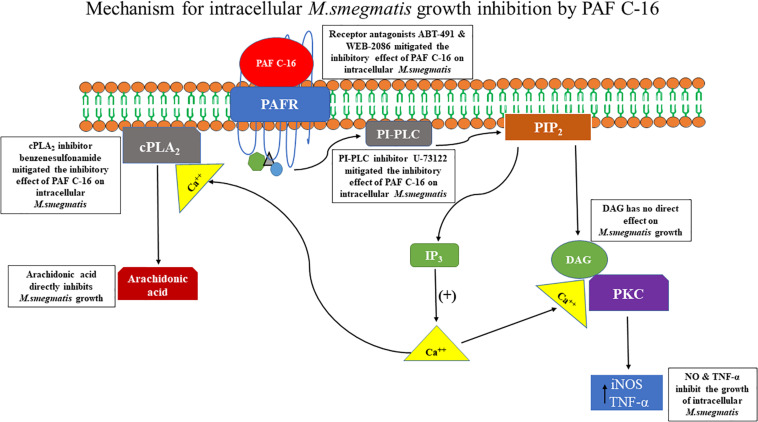
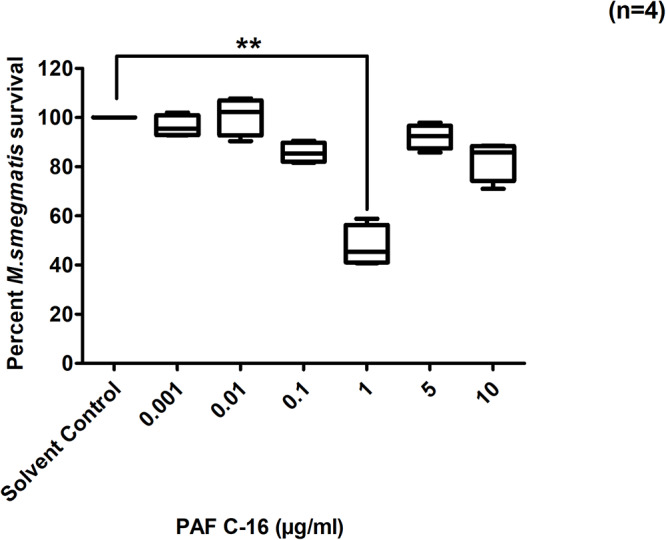
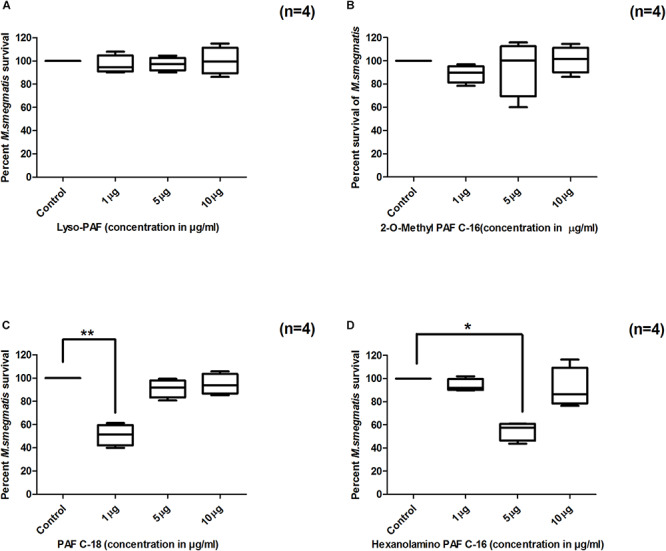
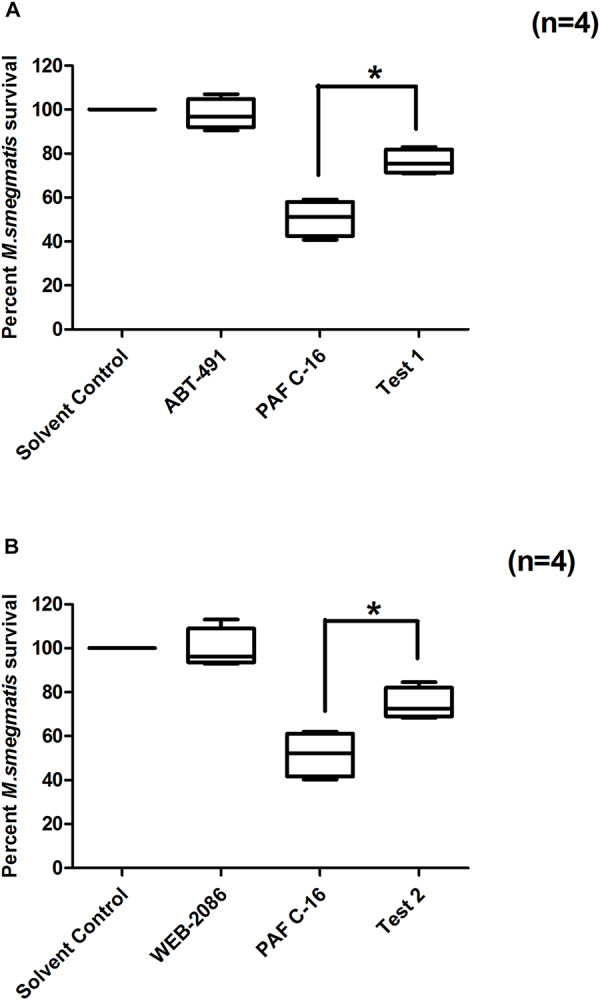
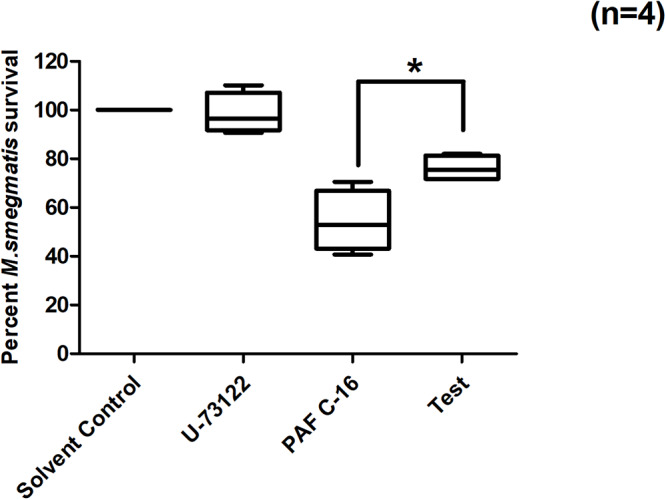
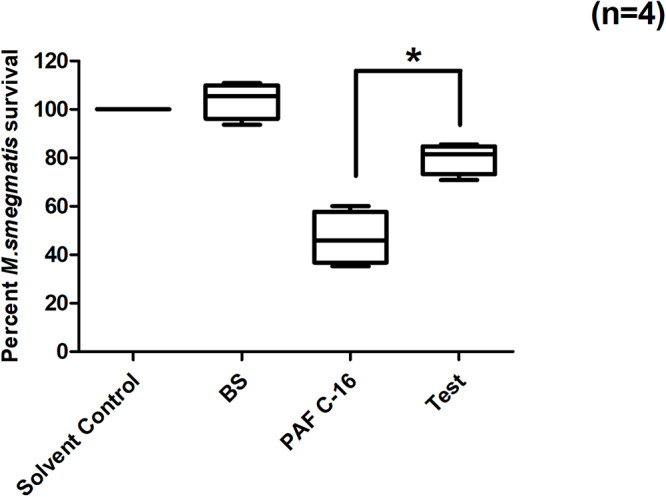
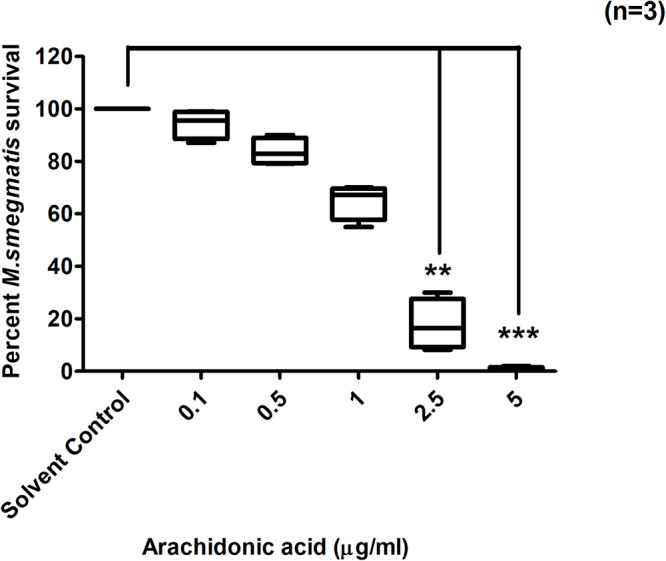
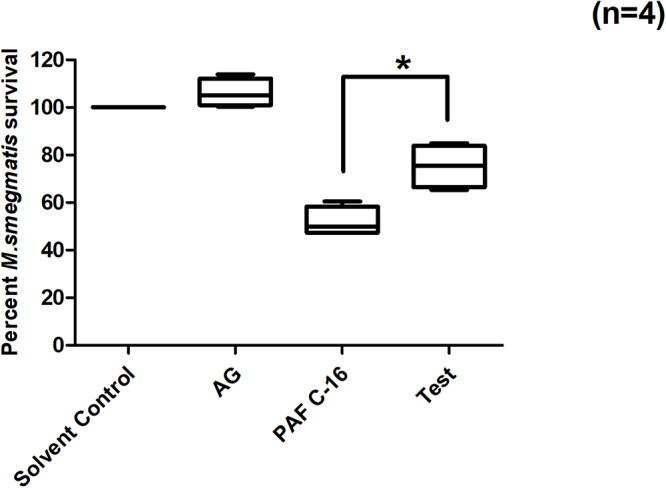
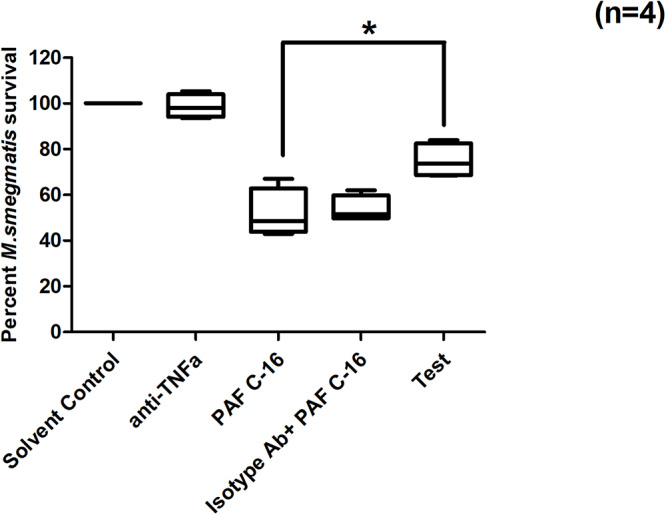
() infection results in approximately 1.3 million human deaths each year. resides primarily inside macrophages, and maintains persistent infection. In response to infection and inflammation, platelet activating factor C-16 (PAF C-16), a phospholipid compound, is released by various cells including neutophils and monocytes. We have recently shown that PAF C-16 can directly inhibit the growth of two representative non-pathogenic mycobacteria, and (), by damaging the bacterial cell membrane. Here, we have examined the effect of PAF C-16 on residing within macrophages, and identified mechanisms involved in their growth inhibitory function. Our results demonstrated that exogenous PAF C-16 inhibited the growth of inside phagocytic cells of monocytic cell line, THP-1; this effect was partially blocked by PAF receptor antagonists, suggesting the involvement of PAF receptor-mediated signaling pathways. Arachidonic acid, a downstream metabolite of PAF C-16 signaling pathway, directly inhibited the growth of . Moreover, the inhibition of phospholipase C and phospholipase A activities, involved in PAF C-16 signaling pathway, increased survival of intracellular . Interestingly, we also observed that inhibition of inducible nitric oxide synthase (iNOS) enzyme and antibody-mediated neutralization of TNF-α partially mitigated the intracellular growth inhibitory effect of PAF C-16. Use of a number of PAF C-16 structural analogs, including Lyso-PAF, 2-O-methyl PAF, PAF C-18 and Hexanolamino PAF, revealed that the presence of acetyl group (CHCO) at -2 position of the glycerol backbone of PAF is important for the intracellular growth inhibition activity against . Taken together, these results suggest that exogenous PAF C-16 treatment inhibits intracellular growth, at least partially, in a nitric oxide and TNF-α dependent manner.
()感染每年导致约130万人死亡。()主要寄生于巨噬细胞内,并维持持续性感染。作为对感染和炎症的反应,血小板活化因子C-16(PAF C-16),一种磷脂化合物,由包括中性粒细胞和单核细胞在内的各种细胞释放。我们最近表明,PAF C-16可通过破坏细菌细胞膜直接抑制两种代表性非致病性分枝杆菌()和()的生长。在这里,我们研究了PAF C-16对巨噬细胞内()的影响,并确定了其生长抑制功能所涉及的机制。我们的结果表明,外源性PAF C-16抑制单核细胞系THP-1吞噬细胞内()的生长;PAF受体拮抗剂部分阻断了这种作用,提示PAF受体介导的信号通路参与其中。花生四烯酸,PAF C-16信号通路的下游代谢产物,直接抑制()的生长。此外,参与PAF C-16信号通路的磷脂酶C和磷脂酶A活性的抑制增加了细胞内()的存活率。有趣的是,我们还观察到诱导型一氧化氮合酶(iNOS)酶的抑制和抗体介导的TNF-α中和部分减轻了PAF C-16的细胞内生长抑制作用。使用多种PAF C-16结构类似物,包括溶血PAF、2-O-甲基PAF、PAF C-18和己醇氨基PAF,发现PAF甘油主链-2位的乙酰基(CHCO)的存在对于其对()的细胞内生长抑制活性很重要。综上所述,这些结果表明外源性PAF C-16处理至少部分以一氧化氮和TNF-α依赖性方式抑制细胞内()的生长。