Velazquez-Salinas Lauro, Pauszek Steven J, Holinka Lauren G, Gladue Douglas P, Rekant Steven I, Bishop Elizabeth A, Stenfeldt Carolina, Verdugo-Rodriguez Antonio, Borca Manuel V, Arzt Jonathan, Rodriguez Luis L
Foreign Animal Disease Research Unit, USDA/ARS Plum Island Animal Disease Center, Greenport, NY, United States.
College of Veterinary Medicine and Animal Science, National Autonomous University of Mexico, Mexico City, Mexico.
Front Microbiol. 2020 May 29;11:1123. doi: 10.3389/fmicb.2020.01123. eCollection 2020.
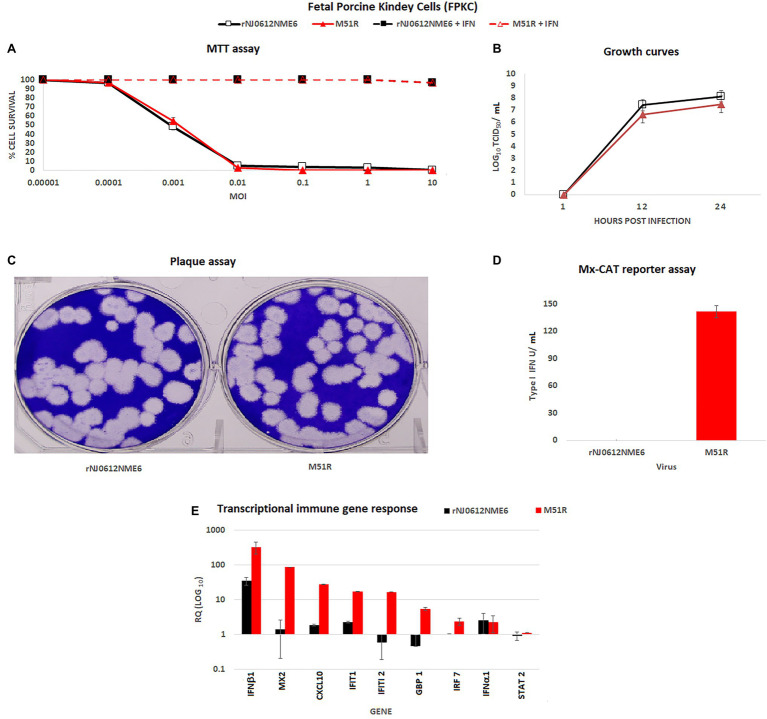
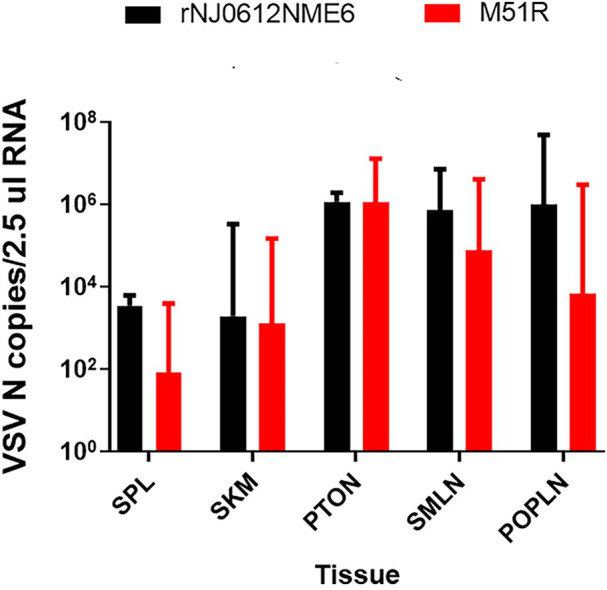
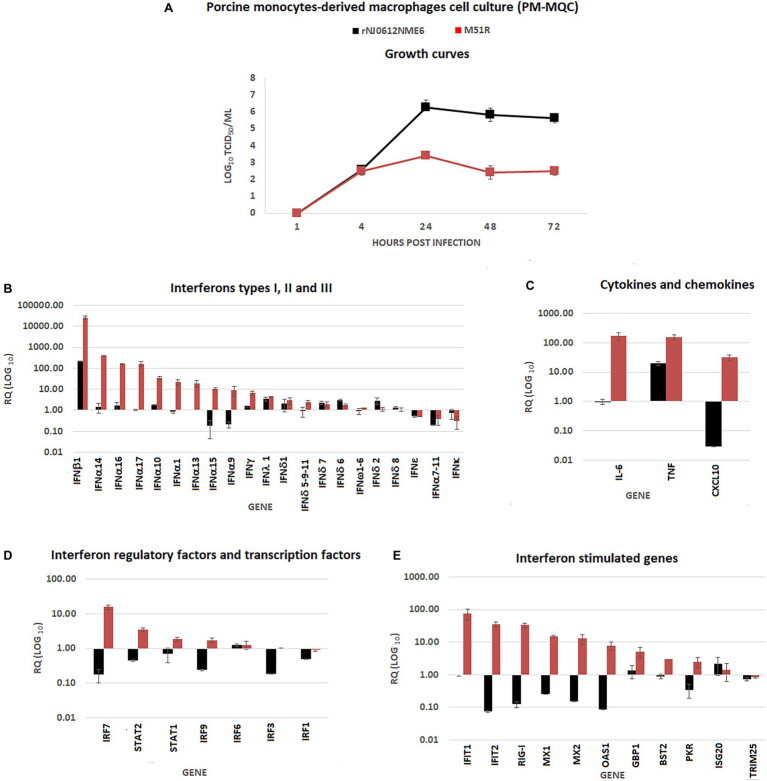
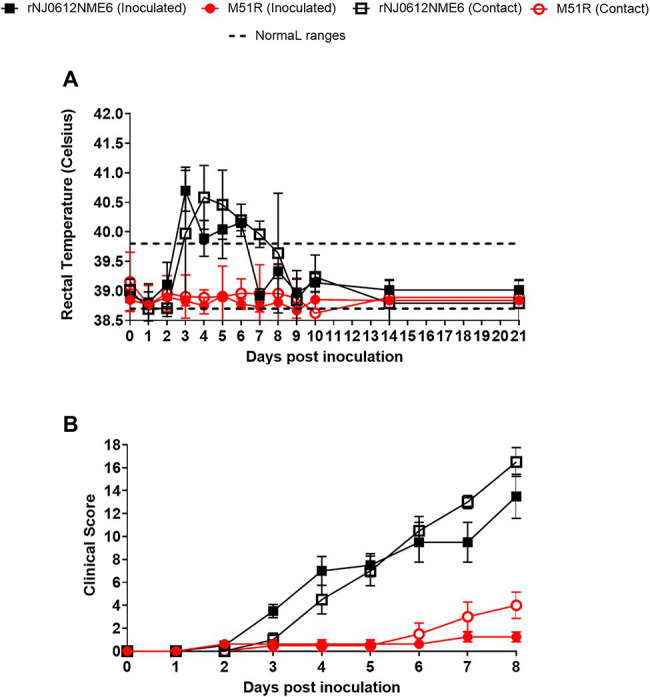
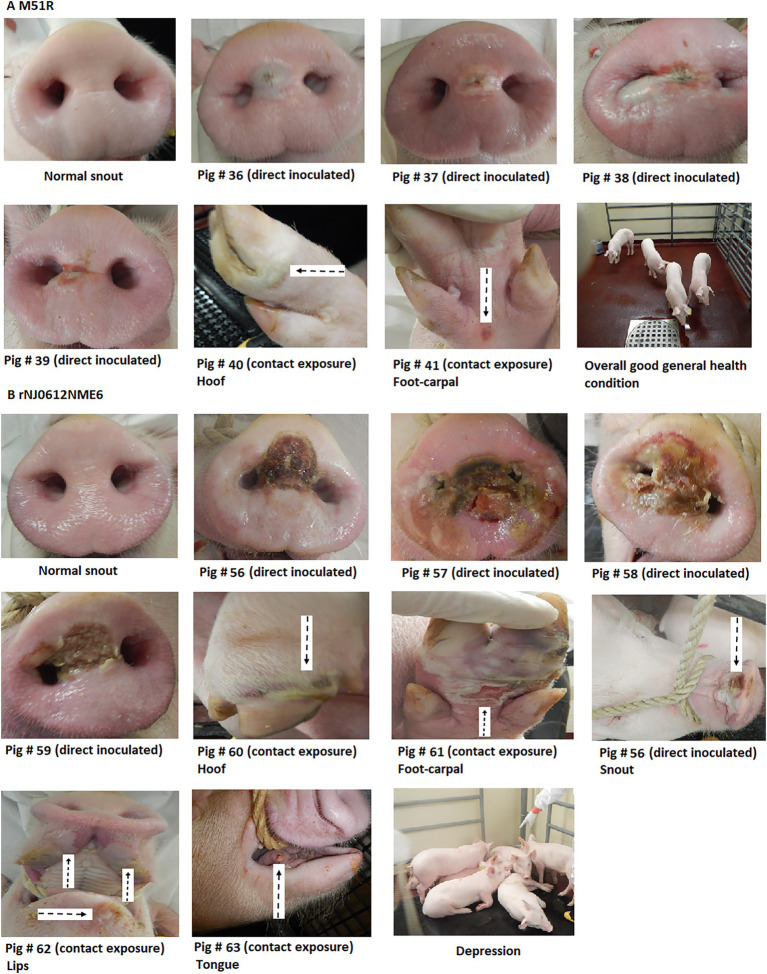
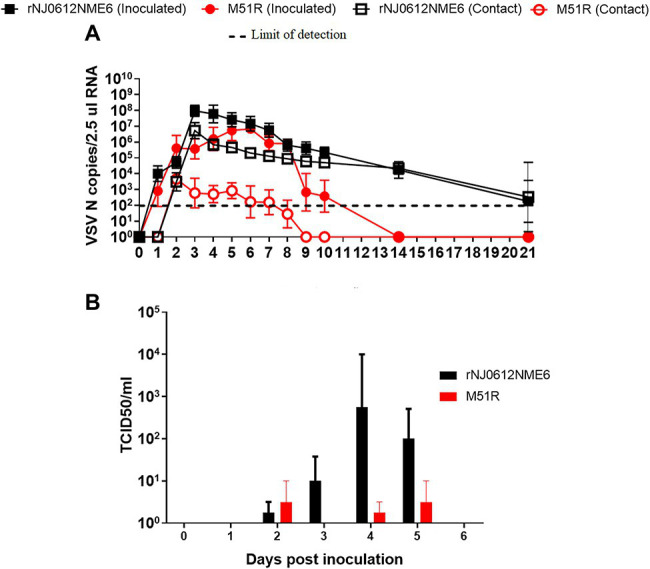
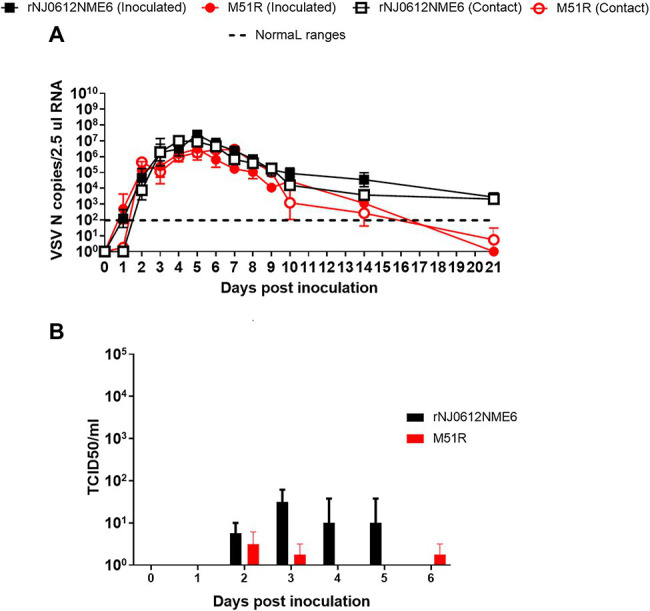
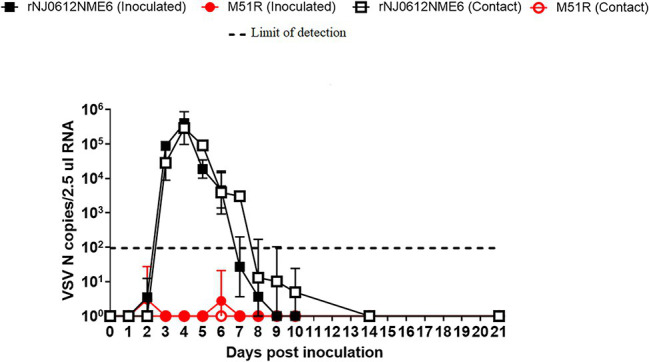
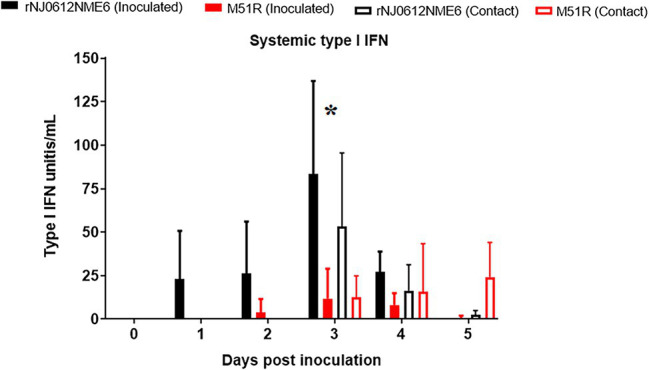
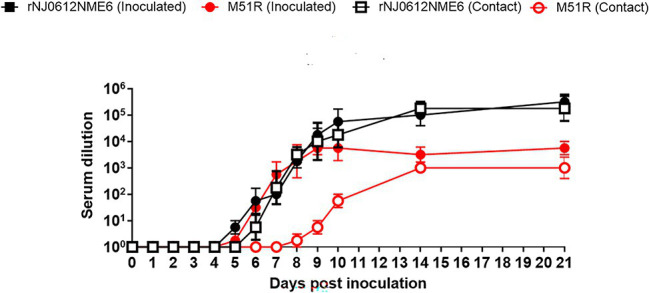
In this study, we explore the virulence of vesicular stomatitis New Jersey virus (VSNJV) in pigs and its potential relationship with the virus's ability to modulate innate responses. For this purpose, we developed a mutant of the highly virulent strain NJ0612NME6, containing a single amino acid substitution in the matrix protein (M51R). The M51R mutant of NJ0612NME6 was unable to suppress the transcription of genes associated with the innate immune response both in primary fetal porcine kidney cells and porcine primary macrophage cultures. Impaired viral growth was observed only in porcine macrophage cultures, indicating that the M51 residue is required for efficient replication of VSNJV in these cells. Furthermore, when inoculated in pigs by intradermal scarification of the snout, M51R infection was characterized by decreased clinical signs including reduced fever and development of less and smaller secondary vesicular lesions. Pigs infected with M51R had decreased levels of viral shedding and absence of RNAemia compared to the parental virus. The ability of the mutant virus to infect pigs by direct contact remained intact, indicating that the M51R mutation resulted in a partially attenuated phenotype capable of causing primary lesions and transmitting to sentinel pigs. Collectively, our results show a positive correlation between the ability of VSNJV to counteract the innate immune response in swine macrophage cultures and the level of virulence in pigs, a natural host of this virus. More studies are encouraged to evaluate the interaction of VSNJV with macrophages and other components of the immune response in pigs.
在本研究中,我们探究了水疱性口炎新泽西病毒(VSNJV)对猪的毒力及其与该病毒调节固有免疫反应能力的潜在关系。为此,我们构建了高毒力毒株NJ0612NME6的一个突变体,其基质蛋白中有一个单氨基酸替换(M51R)。NJ0612NME6的M51R突变体在原代猪胎儿肾细胞和猪原代巨噬细胞培养物中均无法抑制与固有免疫反应相关基因的转录。仅在猪巨噬细胞培养物中观察到病毒生长受损,这表明M51残基是VSNJV在这些细胞中高效复制所必需的。此外,通过在猪鼻进行皮内划痕接种时,M51R感染的特征是临床症状减轻,包括发热降低以及继发性水疱病变数量减少且变小。与亲本病毒相比,感染M51R的猪病毒脱落水平降低且无病毒血症。突变病毒通过直接接触感染猪的能力保持完好,这表明M51R突变导致了一种部分减毒的表型,能够引起原发性病变并传播给哨兵猪。总体而言,我们的结果表明,VSNJV在猪巨噬细胞培养物中对抗固有免疫反应的能力与在猪(该病毒的天然宿主)中的毒力水平呈正相关。鼓励开展更多研究来评估VSNJV与猪巨噬细胞及免疫反应其他成分之间的相互作用。