Department of Oncology, Sidney Kimmel Comprehensive Cancer Center, The Skip Viragh Center for Pancreas Cancer Clinical Research and Patient Care, and The Bloomberg-Kimmel Institute for Cancer Immunotherapy at Johns Hopkins University School of Medicine, Baltimore, Maryland.
Department of Gastrointestinal and Pancreatic Surgery, Zhejiang Provincial People's Hospital, Hangzhou, Zhejiang, China.
Clin Cancer Res. 2020 Oct 1;26(19):5129-5139. doi: 10.1158/1078-0432.CCR-20-1025. Epub 2020 Jun 26.
This phase II study tested granulocyte-macrophage colony-stimulating factor (GM-CSF)-allogeneic pancreatic tumor cells (GVAX) and ipilimumab in metastatic pancreatic ductal adenocarcinoma (PDA) in the maintenance setting.
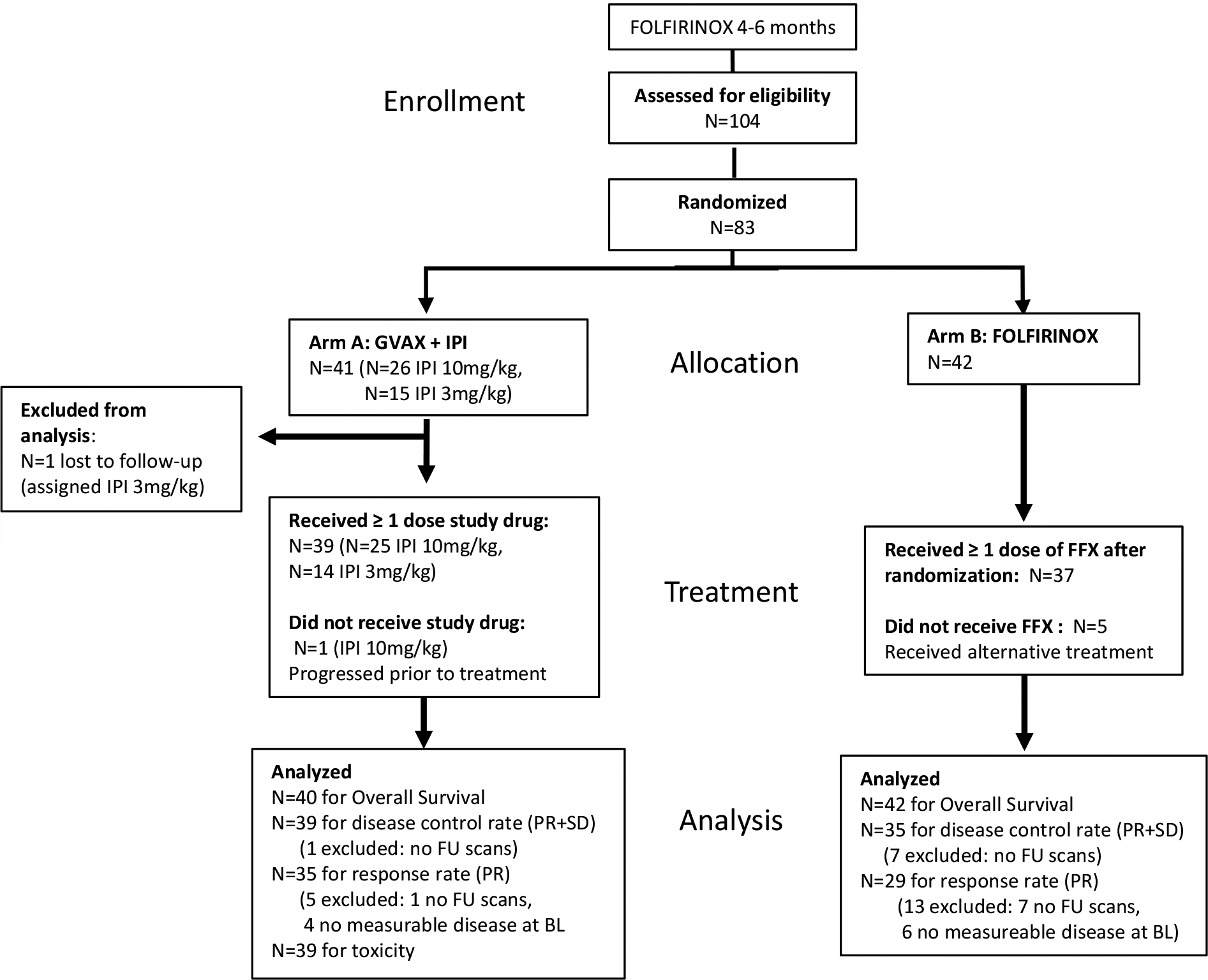
Patients with PDA who were treated with front-line chemotherapy consisting of 5-fluorouracil, leucovorin, irinotecan, and oxaliplatin (FOLFIRINOX) in the metastatic setting and had ongoing response or stable disease after 8-12 doses were eligible. Patients were randomized 1:1 to treatment with GVAX and ipilimumab given every 3 weeks for four doses then every 8 weeks (Arm A) or to FOLFIRINOX continuation (Arm B). The primary objective was to compare overall survival (OS) between the two arms.
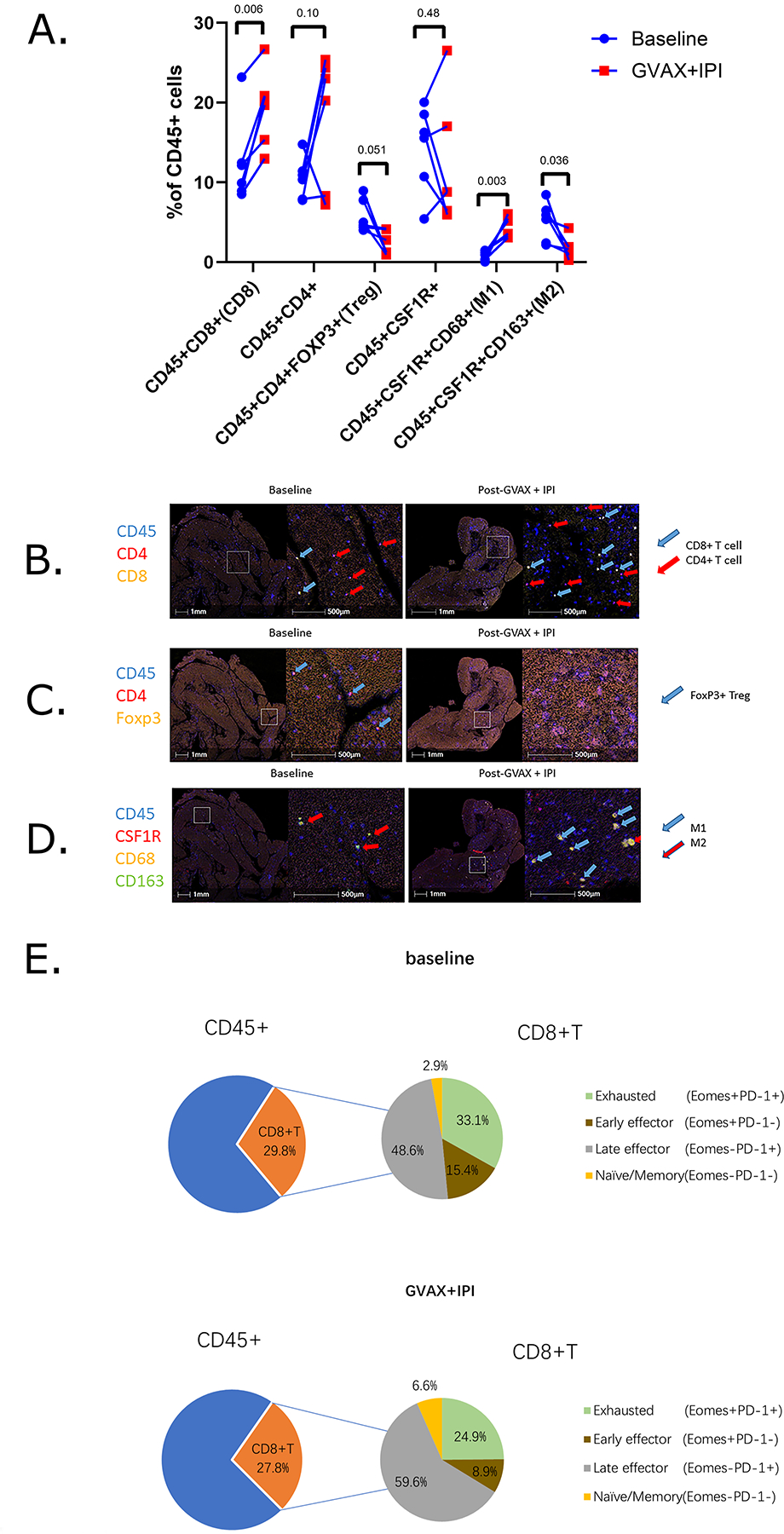
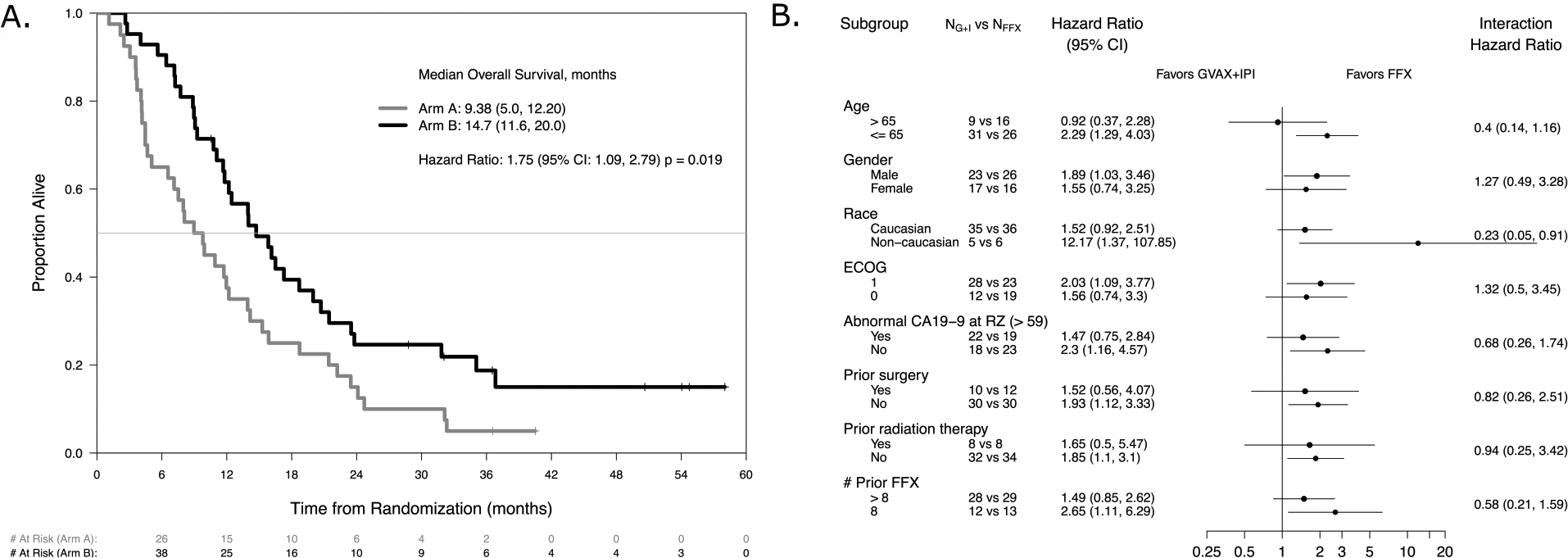
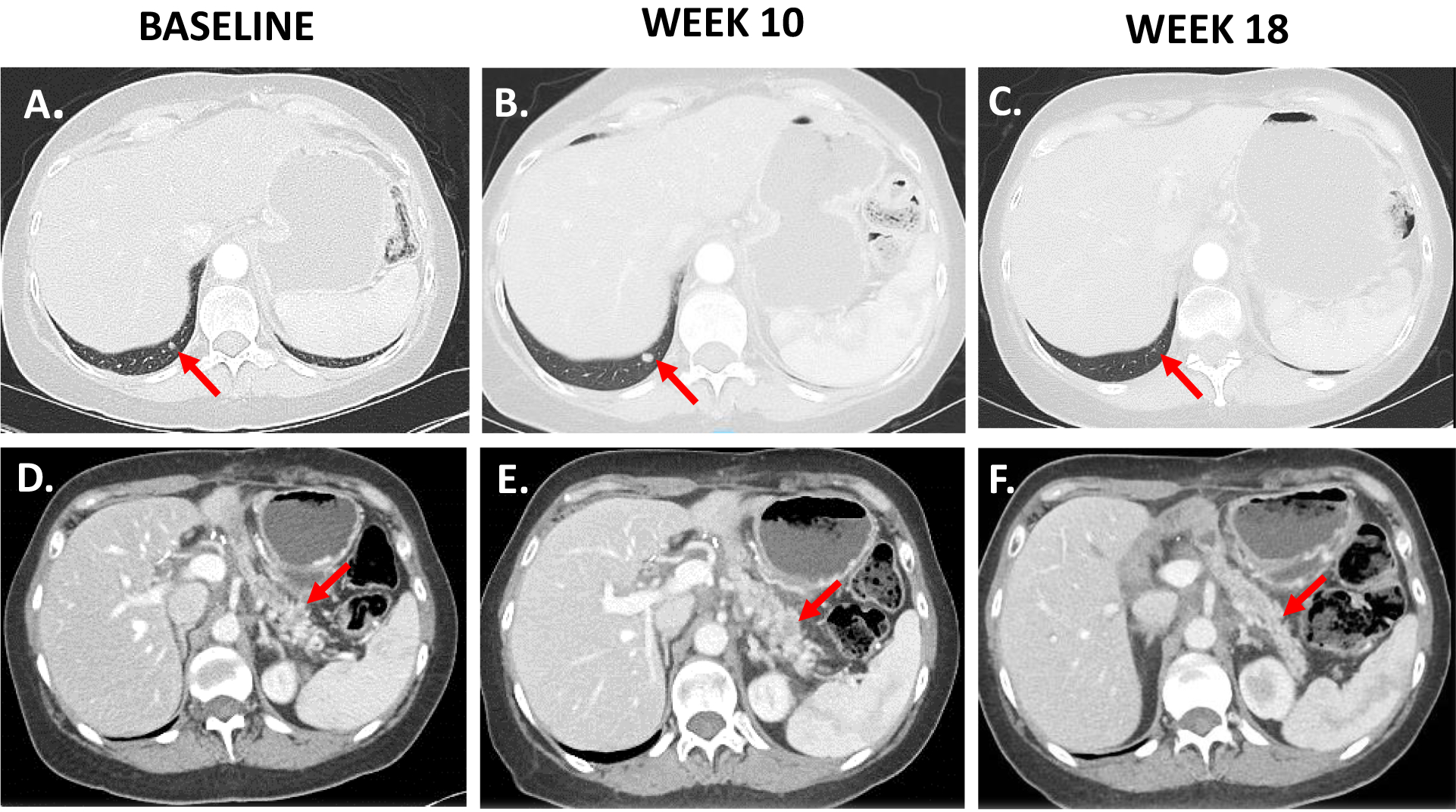
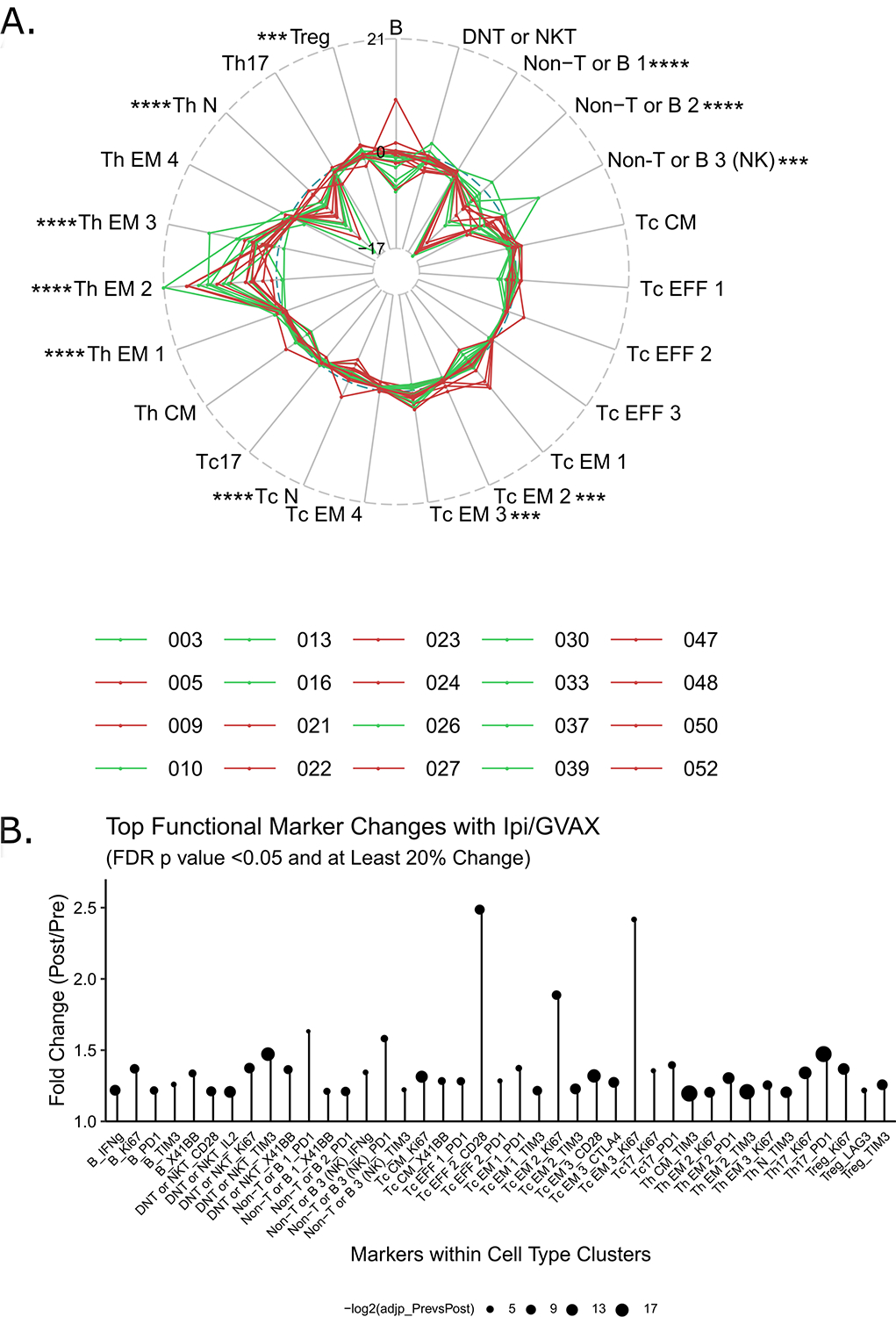
Eighty-two patients were included in the final analysis (Arm A: 40; Arm B: 42). The study was stopped for futility after interim analysis. Median OS was 9.38 months [95% confidence interval (CI), 5.0-12.2] for Arm A and 14.7 months (95% CI, 11.6-20.0) for Arm B (HR, 1.75; = 0.019). Using immune-related response criteria, two partial responses (5.7%) were observed in Arm A and four (13.8%) in Arm B. GVAX + ipilimumab promoted T-cell differentiation into effector memory phenotypes both in the periphery and in the tumor microenvironment and increased M1 macrophages in the tumor.
GVAX and ipilimumab maintenance therapy did not improve OS over continuation of chemotherapy and resulted in a numerically inferior survival in metastatic PDA. However, clinical responses and biological effects on immune cells were observed. Further study of novel combinations in the maintenance treatment of metastatic PDA is feasible.
本 II 期研究旨在转移性胰腺导管腺癌(PDA)的维持治疗中检测粒细胞-巨噬细胞集落刺激因子(GM-CSF)同种异体胰腺肿瘤细胞(GVAX)联合 ipilimumab 的效果。
符合条件的患者为转移性 PDA 患者,一线化疗方案为氟尿嘧啶、亚叶酸、伊立替康和奥沙利铂(FOLFIRINOX),并且在接受 8-12 个剂量后仍有持续缓解或疾病稳定。患者按 1:1 随机分为 GVAX 和 ipilimumab 组(每 3 周治疗 4 个剂量,然后每 8 周治疗 1 次)或 FOLFIRINOX 延续治疗组(Arm B)。主要终点为两组患者的总生存期(OS)。
82 例患者纳入最终分析(Arm A:40 例;Arm B:42 例)。中期分析后,因无效停止研究。Arm A 组的中位 OS 为 9.38 个月(95%CI,5.0-12.2),Arm B 组为 14.7 个月(95%CI,11.6-20.0)(HR,1.75; = 0.019)。使用免疫相关缓解标准,Arm A 组观察到 2 例部分缓解(5.7%),Arm B 组观察到 4 例(13.8%)。GVAX+ipilimumab 可促进效应记忆表型的 T 细胞在周围和肿瘤微环境中的分化,并增加肿瘤中的 M1 巨噬细胞。
GVAX 和 ipilimumab 维持治疗并未改善转移性 PDA 患者的 OS,并且导致患者生存情况略差。然而,观察到了临床缓解和对免疫细胞的生物学作用。在转移性 PDA 的维持治疗中进一步研究新的联合治疗是可行的。