University of Sydney, Sydney Medical School, Kolling Institute of Medical Research Sydney, Sydney, NSW, 2065, Australia.
The Second Affiliated Hospital of Dalian Medical University, Department of Pediatrics 467 Zhongshan Road, Shahekou District Dalian, Liaoning, CN, 116027, China.
Sci Rep. 2020 Jun 26;10(1):10458. doi: 10.1038/s41598-020-67054-x.
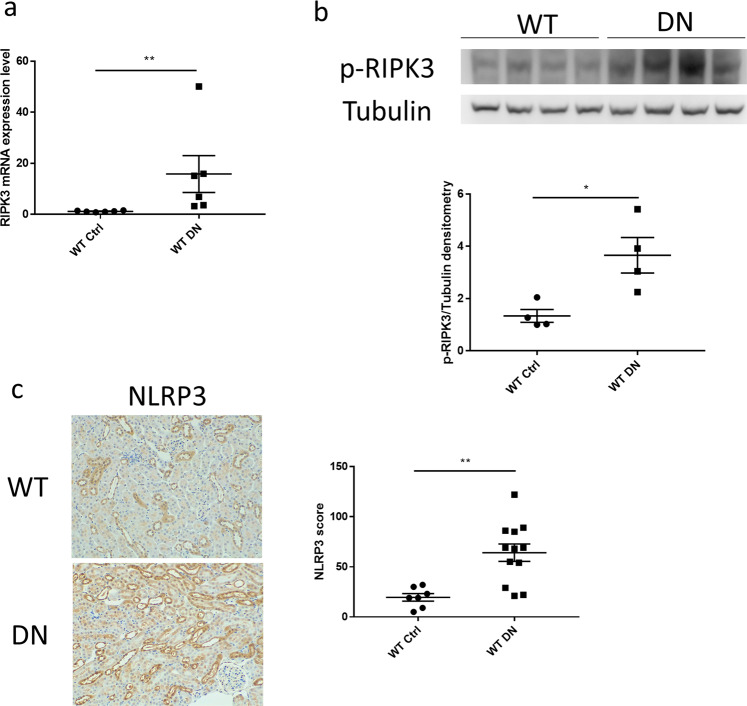
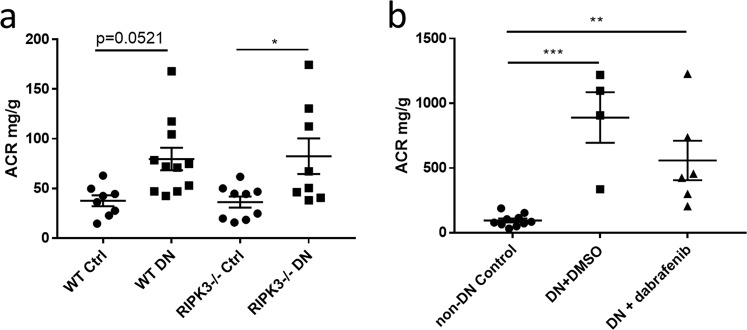
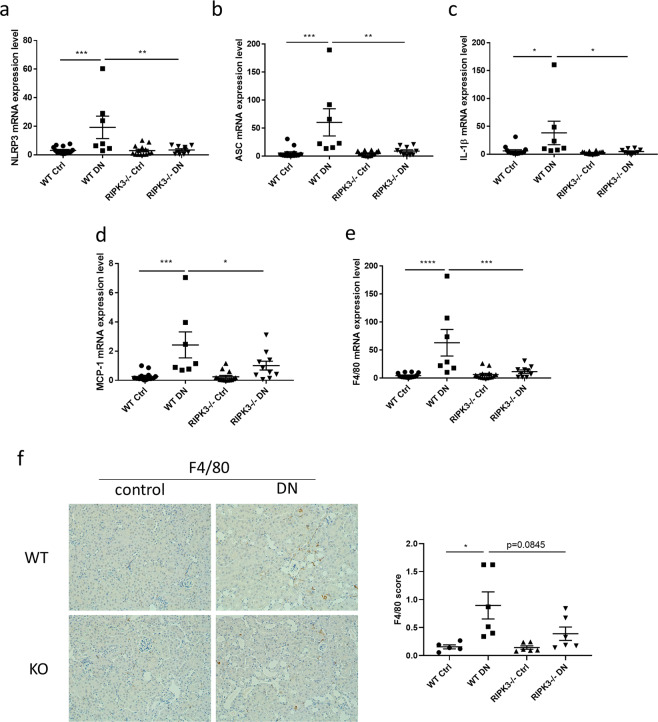
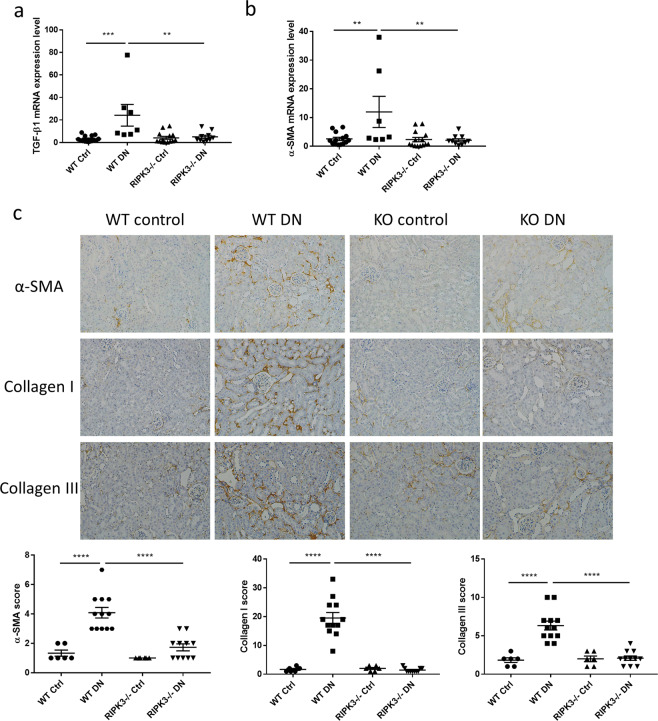
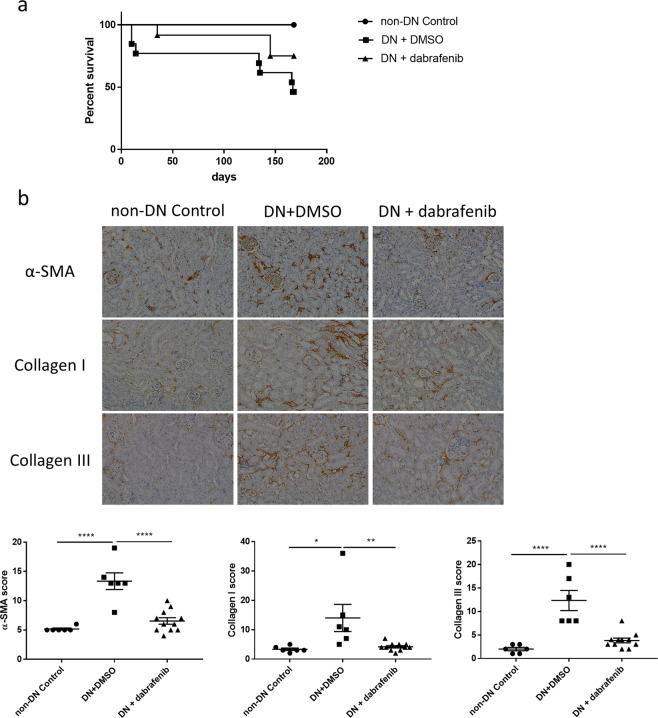
Receptor-interacting protein kinase-3 (RIPK3) is a multifunctional regulator of cell death and inflammation. RIPK3 controls cellular signalling through the formation of the domain-like receptor family pyrin domain-containing 3 (NLRP3) inflammasome, which is recognised to mediate renal fibrogenesis. The role of RIPK3 in diabetic kidney disease (DKD) induced renal fibrosis has not been previously determined. To define the action of RIPK3 in the development of diabetic kidney disease, wild-type (WT), RIPK3 -/- and endothelium-derived nitric oxide synthase (eNOS)-/- mice were induced to develop diabetes mellitus using multiple low doses of streptozotocin and maintained for 24 weeks. RIPK3 activity and NLRP3 expression were upregulated and fibrotic responses were increased in the kidney cortex of WT mice with established diabetic nephropathy compared to control mice. Consistently, mRNA expression of inflammasome components, as well as transforming growth factor beta 1 (TGFβ1), α smooth muscle actin (α-SMA) and collagen deposition were increased in diabetic kidneys of WT mice compared to control mice. However, these markers were normalised or significantly reversed in kidneys of diabetic RIPK3 -/- mice. Renoprotection was also observed using the RIPK3 inhibitor dabrafenib in eNOS-/- diabetic mice as demonstrated by reduced collagen deposition and myofibroblast activation. These results suggest that RIPK3 is associated with the development of renal fibrosis in DKD due to the activation of the NLRP3 inflammasome. Inhibition of RIPK3 results in renoprotection. Thus, RIPK3 may be a potential target for therapeutic intervention in patients with diabetic kidney disease.
受体相互作用蛋白激酶 3(RIPK3)是细胞死亡和炎症的多功能调节剂。RIPK3 通过形成域样受体家族吡喃结构域包含 3(NLRP3)炎性小体来控制细胞信号转导,该炎性小体被认为介导肾纤维化。RIPK3 在糖尿病肾病(DKD)诱导的肾纤维化中的作用尚未确定。为了确定 RIPK3 在糖尿病肾病发展中的作用,使用链脲佐菌素多次低剂量诱导野生型(WT)、RIPK3 -/-和内皮型一氧化氮合酶(eNOS)-/-小鼠发生糖尿病,并维持 24 周。与对照小鼠相比,在已建立的糖尿病肾病的 WT 小鼠的肾脏皮质中,RIPK3 活性和 NLRP3 表达上调,纤维化反应增加。一致地,与对照小鼠相比,WT 小鼠糖尿病肾脏中炎性小体成分以及转化生长因子β1(TGFβ1)、α平滑肌肌动蛋白(α-SMA)和胶原蛋白沉积的 mRNA 表达增加。然而,这些标志物在糖尿病 RIPK3 -/-小鼠的肾脏中正常化或显著逆转。使用 RIPK3 抑制剂 dabrafenib 在 eNOS-/-糖尿病小鼠中也观察到了肾保护作用,表现为胶原蛋白沉积和肌成纤维细胞激活减少。这些结果表明,由于 NLRP3 炎性小体的激活,RIPK3 与 DKD 中肾纤维化的发展有关。抑制 RIPK3 可导致肾保护。因此,RIPK3 可能是糖尿病肾病患者治疗干预的潜在靶点。