Loos Marie-Louise H J, Ahmed Tayiba, Bakx Roel, van Rijn Rick R
Amsterdam UMC, Department of Paediatric Surgery, Emma Children's Hospital, University of Amsterdam and Vrije Universiteit Amsterdam, Meibergdreef 9, 1105AZ, Amsterdam, The Netherlands.
Amsterdam UMC, Department of Radiology and Nuclear Medicine, Emma Children's Hospital, University of Amsterdam, Meibergdreef 9, 1105AZ, Amsterdam, The Netherlands.
Pediatr Surg Int. 2020 Sep;36(9):1009-1017. doi: 10.1007/s00383-020-04706-z. Epub 2020 Jun 26.
The purpose of the study was to determine the rate of occult fractures (without clinical symptoms) per presenting clinical injury i.e., children presenting with a fracture, bruise, abusive head trauma and the types of fracture most likely to be found, in a series of infants and young children suspected of being victims of NAT.
Skeletal surveys done between 2008 and 2018 of children (< 5 years) were retrospectively analyzed. Both radiographs of admitted children and reassessment images from all over the country were included and reviewed by a forensic paediatric radiologist. Deceased children were excluded. Variables as gender, age, initial clinical injury and occult fractures were collected. Occult fractures on the follow-up skeletal survey were collected.
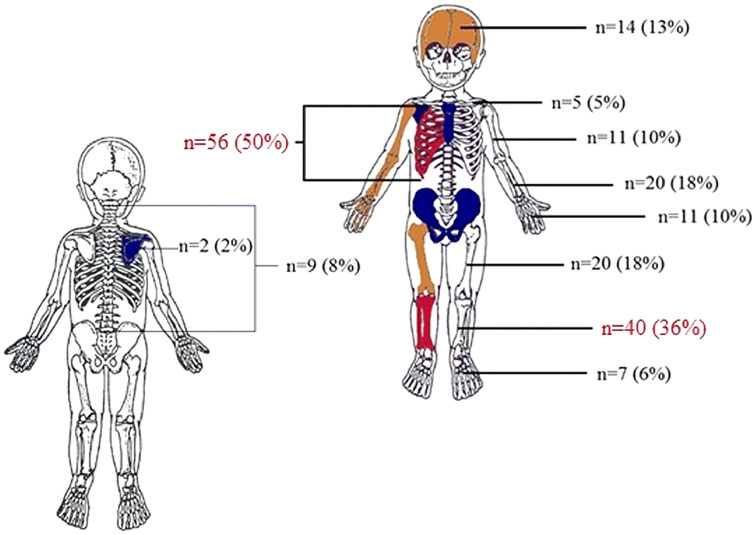
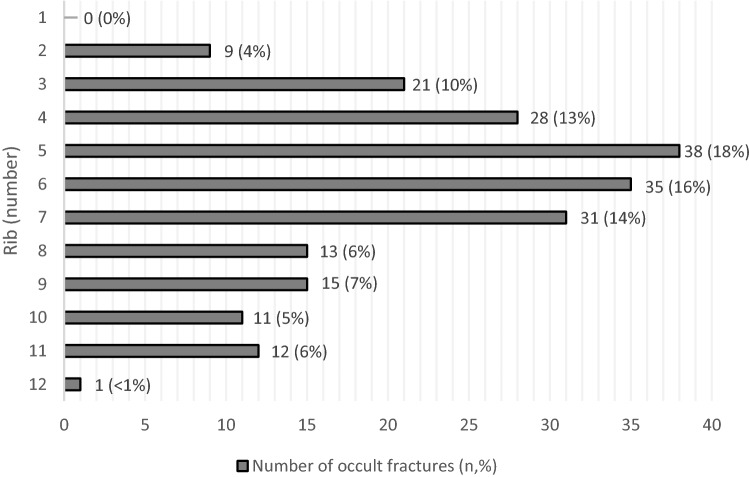
A total of 370 skeletal surveys of 296 children were included. Median age was 22 weeks (IQR 11-48), there were 172 (58%) boys. A total of 195 occult fractures were detected in 111 (32%) children. Occult fractures were detected in 37/126 (29%) children with fracture as presenting symptom, 33/90 (37%) children with head trauma and 26/50 (52%) children with bruises. Rib (n = 56, 50%) and lower leg (n = 40, 36%) fractures were most detected.
Occult fractures were detected in 32% of the children. Occult fractures were most prevalent if the initial clinical injury suggestive for NAT to request skeletal survey was a bruise, abusive head trauma or fracture.
本研究的目的是确定在一系列疑似受非意外创伤(NAT)的婴幼儿中,每种呈现的临床损伤(即伴有骨折、瘀伤、虐待性头部创伤的儿童)的隐匿性骨折(无临床症状)发生率,以及最可能发现的骨折类型。
对2008年至2018年期间对<5岁儿童进行的骨骼检查进行回顾性分析。纳入入院儿童的X光片和来自全国各地的重新评估影像,并由一名法医儿科放射科医生进行审查。排除已死亡儿童。收集性别、年龄、初始临床损伤和隐匿性骨折等变量。收集随访骨骼检查中的隐匿性骨折情况。
共纳入296名儿童的370次骨骼检查。中位年龄为22周(四分位间距11 - 48),有172名(58%)男孩。111名(32%)儿童共检测到195处隐匿性骨折。在以骨折为首发症状的126名儿童中的37名(29%)、头部创伤儿童中的33名(37%)和瘀伤儿童中的26名(52%)检测到隐匿性骨折。肋骨骨折(n = 56,50%)和小腿骨折(n = 40,36%)检测到的最多。
32%的儿童检测到隐匿性骨折。如果提示因NAT而需进行骨骼检查的初始临床损伤为瘀伤、虐待性头部创伤或骨折,则隐匿性骨折最为常见。