Li Jing, Wang Zhen, Li Ao-Mei, Zhou Han, Zhu Xi-Xu
Department of Radiation Oncology, Jinling Hospital, Medical School of Nanjing University, Nanjing 210002, Jiangsu, China.
Department of Radiation Oncology, Jinling Hospital, Medical School of Nanjing University, Nanjing 210002, Jiangsu, China.
Transl Oncol. 2020 Oct;13(10):100818. doi: 10.1016/j.tranon.2020.100818. Epub 2020 Jun 24.
This study aims to evaluate the efficacy and safety of stereotactic body radiation therapy (SBRT) using Cyber Knife (CK) in the treatment of patients with recurrent pancreatic cancer after surgery, and analyze its survival-related factors.
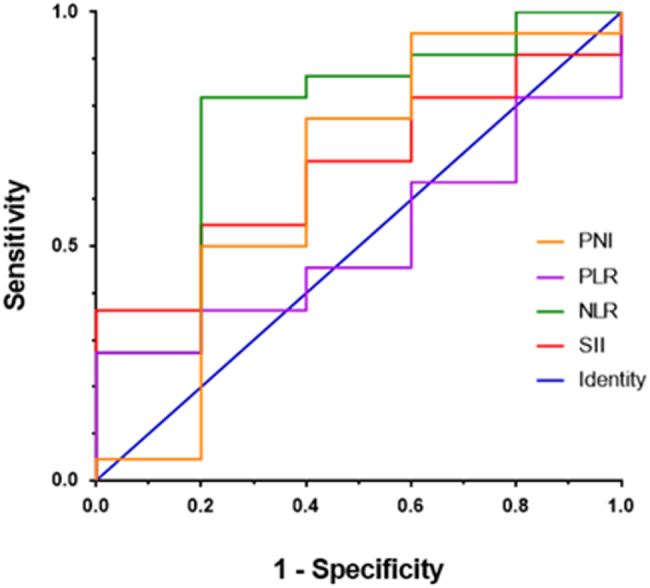
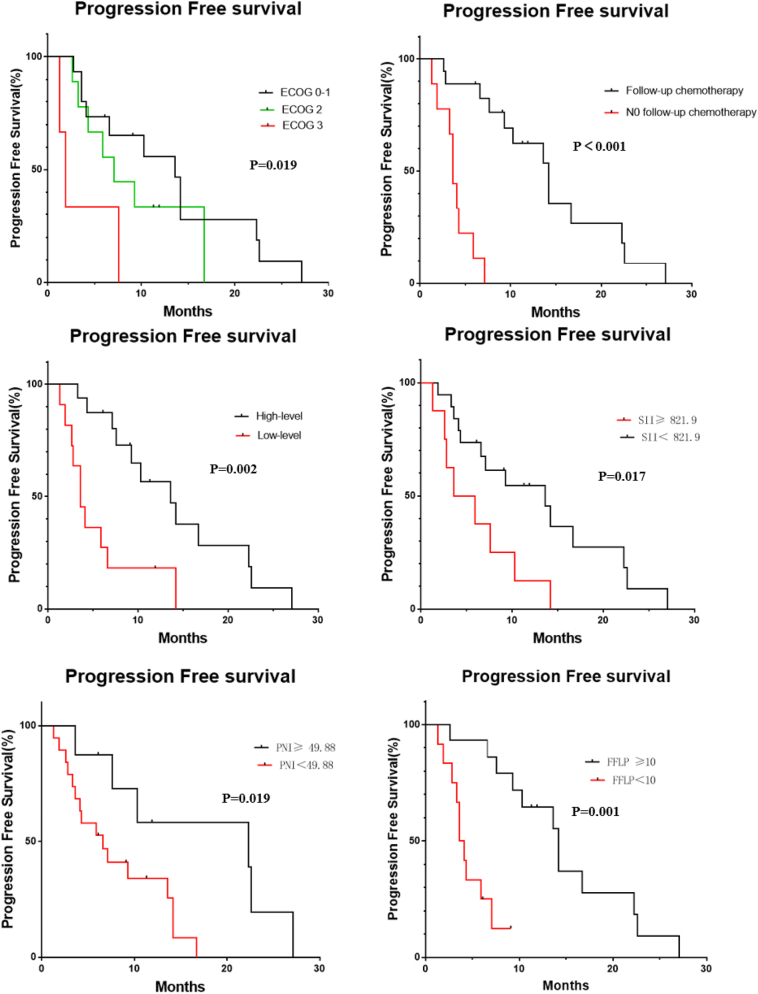
The primary endpoint was freedom from local progression (FFLP) and local control (LC) rate after CK. The secondary endpoints were overall survival (OS), progression-free survival (PFS), symptom relief and toxicities. Receiver operating characteristic (ROC) curves were used to determine the optimal cut-off values of inflammatory composite indicators NLR, PLR, SII and PNI. The prognostic factors that affected these patients were analyzed by univariate and multivariate analysis, respectively.
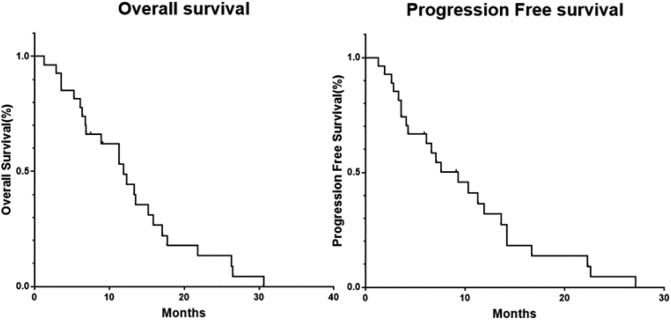
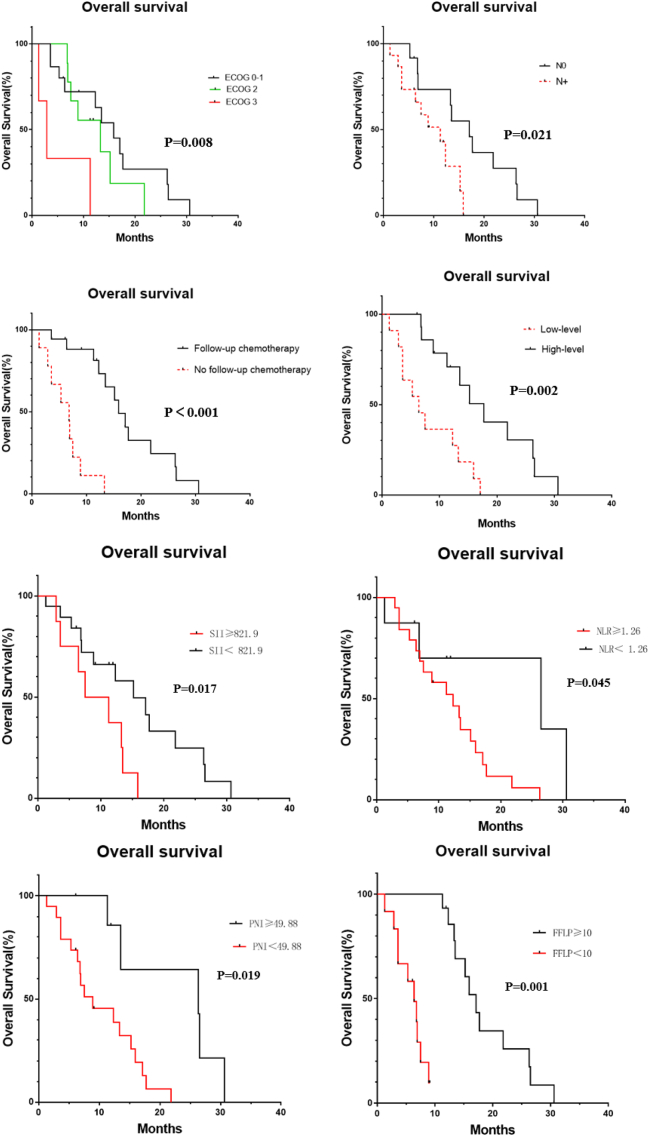
A total of 27 patients were enrolled. Median local recurrence disease free interval(DFI)was 11.3 (1.3-30.6) months, LC was 81.5% and 37.0% at 6 and 12 months, respectively. Median PFS was 7.1 (1.3-27.1) months. Median OS was 11.3 (1.3-30.6) months. Symptom alleviation was observed in 16 of 17 patients (94.1%) within 2 weeks after CK. Subsequent chemotherapy, CA199≥50% decrease after CK were independent prognostic factors for OS (all P <0.05).
SBRT is a safe and effective treatment approach for recurrent pancreatic adenocarcinoma. Encouraging local control rate, low toxicity, and effective symptom relief suggests the vital role of CK in the treatment of these patients. This clinical application needs to be further studied in the combination of CK and multimodal therapy.
本研究旨在评估使用射波刀(CK)的立体定向体部放射治疗(SBRT)在治疗术后复发性胰腺癌患者中的疗效和安全性,并分析其生存相关因素。
主要终点为CK治疗后的局部无进展生存期(FFLP)和局部控制率(LC)。次要终点为总生存期(OS)、无进展生存期(PFS)、症状缓解和毒性。采用受试者工作特征(ROC)曲线确定炎症复合指标中性粒细胞与淋巴细胞比值(NLR)、血小板与淋巴细胞比值(PLR)、全身免疫炎症指标(SII)和预后营养指数(PNI)的最佳临界值。分别通过单因素和多因素分析影响这些患者的预后因素。
共纳入27例患者。局部复发的中位无病间期(DFI)为11.3(1.3 - 30.6)个月,6个月和12个月时的LC分别为81.5%和37.0%。中位PFS为7.1(1.3 - 27.1)个月。中位OS为11.3(1.3 - 30.6)个月。17例患者中有16例(94.1%)在CK治疗后2周内症状得到缓解。后续化疗、CK治疗后糖类抗原199(CA199)下降≥50%是OS的独立预后因素(均P <0.05)。
SBRT是复发性胰腺腺癌的一种安全有效的治疗方法。令人鼓舞的局部控制率、低毒性和有效的症状缓解表明CK在这些患者的治疗中起着重要作用。这种临床应用需要在CK与多模式治疗的联合应用中进一步研究。