Miura Shuhei, Kurimoto Yoshihiko, Ujihira Kosuke, Masuda Takahiko, Yanase Yohsuke, Iba Yutaka, Maruyama Ryushi, Yamada Akira
Department of Cardiovascular Surgery, Teine Keijinkai Hospital, Sapporo, Hokkaido, Japan.
Ann Vasc Dis. 2020 Jun 25;13(2):183-186. doi: 10.3400/avd.cr.19-00104.
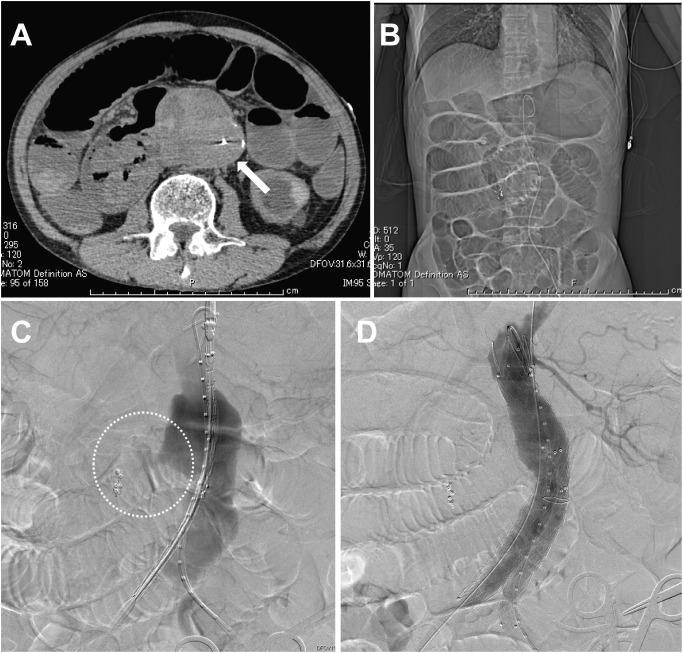
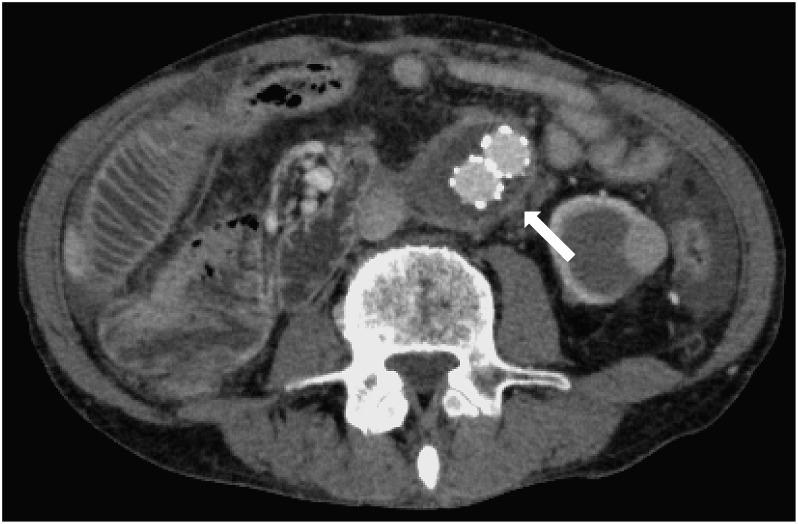
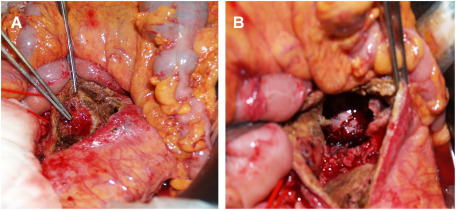
A primary aorto-duodenal fistula (ADF), a rare, spontaneous development of a communication between the aorta and duodenum, is a disastrous complication of an abdominal aortic aneurysm. A 73-year-old patient with primary ADF underwent emergent endovascular aneurysm repair (EVAR), followed by staged omentopexy, without removing a stent graft (SG). The patient received long-term treatment with antibiotics, and there has been no evidence of infection during a follow-up period of three years. Emergency EVAR coupled with omentopexy, may be a treatment option for primary ADF, even when it means leaving the SG in a potentially infectious site.
原发性主动脉十二指肠瘘(ADF)是一种罕见的、主动脉与十二指肠之间自发形成的连通,是腹主动脉瘤的灾难性并发症。一名患有原发性ADF的73岁患者接受了紧急血管内动脉瘤修复术(EVAR),随后进行了分期网膜固定术,未移除支架移植物(SG)。该患者接受了长期抗生素治疗,在三年的随访期内没有感染迹象。紧急EVAR联合网膜固定术可能是原发性ADF的一种治疗选择,即使这意味着将SG留在潜在的感染部位。