Bhattacharyya Sumit, Feferman Leo, Han Xiaorui, Xia Ke, Zhang Fuming, Linhardt Robert J, Tobacman Joanne K
Department of Medicine, University of Illinois at Chicago, Chicago, IL, USA.
Jesse Brown VAMC, Chicago, IL, USA.
Oncotarget. 2020 Jun 16;11(24):2327-2344. doi: 10.18632/oncotarget.27634.
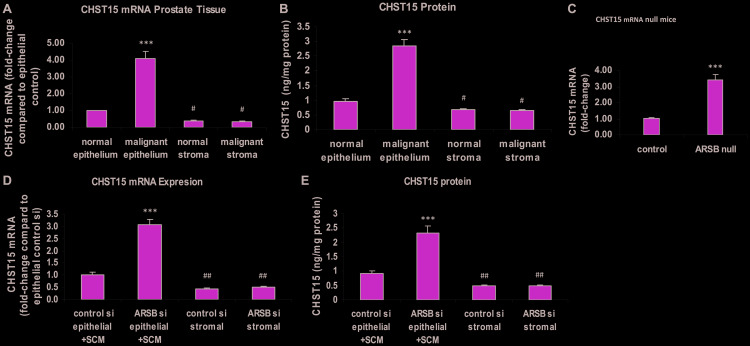
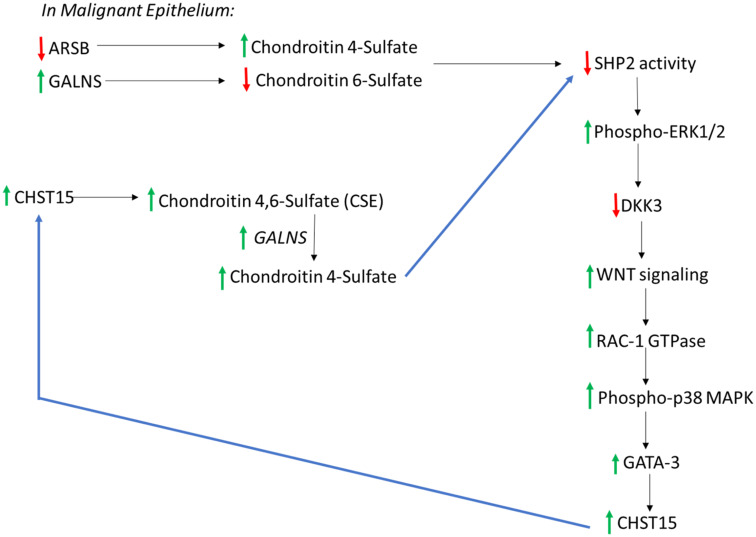
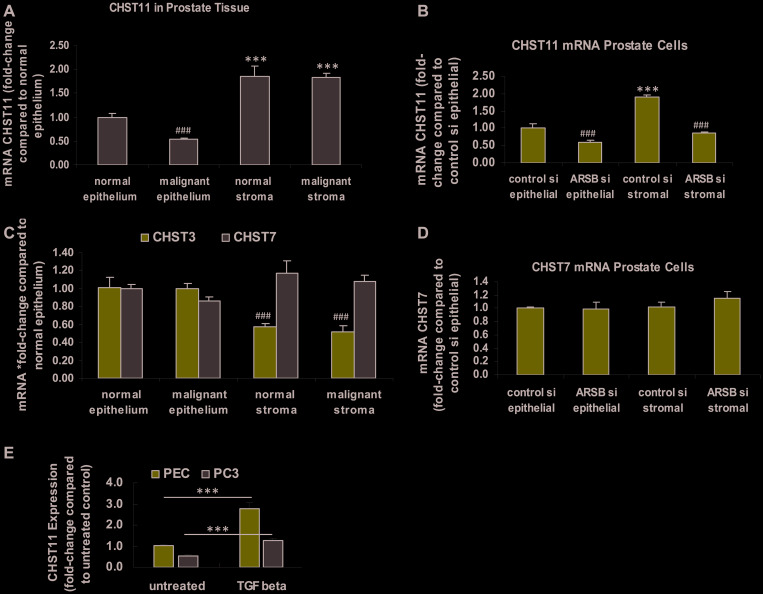
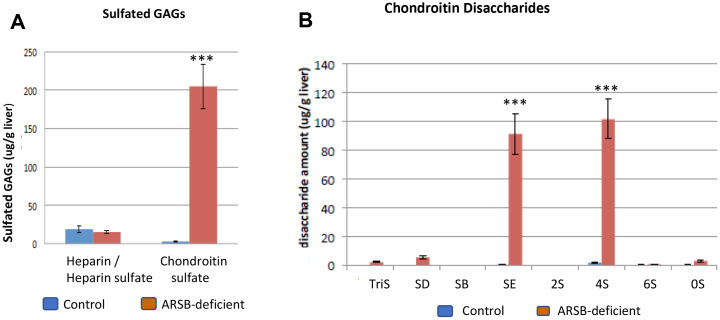
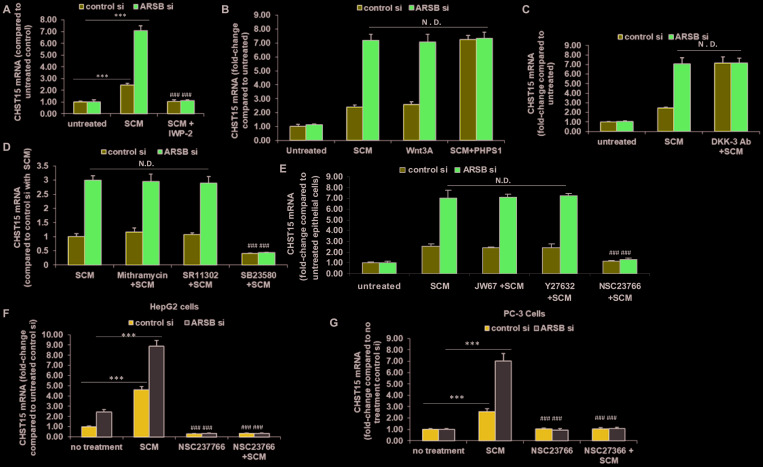
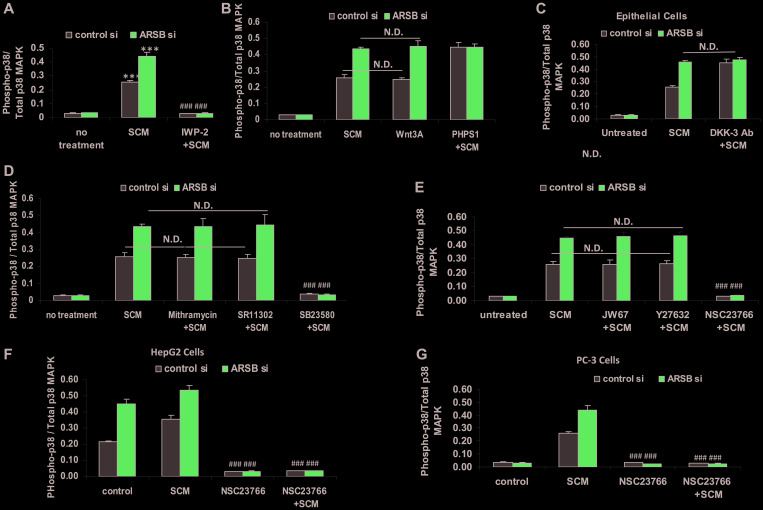
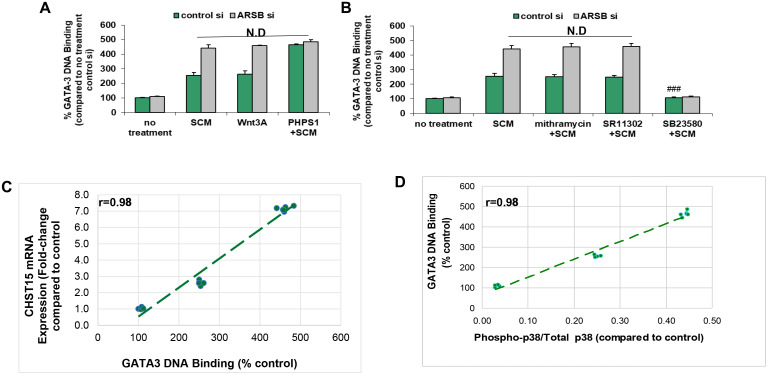
Expression of CHST15 (carbohydrate sulfotransferase 15; chondroitin 4-sulfate-6-sulfotransferase; BRAG), the sulfotransferase enzyme that adds 6-sulfate to chondroitin 4-sulfate (C4S) to make chondroitin 4,6-disulfate (chondroitin sulfate E, CSE), was increased in malignant prostate epithelium obtained by laser capture microdissection and following arylsulfatase B (ARSB; N-acetylgalactosamine-4-sulfatase) silencing in human prostate epithelial cells. Experiments in normal and malignant human prostate epithelial and stromal cells and tissues, in HepG2 cells, and in the ARSB-null mouse were performed to determine the pathway by which CHST15 expression is up-regulated when ARSB expression is reduced. Effects of Wnt-containing prostate stromal cell spent media and selective inhibitors of WNT, JNK, p38, SHP2, β-catenin, Rho, and Rac-1 signaling pathways were determined. Activation of WNT signaling followed declines in ARSB and Dickkopf WNT Signaling Pathway Inhibitor (DKK)3 and was required for increased CHST15 expression. The increase in expression of CHST15 followed activation of non-canonical WNT signaling and involved Wnt3A, Rac-1 GTPase, phospho-p38 MAPK, and nuclear DNA-bound GATA-3. Inhibition of JNK, Sp1, β-catenin nuclear translocation, or Rho kinase had no effect. Consistent with higher expression of CHST15 in prostate epithelium, disaccharide analysis showed higher levels of CSE and chondroitin 6-sulfate (C6S) disaccharides in prostate epithelial cells. In contrast, chondroitin 4-sulfate (C4S) disaccharides were greater in prostate stromal cells. CSE may contribute to increased C4S in malignant epithelium when GALNS (N-aceytylgalactosamine-6-sulfate sulfatase) is increased and ARSB is reduced. These effects increase chondroitin 4-sulfates and reduce chondroitin 6-sulfates, consistent with enhanced stromal characteristics and epithelial-mesenchymal transition.
碳水化合物硫酸转移酶15(CHST15;硫酸软骨素4 - 硫酸 - 6 - 硫酸转移酶;BRAG)是一种硫酸转移酶,可将6 - 硫酸基团添加到硫酸软骨素4(C4S)上以生成硫酸软骨素4,6 - 二硫酸酯(硫酸软骨素E,CSE)。在通过激光捕获显微切割获得的恶性前列腺上皮细胞以及人前列腺上皮细胞中芳基硫酸酯酶B(ARSB;N - 乙酰半乳糖胺 - 4 - 硫酸酯酶)沉默后,CHST15的表达增加。在正常和恶性人前列腺上皮细胞、基质细胞及组织、HepG2细胞以及ARSB基因敲除小鼠中进行了实验,以确定当ARSB表达降低时CHST15表达上调的途径。测定了含Wnt的前列腺基质细胞条件培养基以及WNT、JNK、p38、SHP2、β - 连环蛋白、Rho和Rac - 1信号通路的选择性抑制剂的作用。WNT信号的激活跟随ARSB和Dickkopf WNT信号通路抑制剂(DKK)3的下降,并且是CHST15表达增加所必需的。CHST15表达的增加跟随非经典WNT信号的激活,并且涉及Wnt3A、Rac - 1 GTP酶、磷酸化p38 MAPK和与核DNA结合的GATA - 3。抑制JNK、Sp1、β - 连环蛋白核转位或Rho激酶没有效果。与前列腺上皮细胞中CHST15的较高表达一致,二糖分析显示前列腺上皮细胞中CSE和硫酸软骨素6 - 硫酸酯(C6S)二糖的水平较高。相反,硫酸软骨素4 - 硫酸酯(C4S)二糖在前列腺基质细胞中含量更高。当N - 乙酰半乳糖胺硫酸酯酶(GALNS)增加且ARSB减少时,CSE可能导致恶性上皮细胞中C4S增加。这些作用增加了硫酸软骨素4 - 硫酸酯并减少了硫酸软骨素6 - 硫酸酯,这与增强的基质特征和上皮 - 间质转化一致。