Ohbayashi Norihiko, Fukuda Mitsunori
Faculty of Medicine and Graduate School of Comprehensive Human Sciences, University of Tsukuba, Tsukuba 305-8575, Japan.
Laboratory of Membrane Trafficking Mechanisms, Department of Integrative Life Sciences, Graduate School of Life Sciences, Tohoku University, Miyagi 980-8578, Japan.
F1000Res. 2020 Jun 15;9. doi: 10.12688/f1000research.24625.1. eCollection 2020.
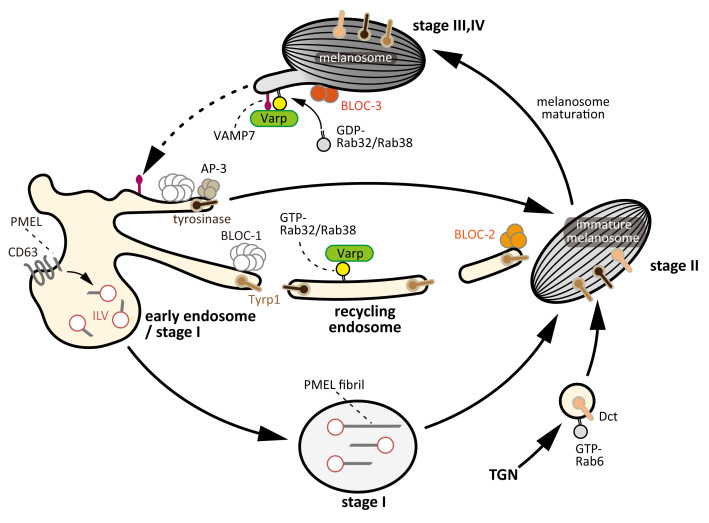
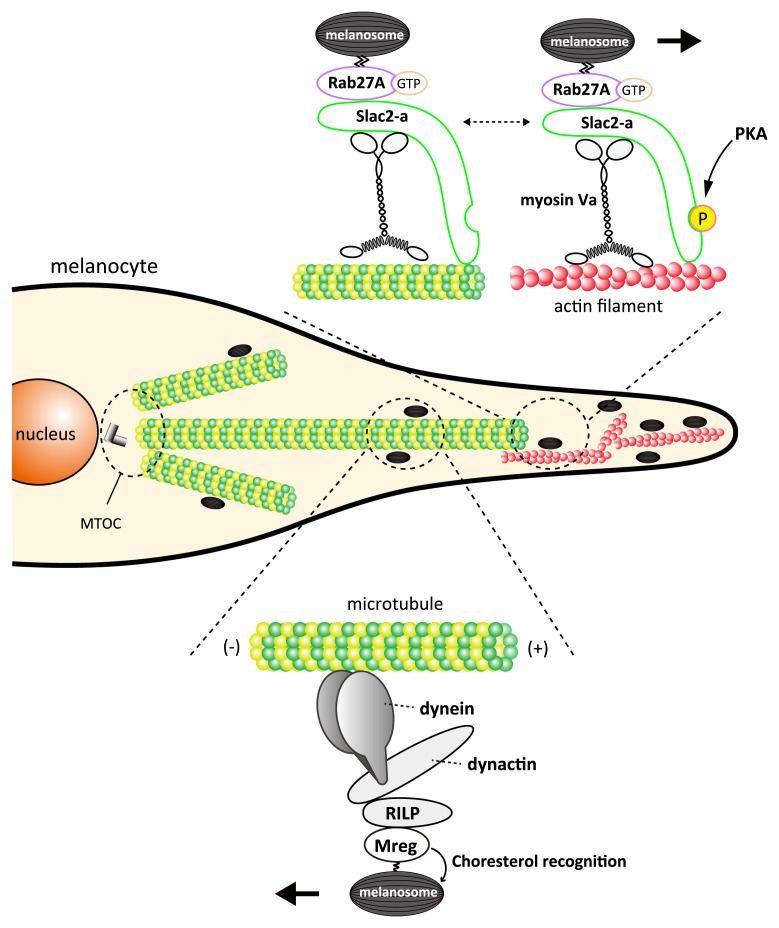
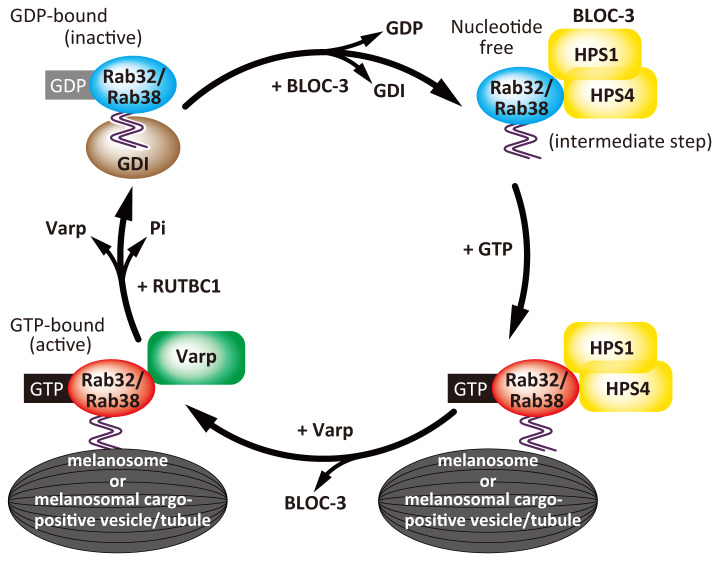
Melanin pigments are responsible for human skin and hair color, and they protect the body from harmful ultraviolet light. The black and brown melanin pigments are synthesized in specialized lysosome-related organelles called melanosomes in melanocytes. Mature melanosomes are transported within melanocytes and transferred to adjacent keratinocytes, which constitute the principal part of human skin. The melanosomes are then deposited inside the keratinocytes and darken the skin (a process called tanning). Owing to their dark color, melanosomes can be seen easily with an ordinary light microscope, and melanosome research dates back approximately 150 years; since then, biochemical studies aimed at isolating and purifying melanosomes have been conducted. Moreover, in the last two decades, hundreds of molecules involved in regulating melanosomal functions have been identified by analyses of the genes of coat-color mutant animals and patients with genetic diseases characterized by pigment abnormalities, such as hypopigmentation. In recent years, dynamic analyses by more precise microscopic observations have revealed specific functions of a variety of molecules involved in melanogenesis. This review article focuses on the latest findings with regard to the steps (or mechanisms) involved in melanosome formation and transport of mature melanosomes within epidermal melanocytes. Finally, we will touch on current topics in melanosome research, particularly on the "melanosome transfer" and "post-transfer" steps, and discuss future directions in pigment research.
黑色素负责人类皮肤和头发的颜色,并且保护身体免受有害紫外线的伤害。黑色和棕色黑色素在黑素细胞中一种称为黑素小体的特殊的溶酶体相关细胞器中合成。成熟的黑素小体在黑素细胞内运输,并转移到相邻的角质形成细胞,角质形成细胞构成了人类皮肤的主要部分。然后黑素小体沉积在角质形成细胞内,使皮肤变黑(这一过程称为晒黑)。由于其颜色深,黑素小体在普通光学显微镜下很容易看到,黑素小体的研究可以追溯到大约150年前;从那时起,人们就进行了旨在分离和纯化黑素小体的生化研究。此外,在过去的二十年里,通过对毛色突变动物和患有色素异常(如色素减退)等遗传性疾病患者的基因分析,已经鉴定出数百种参与调节黑素小体功能的分子。近年来,通过更精确的显微镜观察进行的动态分析揭示了多种参与黑素生成的分子的特定功能。这篇综述文章重点关注黑素小体形成以及成熟黑素小体在表皮黑素细胞内运输所涉及的步骤(或机制)的最新发现。最后,我们将探讨黑素小体研究的当前热点话题,特别是“黑素小体转移”和“转移后”步骤,并讨论色素研究的未来方向。