Mo Zhuomao, Wang Yongdan, Cao Zhirui, Li Pan, Zhang Shijun
Department of Traditional Chinese Medicine, The First Affiliated Hospital, Sun Yat-sen University, Guangzhou, China.
Front Oncol. 2020 Jun 12;10:853. doi: 10.3389/fonc.2020.00853. eCollection 2020.
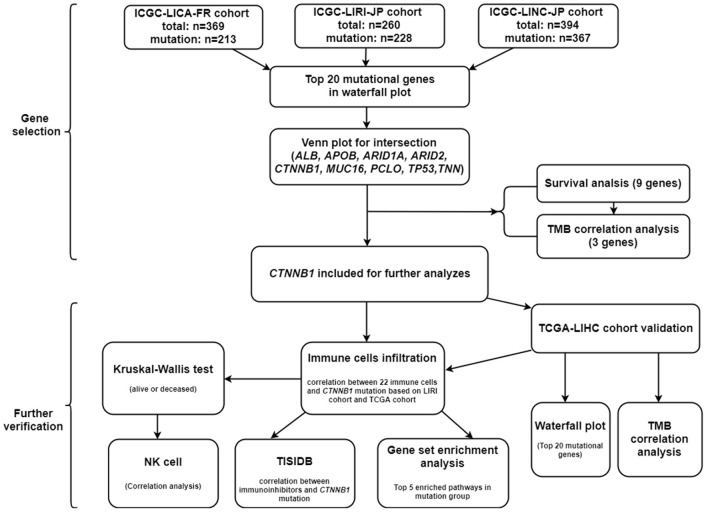
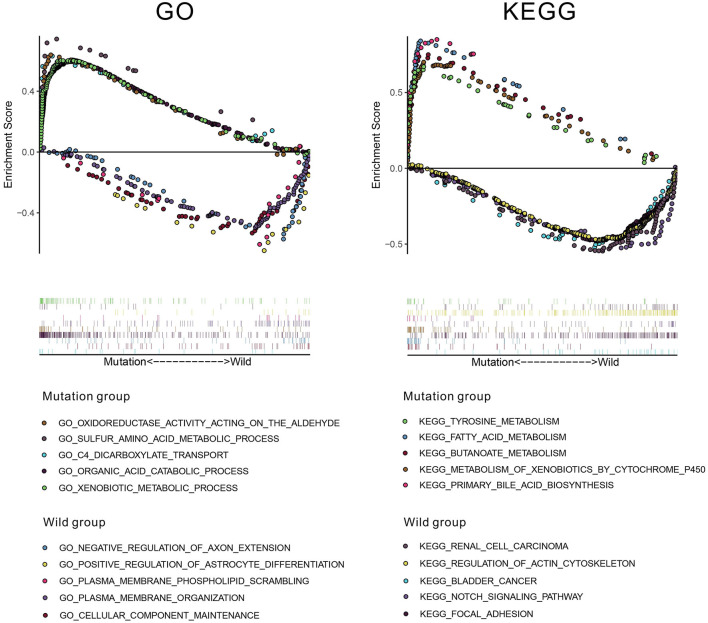
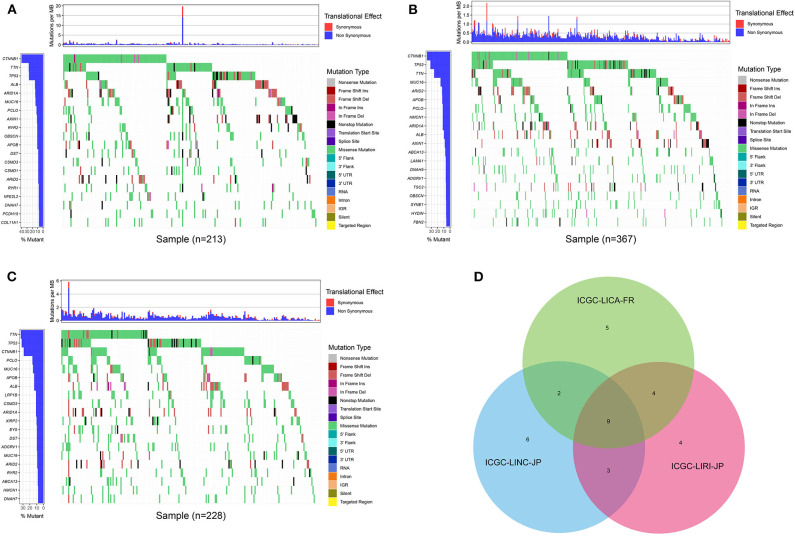
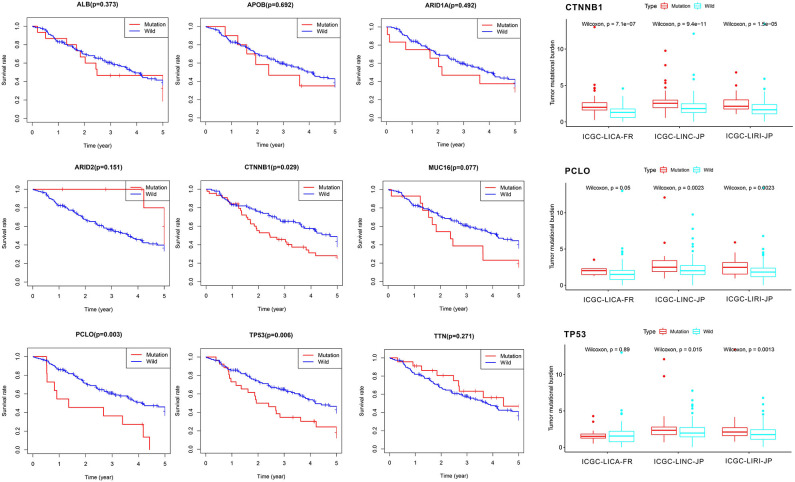
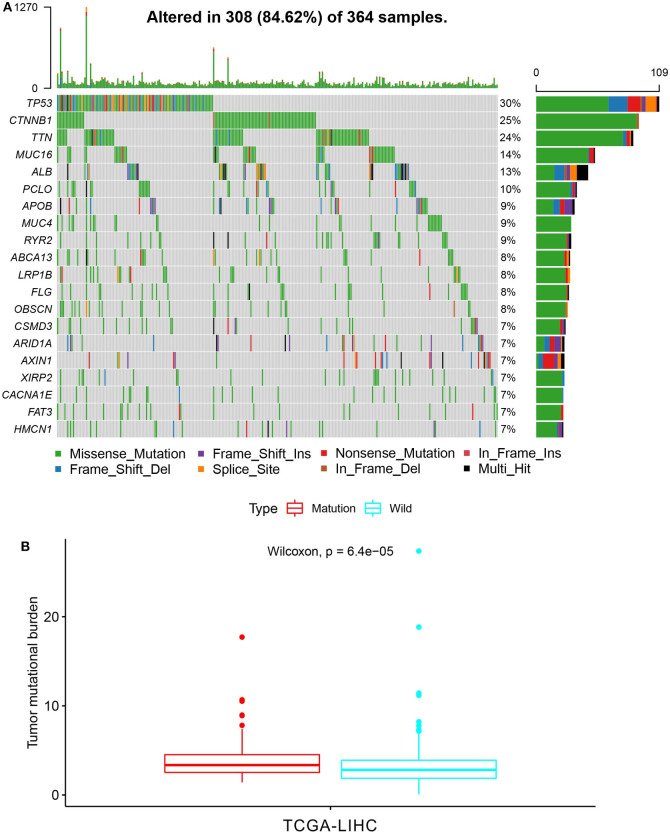
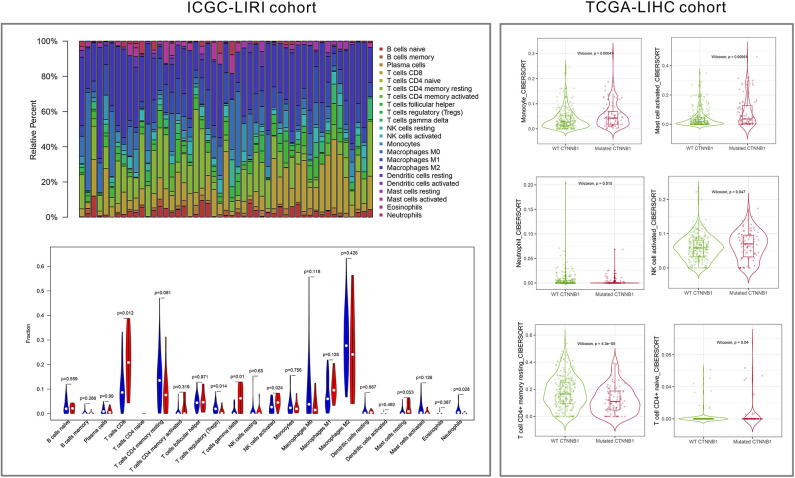
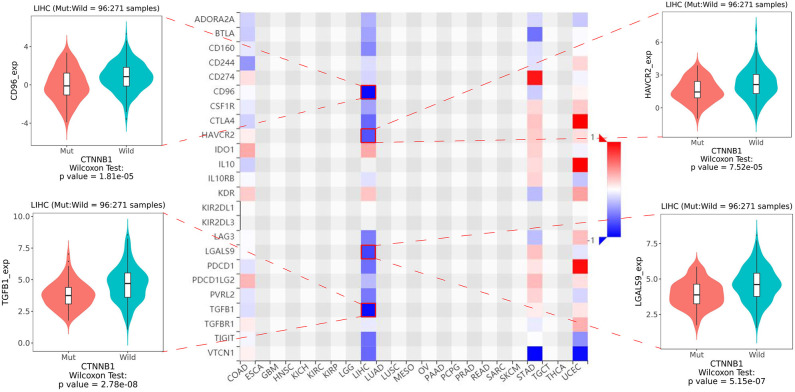
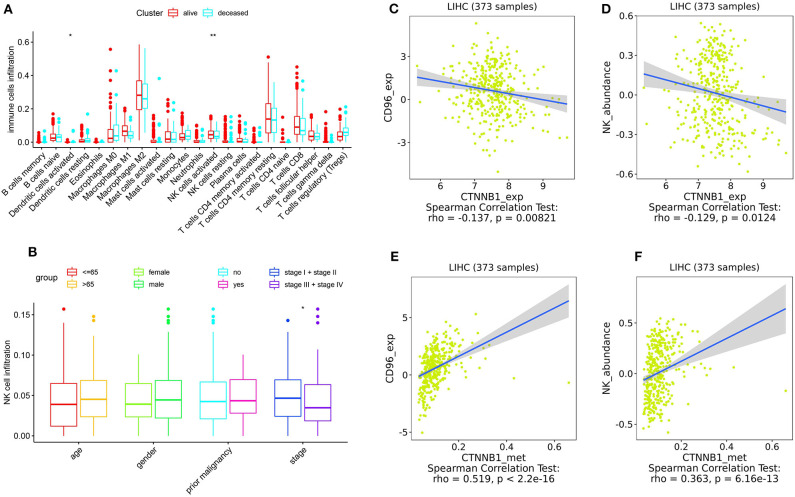
Tumor mutational burden (TMB) was verified to be closely associated with immune checkpoint inhibitors, but it is unclear whether gene mutation has an effect on immunotherapy of hepatocellular carcinoma (HCC). This research aimed to investigate the underlying correlation between gene mutation and immunotherapy in HCC. The somatic gene mutation data and gene expression data were retrieved from International Cancer Genome Consortium database and The Cancer Genome Atlas (TCGA) database. The mutational genes were selected by the intersection of three cohorts and further identified using survival analysis and TMB correlation analysis. After the identification of key mutational gene, we explored the correlation between gene mutation and both the immune cell infiltration and immune inhibitors. The signaling pathways associated with gene mutation were confirmed through gene set enrichment analysis. Furthermore, the survival analysis and mutational analysis based on TCGA cohort were performed for the validation of included gene. As one of the frequently mutational genes in HCC, was finally included in our research, for which it showed the significant result in survival analysis and the positive association with TMB of the three cohorts. Meanwhile, the validation of TCGA showed the significant results. Furthermore, natural killer (NK) cells and neutrophil were found to significantly infiltrate mutation group from two cohorts. Besides, further analysis demonstrated that four types of immune inhibitors (, and ) were downregulated in mutation group. Our research firstly revealed the underlying association between mutation and immunotherapy, and we speculated that mutation may modulate NK cells by affecting CD96. However, more functional experiments should be performed for verification.
肿瘤突变负荷(TMB)已被证实与免疫检查点抑制剂密切相关,但基因突变对肝细胞癌(HCC)免疫治疗是否有影响尚不清楚。本研究旨在探讨HCC基因突变与免疫治疗之间的潜在关联。从国际癌症基因组联盟数据库和癌症基因组图谱(TCGA)数据库中检索体细胞基因突变数据和基因表达数据。通过三个队列的交集选择突变基因,并使用生存分析和TMB相关性分析进一步鉴定。在确定关键突变基因后,我们探讨了基因突变与免疫细胞浸润和免疫抑制剂之间的相关性。通过基因集富集分析确认与基因突变相关的信号通路。此外,基于TCGA队列进行生存分析和突变分析以验证纳入基因。作为HCC中频繁突变的基因之一,最终被纳入我们的研究,因为它在生存分析中显示出显著结果,并且与三个队列的TMB呈正相关。同时,TCGA的验证显示出显著结果。此外,在两个队列中发现自然杀伤(NK)细胞和中性粒细胞在 突变组中显著浸润。此外,进一步分析表明,在 突变组中四种免疫抑制剂( 、 和 )下调。我们的研究首次揭示了 突变与免疫治疗之间的潜在关联,并且我们推测 突变可能通过影响CD96来调节NK细胞。然而,需要进行更多的功能实验来验证。 (注:原文中部分基因名称未完整给出,翻译时保留原文形式)