Nguyen Tien A, Tran Dang B, Le Hien Dat C, Nguyen Quang L, Pham Vinh
Department for Management of Science and Technology Development, Ton Duc Thang University, Ho Chi Minh City 700000, Vietnam.
Faculty of Applied Sciences, Ton Duc Thang University, Ho Chi Minh City 700000, Vietnam.
ACS Omega. 2020 Jun 12;5(24):14481-14493. doi: 10.1021/acsomega.0c01129. eCollection 2020 Jun 23.
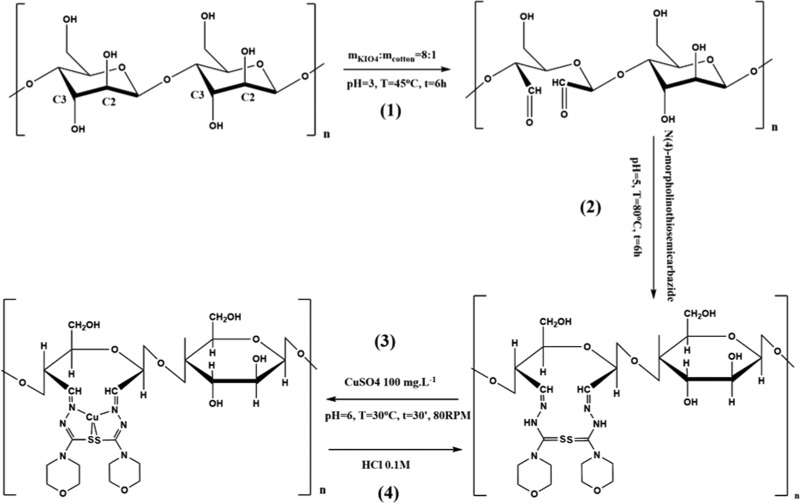
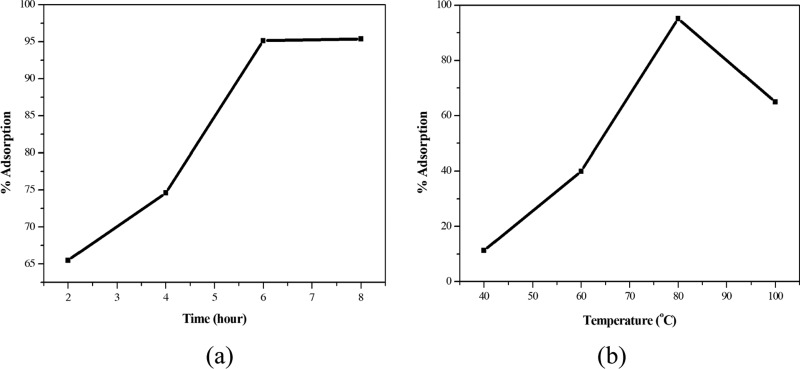
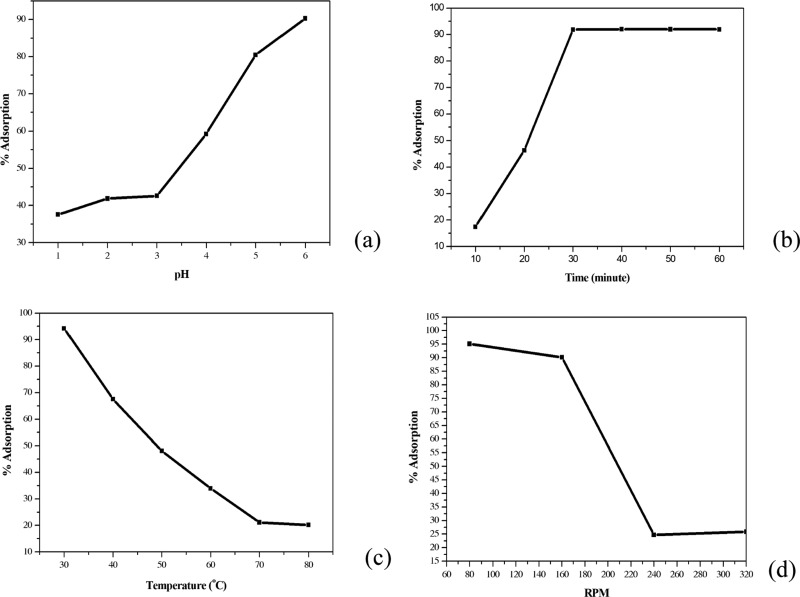
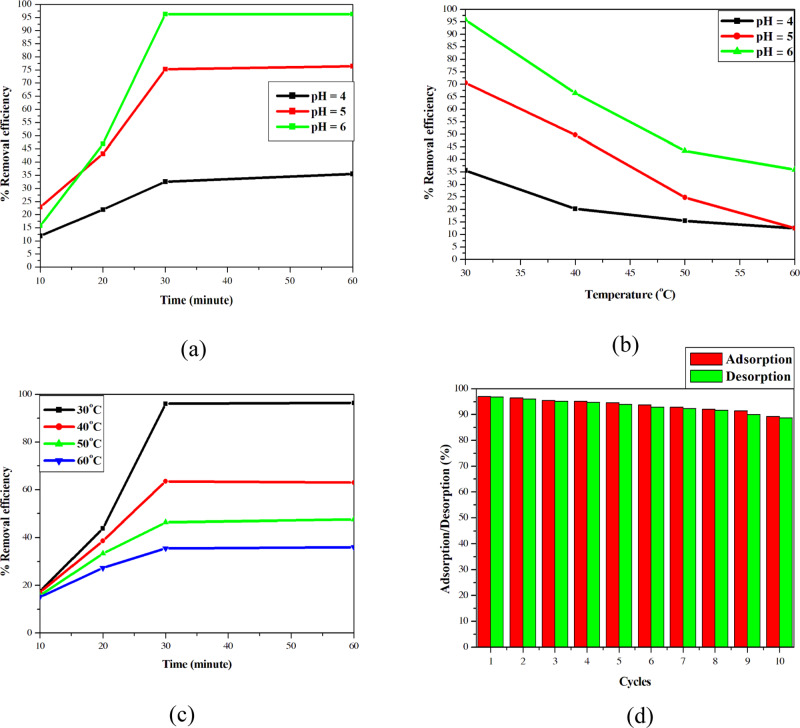
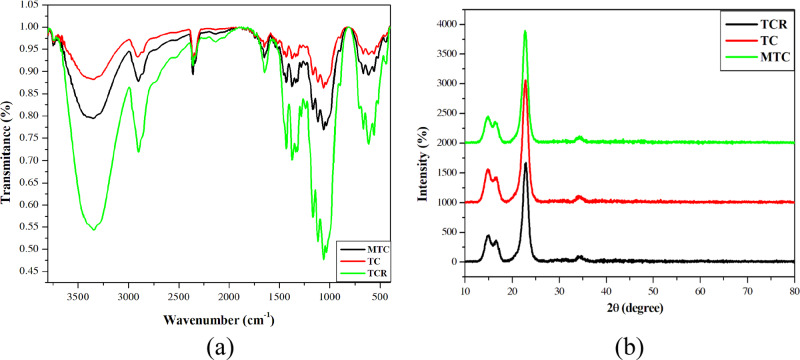
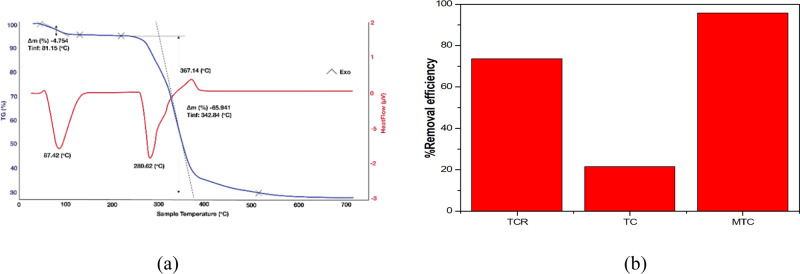
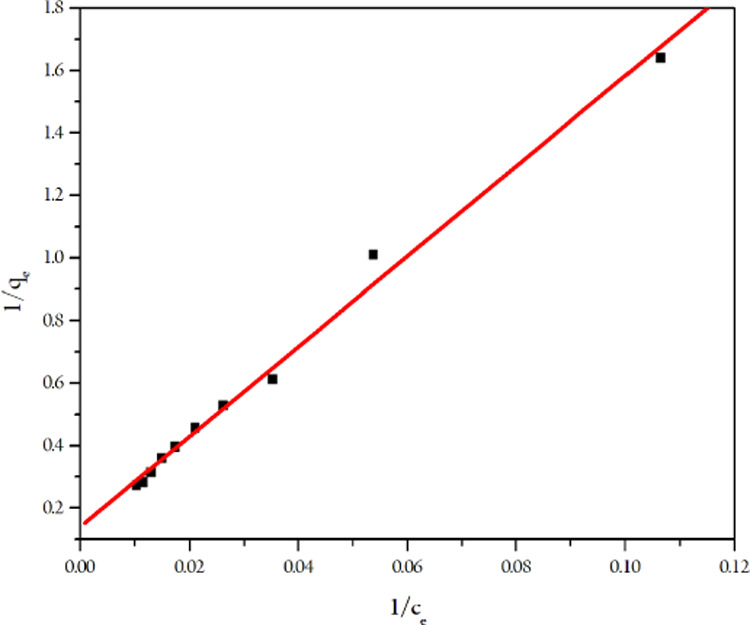
Thiosemicarbazide-modified cellulose (MTC) has been studied for removing heavy metals in the water source or for extracting some precious metals. The conditions of synthesis of MTC and Cu(II) removal were optimized by single-variable analysis through oxidation-reduction on titration and photometry. The results of Fourier-transform infrared spectroscopy, Brunauer-Emmett-Teller, and thermogravimetric analyses show that MTC exists in the thioketone form with a high surface area and heat durability. The Cu(II) removal was of pseudo-second order and the isotherm equation correlated best with the Langmuir equation. MTC has the maximum capacity of adsorption, which is = 106.3829 mg g. Furthermore, MTC can be regenerated without the loss of adsorption efficiency after ten cycles of adsorption and desorption.
硫代氨基脲改性纤维素(MTC)已被研究用于去除水源中的重金属或提取一些贵金属。通过滴定和光度法的氧化还原单变量分析,优化了MTC的合成条件和对Cu(II)的去除条件。傅里叶变换红外光谱、布鲁诺尔-埃米特-泰勒和热重分析结果表明,MTC以硫酮形式存在,具有高比表面积和热耐久性。对Cu(II)的去除符合准二级动力学,等温方程与朗缪尔方程相关性最佳。MTC具有最大吸附容量,即 = 106.3829 mg g。此外,经过十次吸附-解吸循环后,MTC可以再生且吸附效率不损失。