Mannino Mark H, Patel Rishi S, Eccardt Amanda M, Janowiak Blythe E, Wood David C, He Fahu, Fisher Jonathan S
Department of Biology, Saint Louis University, St. Louis, MO 63103, USA.
Department of Biochemistry and Molecular Biology, Saint Louis University, St. Louis, MO 63104, USA.
Antioxidants (Basel). 2020 Jun 24;9(6):549. doi: 10.3390/antiox9060549.
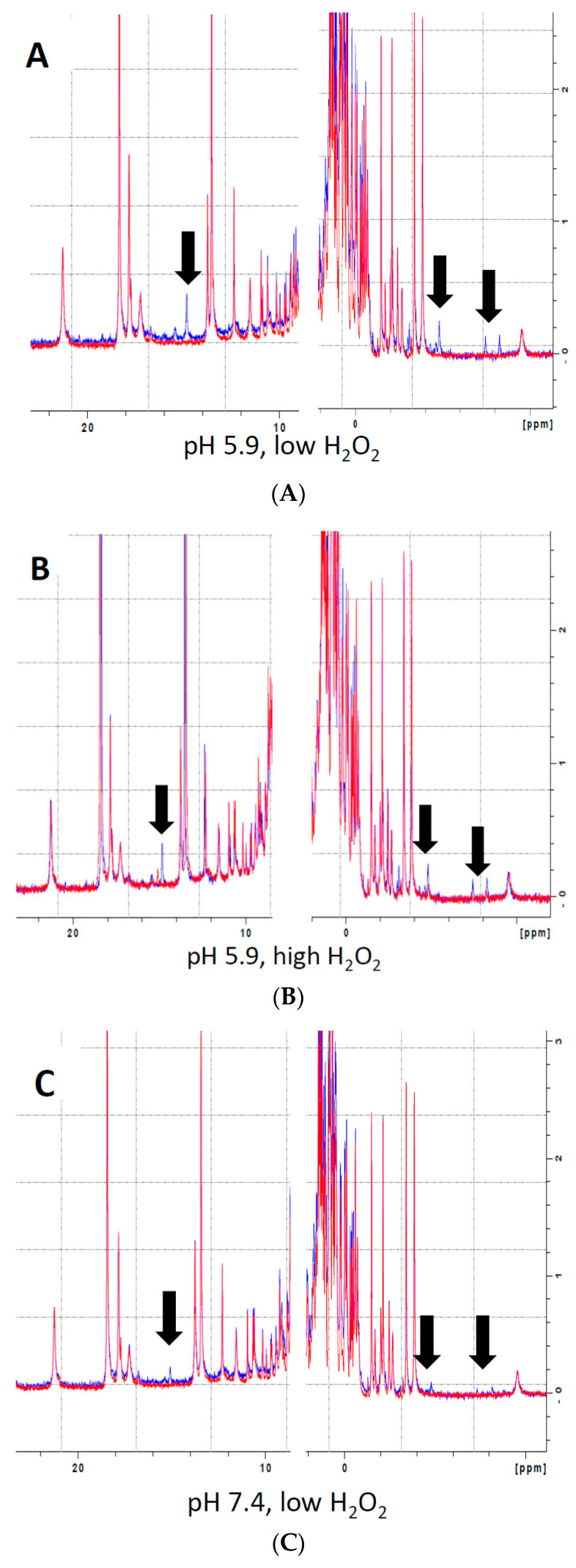
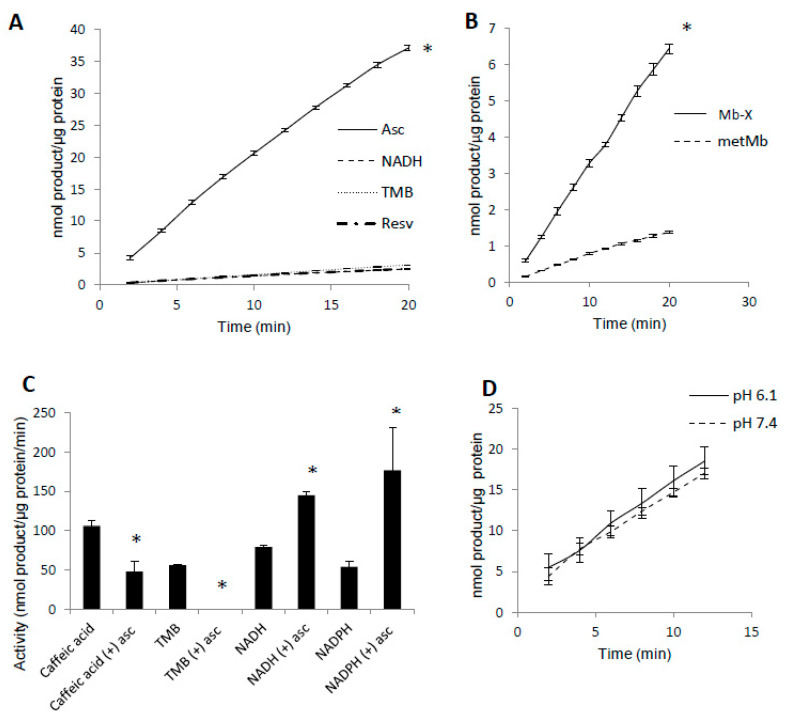
Myoglobin (Mb), an oxygen-binding heme protein highly expressed in heart and skeletal muscle, has been shown to undergo oxidative modifications on both an inter- and intramolecular level when exposed to hydrogen peroxide (HO) in vitro. Here, we show that exposure to HO increases the peroxidase activity of Mb. Reaction of Mb with HO causes covalent binding of heme to the Mb protein (Mb-X), corresponding to an increase in peroxidase activity when ascorbic acid is the reducing co-substrate. Treatment of HO-reacted Mb with ascorbic acid reverses the Mb-X crosslink. Reaction with HO causes Mb to form dimers, trimers, and larger molecular weight Mb aggregates, and treatment with ascorbic acid regenerates Mb monomers. Reaction of Mb with HO causes formation of dityrosine crosslinks, though the labile nature of the crosslinks broken by treatment with ascorbic acid suggests that the reversible aggregation of Mb is mediated by crosslinks other than dityrosine. Disappearance of a peptide containing a tryptophan residue when Mb is treated with HO and the peptide's reappearance after subsequent treatment with ascorbic acid suggest that tryptophan side chains might participate in the labile crosslinking. Taken together, these data suggest that while exposure to HO causes Mb-X formation, increases Mb peroxidase activity, and causes Mb aggregation, these oxidative modifications are reversible by treatment with ascorbic acid. A caveat is that future studies should demonstrate that these and other in vitro findings regarding properties of Mb have relevance in the intracellular milieu, especially in regard to actual concentrations of metMb, HO, and ascorbate that would be found in vivo.
肌红蛋白(Mb)是一种在心脏和骨骼肌中高度表达的氧结合血红素蛋白,体外实验表明,当暴露于过氧化氢(HO)时,它会在分子间和分子内水平上发生氧化修饰。在此,我们发现暴露于HO会增加Mb的过氧化物酶活性。Mb与HO反应导致血红素与Mb蛋白共价结合(Mb-X),当以抗坏血酸作为还原共底物时,这对应于过氧化物酶活性的增加。用抗坏血酸处理HO反应后的Mb可逆转Mb-X交联。与HO反应会使Mb形成二聚体、三聚体以及更大分子量的Mb聚集体,而用抗坏血酸处理可使Mb单体再生。Mb与HO反应会导致二酪氨酸交联的形成,不过用抗坏血酸处理会破坏这种交联的不稳定性,这表明Mb的可逆聚集是由除二酪氨酸之外的交联介导的。用HO处理Mb时,含有色氨酸残基的肽段消失,随后用抗坏血酸处理后该肽段重新出现,这表明色氨酸侧链可能参与了这种不稳定的交联。综上所述,这些数据表明,虽然暴露于HO会导致Mb-X形成、增加Mb过氧化物酶活性并导致Mb聚集,但这些氧化修饰可通过用抗坏血酸处理而逆转。需要注意的是,未来的研究应证明这些以及其他关于Mb性质的体外研究结果在细胞内环境中具有相关性,特别是在体内实际存在的高铁肌红蛋白、HO和抗坏血酸盐浓度方面。