Center of Integrated Protein Science Munich (CIPS-M) and Division of Clinical Pharmacology, University Hospital, Ludwig-Maximilians-Universität München, Munich, Germany; Department of Medicine II, University Hospital, Ludwig-Maximilians-Universität München, Munich, Germany.
Department of Pediatrics, Dr. von Hauner Children's Hospital, University Hospital, Ludwig-Maximilians-Universität München, Munich, Germany.
J Allergy Clin Immunol Pract. 2020 Oct;8(9):3102-3111. doi: 10.1016/j.jaip.2020.06.034. Epub 2020 Jun 27.
Complete signal transducer and activator of transcription 1 (STAT1) deficiency causes a rare primary immunodeficiency that is characterized by defective IFN-dependent gene expression leading to life-threatening viral and mycobacterial infections early in life.
To characterize a novel STAT1 loss-of-function variant leading to pathological infection susceptibility and hyperinflammation.
Clinical, immunologic, and genetic characterization of a patient with severe infections and hemophagocytic lymphohistiocytosis-like hyperinflammation was investigated.
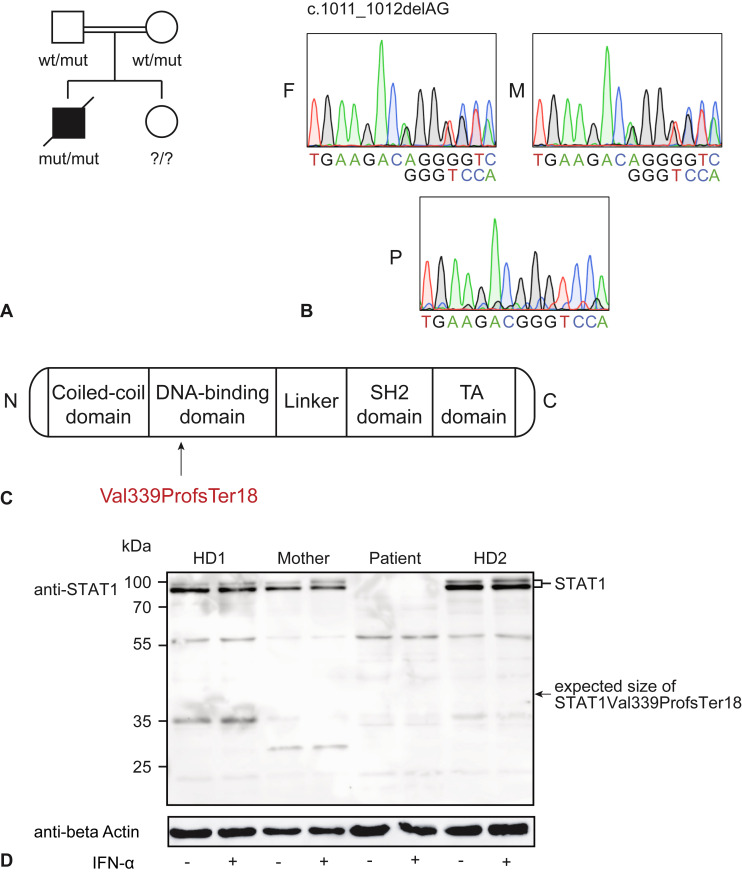
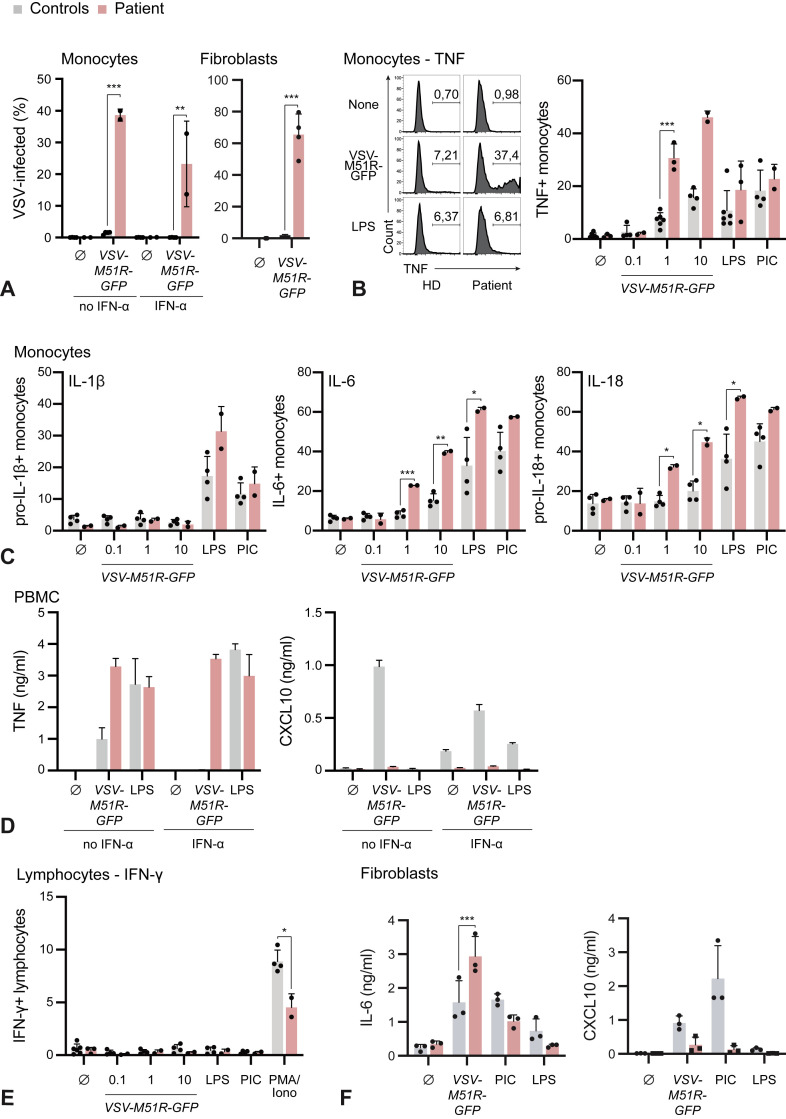
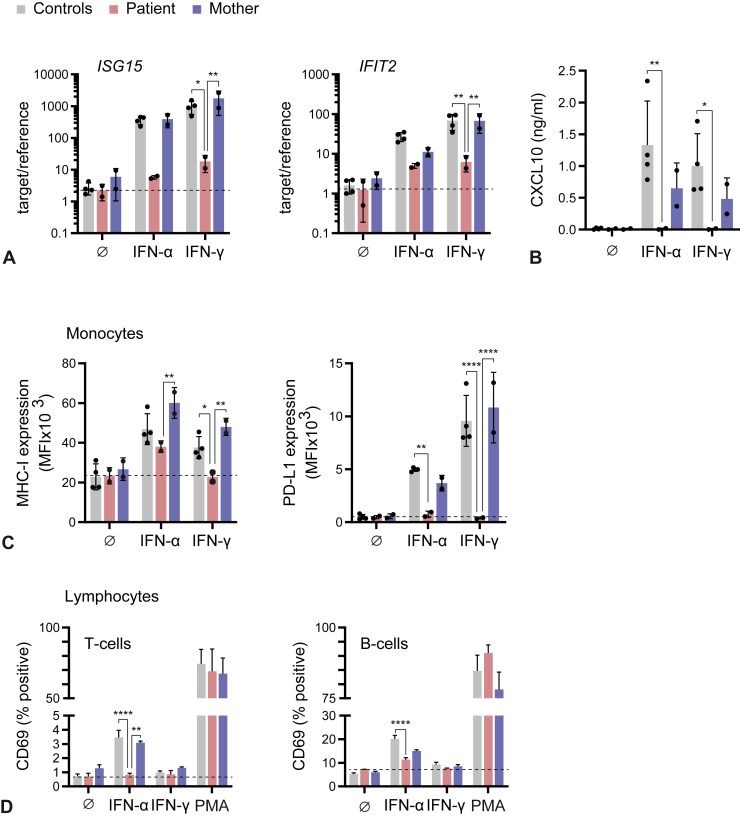
We reported a child of consanguineous parents who presented with multiple severe viral infections that ultimately triggered hemophagocytic lymphohistiocytosis and liver failure. Despite intensified therapy with antivirals and cytomegalovirus-specific donor cells, the child died after hematopoietic stem cell transplantation because of cytomegalovirus reactivation with acute respiratory distress syndrome. Exome sequencing revealed a homozygous STAT1 variant (p.Val339ProfsTer18), leading to loss of STAT1 protein expression. Upon type I and type II IFN stimulation, immune and nonimmune cells showed defective upregulation of IFN-stimulated genes and increased susceptibility to viral infection in vitro. Increased viral infection rates were paralleled by hyperinflammatory ex vivo cytokine responses with increased production of TNF, IL-6, and IL-18.
Complete STAT1 deficiency is a devastating disorder characterized by severe viral infections and ensuing hyperinflammatory responses. Early diagnosis can be made by exome sequencing and variant validation by functional testing of STAT1-dependent programmed cell death 1 ligand 1 surface expression on monocytes. Furthermore, high awareness for hyperinflammatory complications and potential targeted treatment strategies such as IL-18 binding protein could be considered. Hematopoietic stem cell transplantation is the only definitive treatment strategy but remains challenging.
完全信号转导子和转录激活子 1(STAT1)缺陷导致一种罕见的原发性免疫缺陷,其特征是 IFN 依赖性基因表达缺陷,导致生命威胁性的病毒和分枝杆菌感染在生命早期发生。
描述一种新的 STAT1 功能丧失变异体,导致病理性感染易感性和过度炎症。
对一名患有严重感染和噬血细胞性淋巴组织细胞增生症样过度炎症的患者进行临床、免疫和遗传特征分析。
我们报告了一名近亲父母所生的孩子,他患有多种严重的病毒感染,最终引发噬血细胞性淋巴组织细胞增生症和肝功能衰竭。尽管接受了抗病毒药物和巨细胞病毒特异性供体细胞的强化治疗,但该患儿在造血干细胞移植后因巨细胞病毒再激活伴急性呼吸窘迫综合征而死亡。外显子组测序显示存在一个 STAT1 变异体(p.Val339ProfsTer18),导致 STAT1 蛋白表达缺失。在 I 型和 II 型 IFN 刺激下,免疫和非免疫细胞显示 IFN 刺激基因的上调缺陷和体外对病毒感染的易感性增加。病毒感染率的增加与体外细胞因子反应过度炎症平行,表现为 TNF、IL-6 和 IL-18 的产生增加。
完全的 STAT1 缺陷是一种严重的疾病,其特征是严重的病毒感染和随之而来的过度炎症反应。通过外显子组测序可以做出早期诊断,并通过功能性检测 STAT1 依赖性程序性细胞死亡配体 1 表面表达来验证变异体。此外,应高度警惕过度炎症并发症,并考虑潜在的靶向治疗策略,如 IL-18 结合蛋白。造血干细胞移植是唯一的确定性治疗策略,但仍具有挑战性。