Maimonides Biomedical Research Institute of Cordoba (IMIBIC), 14004 Córdoba, Spain.
Department of Psychology, University of Cordoba, 14071 Córdoba, Spain.
Nutrients. 2020 Jun 27;12(7):1903. doi: 10.3390/nu12071903.
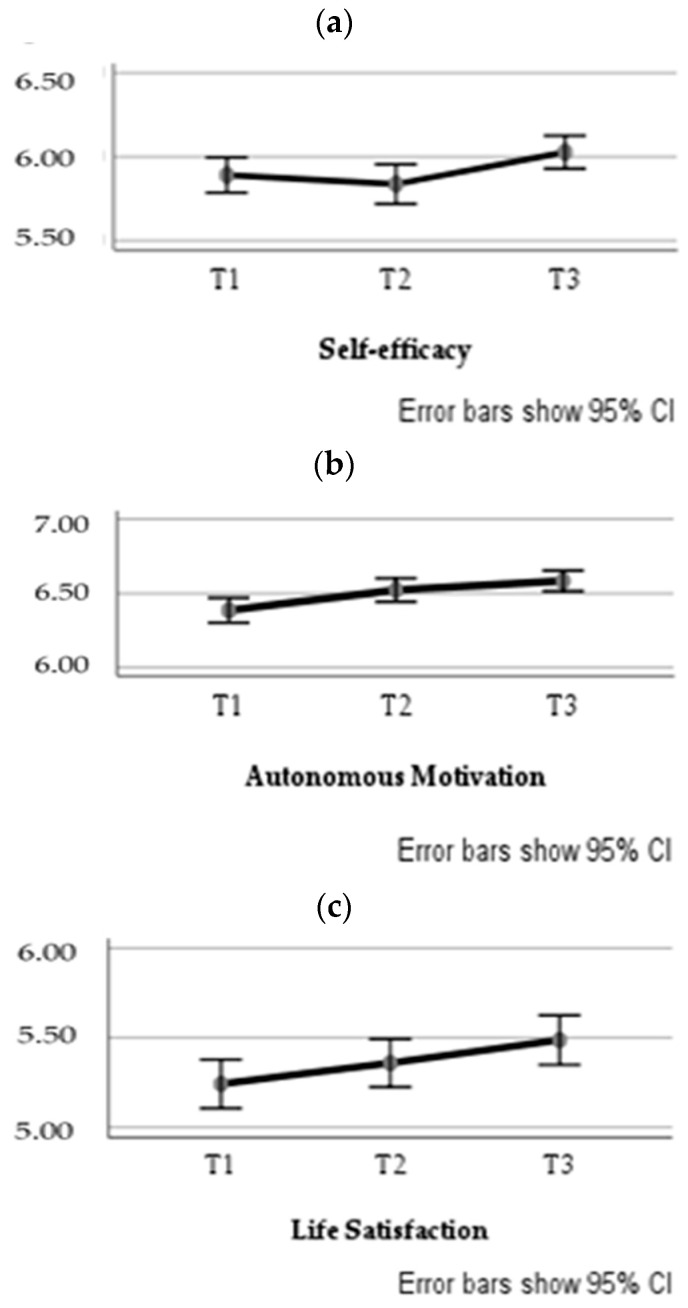
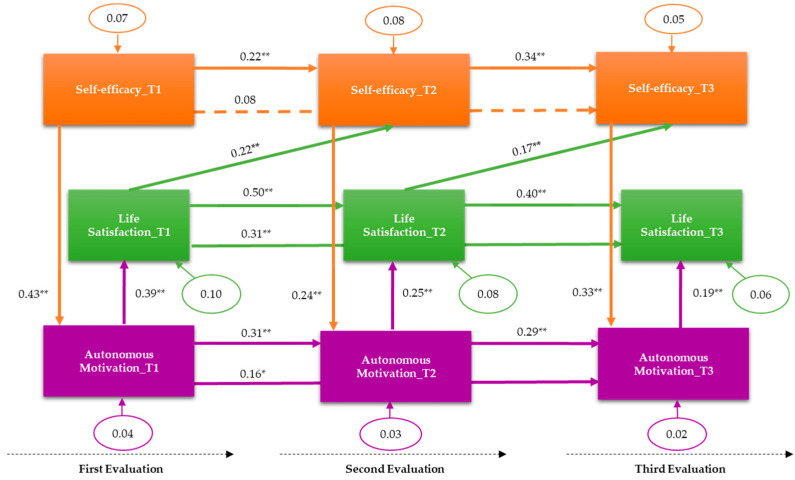
Today, cardiovascular disease has a great impact on the global population due to its high prevalence. One challenge that cardiovascular patients face to achieve a better prognosis is to follow a healthy diet. This study focused on psychological factors linked to adaptation to a healthy diet in these patients. The main objective was to analyze the interrelationship between motivation to follow a healthy diet and self-efficacy to adhere to the Mediterranean diet with life satisfaction over time. The sample consisted of cardiovascular patients who were assessed at three measurement moments (NT1 = 755; NT2 = 593; NT3 = 323, average interval time: nine months). Correlation analyses showed that self-efficacy, motivation, and life satisfaction followed a pattern of positive relations across the three measurements. A time effect over the study variables was also observed. The results of path analyses showed that self-efficacy positively predicted autonomous motivation, which in turn was associated with patients' life satisfaction. This interrelation was stable over a period of 18 months. Moreover, life satisfaction predicted self-efficacy nine months later. Psychological interventions might be a positive resource for cardiovascular patients, since psychological variables influence their life satisfaction and their subsequent quality of life in their new health condition.
如今,心血管疾病的高发病率对全球人口健康造成了巨大影响。心血管疾病患者面临的一个挑战是遵循健康饮食以获得更好的预后。本研究重点关注与这些患者适应健康饮食相关的心理因素。主要目的是分析动机和自我效能感与生活满意度随时间的变化与坚持地中海饮食之间的相互关系。该样本包括在三个测量时间点(NT1 = 755;NT2 = 593;NT3 = 323,平均间隔时间:九个月)接受评估的心血管患者。相关性分析表明,自我效能感、动机和生活满意度在三个测量中均呈现出积极的关系模式。研究变量也观察到了时间效应。路径分析的结果表明,自我效能感正向预测自主动机,而自主动机又与患者的生活满意度相关。这种相互关系在 18 个月的时间内保持稳定。此外,生活满意度在 9 个月后预测了自我效能感。心理干预可能是心血管疾病患者的一个积极资源,因为心理变量会影响他们的生活满意度以及他们在新的健康状况下的生活质量。