College of Pharmaceutical Sciences, Medical Research Institute, Southwest University, Chongqing, 400715, PR China.
Engineer Research Center of Chongqing Pharmaceutical Process and Quality Control, Chongqing, 400715, PR China.
BMC Pharmacol Toxicol. 2020 Jun 30;21(1):48. doi: 10.1186/s40360-020-00427-0.
Prescription of second-generation antipsychotic drugs (SGAs) to childhood/adolescent has exponentially increased in recent years, which was associated with the greater risk of significant weight gain and dyslipidemia. Statin is considered a potential preventive and treatment approach for reducing SGA-induced weight gain and dyslipidemia in schizophrenia patients. However, the effect of statin treatment in children and adolescents with SGA-induced dyslipidemia is not clearly demonstrated.
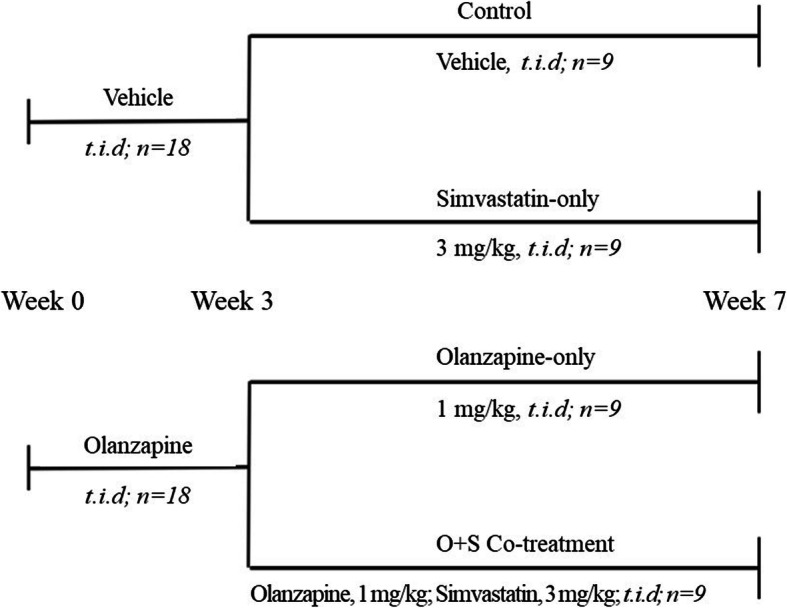
To investigate the efficacy of statin interventions for reversing SGA-induced dyslipidemia, young Sprague Dawley rats were treated orally with either olanzapine (1.0 mg/kg, t.i.d.), simvastatin (3.0 mg/kg, t.i.d.), olanzapine plus simvastatin (O + S), or vehicle (control) for 5 weeks.
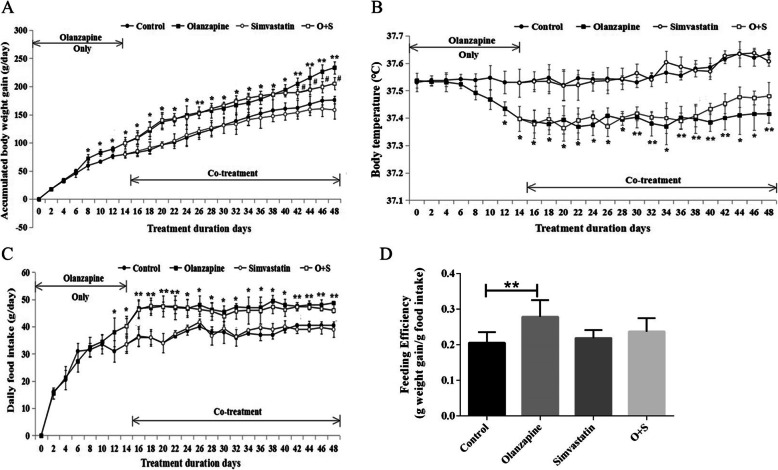
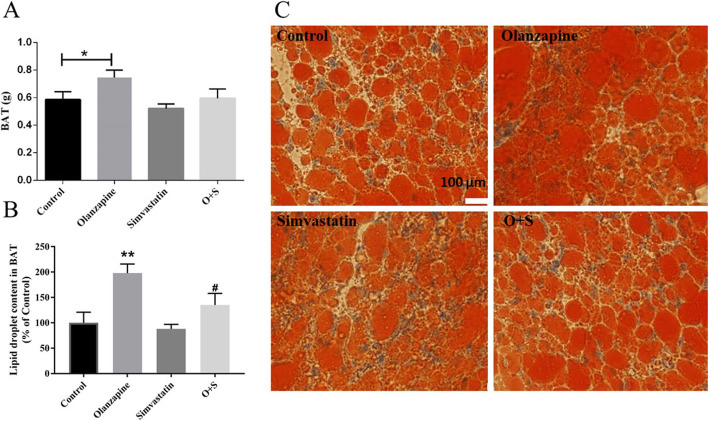
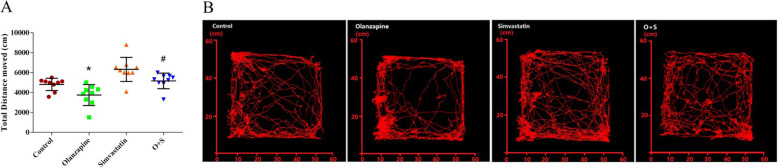
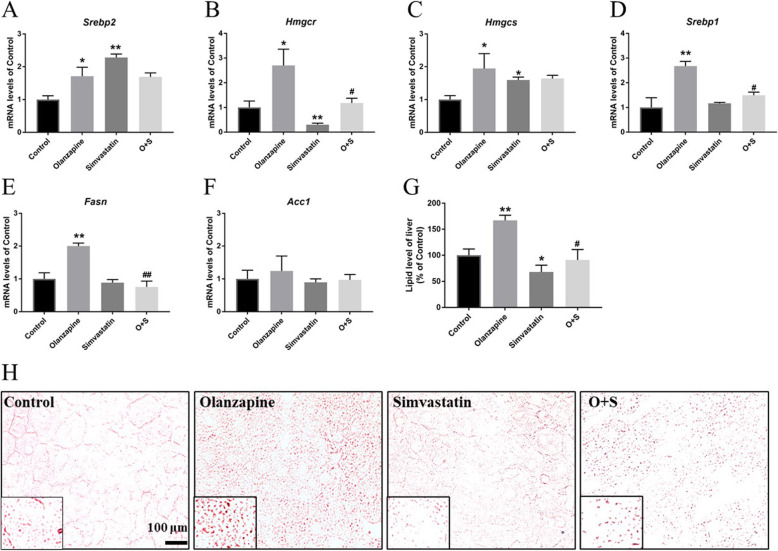
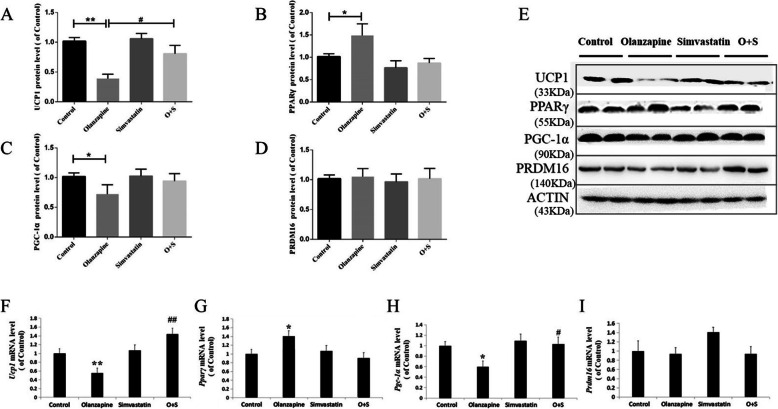
Olanzapine treatment increased weight gain, food intake and feeding efficiency compared to the control, while O + S co-treatment significantly reversed body weight gain but without significant effects on food intake. Moreover, olanzapine treatment induced a slight but significant reduction in body temperature, with a decrease in locomotor activity. Fasting plasma glucose, triglycerides (TG), and total cholesterol (TC) levels were markedly elevated in the olanzapine-only group, whereas O + S co-treatment significantly ameliorated these changes. Pronounced activation of lipogenic gene expression in the liver and down-regulated expression of uncoupling protein-1 (UCP1) and peroxisome-proliferator-activated receptor-γ co-activator-1α (PGC-1α) in brown adipose tissue (BAT) was observed in the olanzapine-only group. Interestingly, these protein changes could be reversed by co-treatment with O + B.
Simvastatin is effective in ameliorating TC and TG elevated by olanzapine. Modulation of BAT activity by statins could be a partial mechanism in reducing metabolic side effects caused by SGAs in child and adolescent patients.
近年来,第二代抗精神病药物(SGAs)在儿童和青少年中的处方呈指数级增长,这与体重显著增加和血脂异常的风险增加有关。他汀类药物被认为是一种潜在的预防和治疗方法,可以减少精神分裂症患者因 SGA 引起的体重增加和血脂异常。然而,他汀类药物治疗在 SGA 引起的血脂异常的儿童和青少年中的效果尚不清楚。
为了研究他汀类药物干预逆转 SGA 引起的血脂异常的疗效,将年轻的 Sprague Dawley 大鼠分别用奥氮平(1.0mg/kg,tid)、辛伐他汀(3.0mg/kg,tid)、奥氮平加辛伐他汀(O+S)或载体(对照)口服治疗 5 周。
与对照组相比,奥氮平治疗导致体重增加、食物摄入和摄食效率增加,而 O+S 联合治疗则显著逆转体重增加,但对食物摄入没有显著影响。此外,奥氮平治疗导致体温轻微但显著降低,运动活性降低。单独使用奥氮平治疗可显著升高空腹血糖、甘油三酯(TG)和总胆固醇(TC)水平,而 O+S 联合治疗可显著改善这些变化。肝脏中脂质生成基因表达明显激活,棕色脂肪组织(BAT)中解偶联蛋白-1(UCP1)和过氧化物酶体增殖物激活受体-γ共激活物-1α(PGC-1α)的表达下调,在奥氮平单独治疗组观察到。有趣的是,这些蛋白变化可通过 O+B 联合治疗逆转。
辛伐他汀可有效改善奥氮平升高的 TC 和 TG。他汀类药物调节 BAT 活性可能是减轻儿童和青少年患者 SGA 引起的代谢副作用的部分机制。