Doherty Alison Jayne, Atherton Helen, Boland Paul, Hastings Richard, Hives Lucy, Hood Kerry, James-Jenkinson Lynn, Leavey Ralph, Randell Elizabeth, Reed Janet, Taggart Laurence, Wilson Neil, Chauhan Umesh
University of Central Lancashire, Preston, UK
University of Warwick, Coventry, UK.
BJGP Open. 2020 Aug 25;4(3). doi: 10.3399/bjgpopen20X101030. Print 2020 Aug.
Globally, people with intellectual disabilities and/or autism experience health inequalities. Death occurs at a younger age and the prevalence of long-term morbidities is higher than in the general population. Despite this, their primary healthcare access rates are lower than the general population, their health needs are often unmet, and their views and experiences are frequently overlooked in research, policy, and practice.
To investigate the barriers and facilitators reported by individuals with intellectual disabilities, autism, or both, and/or their carers, to accessing and utilising primary health care for their physical and mental health needs.
DESIGN & SETTING: An integrative review was undertaken, which used systematic review methodology.
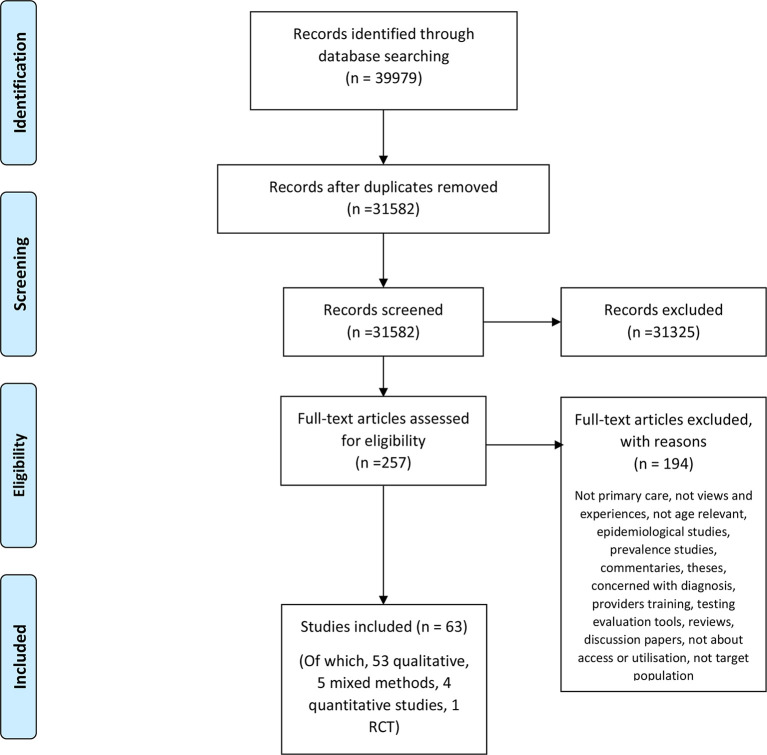
Electronic databases MEDLINE, Embase, CINAHL (Cumulative Index to Nursing and Allied Health Literature), and Cochrane were searched for relevant studies (all languages) using a search strategy. Two researchers independently screened the results and assessed the quality of the studies.
Sixty-three international studies were identified. Six main themes relating to barriers and facilitators emerged from an analysis of these studies. The main themes were: training; knowledge and awareness; communication; fear and embarrassment; involvement in healthcare decision-making; and time. All the themes were underpinned by the need for greater care, dignity, respect, collaborative relationships, and reasonable adjustments. Opposing barriers and facilitators were identified within each of the main themes.
Adolescents and adults with intellectual disabilities and/or autism experience several barriers to accessing and utilising primary health care. The findings highlight the reasonable adjustments and facilitators that can be implemented to ensure that these individuals are not excluded from primary health care.
在全球范围内,智障人士和/或自闭症患者面临健康不平等问题。他们的死亡年龄较轻,长期疾病的患病率高于普通人群。尽管如此,他们获得初级医疗保健的比例低于普通人群,他们的健康需求往往得不到满足,并且在研究、政策和实践中,他们的观点和经历常常被忽视。
调查智障人士、自闭症患者或两者兼具的患者及其照顾者在获得和利用初级医疗保健以满足其身心健康需求方面所报告的障碍和促进因素。
采用系统综述方法进行综合综述。
使用检索策略在电子数据库MEDLINE、Embase、CINAHL(护理学与健康相关文献累积索引)和Cochrane中检索相关研究(所有语言)。两名研究人员独立筛选结果并评估研究质量。
共识别出63项国际研究。对这些研究的分析得出了与障碍和促进因素相关的六个主要主题。主要主题包括:培训;知识与意识;沟通;恐惧与尴尬;参与医疗决策;以及时间。所有主题都基于对更多关怀、尊严、尊重、合作关系和合理调整的需求。在每个主要主题中都发现了相互对立的障碍和促进因素。
智障和/或自闭症青少年及成年人在获得和利用初级医疗保健方面面临若干障碍。研究结果突出了可以实施的合理调整和促进因素,以确保这些人不被排除在初级医疗保健之外。