Interventional Neuroradiology, West Virginia University Rockefeller Neuroscience Institute, Morgantown, West Virginia, USA
Department of Neurosurgery, Massachusetts General Hospital, Boston, Massachusetts, USA.
J Neurointerv Surg. 2020 Sep;12(9):831-835. doi: 10.1136/neurintsurg-2020-016502. Epub 2020 Jun 30.
To assess the impact of COVID-19 on neurovascular research and deal with the challenges imposed by the pandemic.
A survey-based study focused on randomized controlled trials (RCTs) and single-arm studies for acute ischemic stroke and cerebral aneurysms was developed by a group of senior neurointerventionalists and sent to sites identified through the clinical trials website (https://clinicaltrials.gov/), study sponsors, and physician investigators.
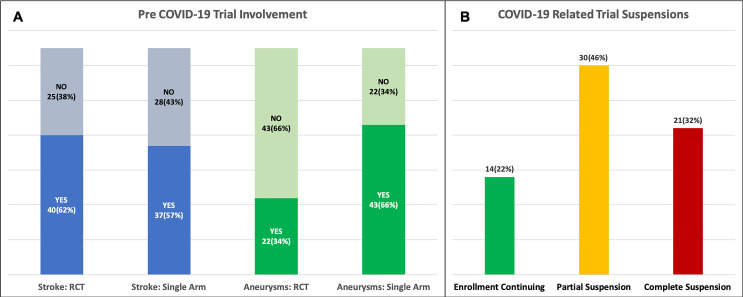
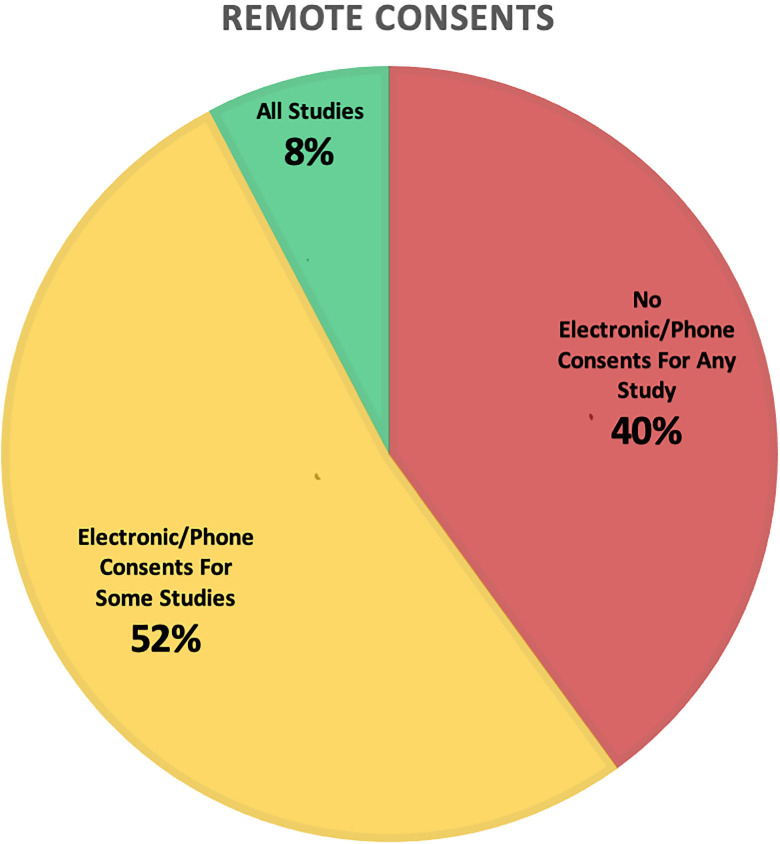
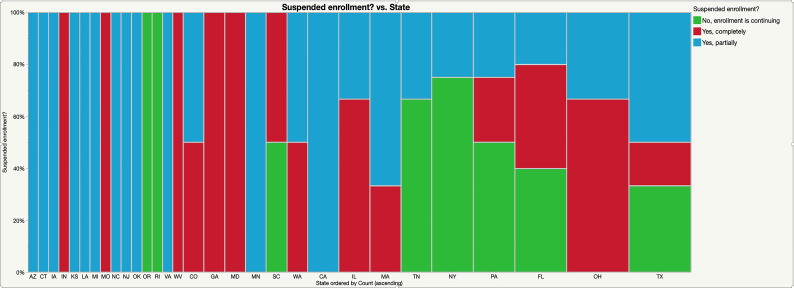
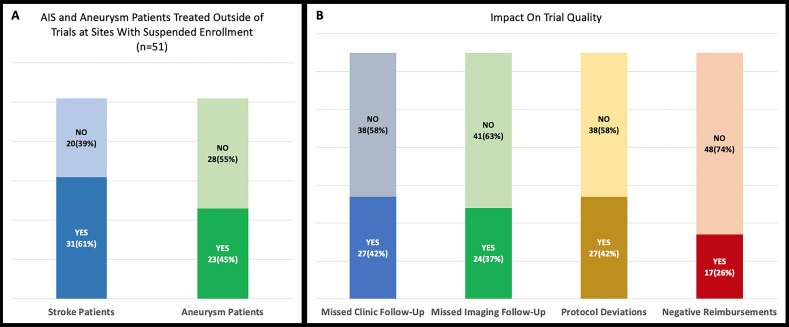
The survey was sent to 101 institutions, with 65 responding (64%). Stroke RCTs were being conducted at 40 (62%) sites, aneurysm RCTs at 22 (34%) sites, stroke single-arm studies at 37 (57%) sites, and aneurysm single-arm studies at 43 (66%) sites. Following COVID-19, enrollment was suspended at 51 (78%) sites-completely at 21 (32%) and partially at 30 (46%) sites. Missed trial-related clinics and imaging follow-ups and protocol deviations were reported by 27 (42%), 24 (37%), and 27 (42%) sites, respectively. Negative reimbursements were reported at 17 (26%) sites. The majority of sites, 49 (75%), had put new trials on hold. Of the coordinators, 41 (63%) worked from home and 20 (31%) reported a personal financial impact. Remote consent was possible for some studies at 34 (52%) sites and for all studies at 5 (8%) sites. At sites with suspended trials (n=51), endovascular treatment without enrollment occurred at 31 (61%) sites for stroke and 23 (45%) sites for aneurysms. A total of 277 patients with acute ischemic stroke and 184 with cerebral aneurysms were treated without consideration for trial enrollment.
Widespread disruption of neuroendovascular trials occurred because of COVID-19. As sites resume clinical research, steps to mitigate similar challenges in the future should be considered.
评估 COVID-19 对神经血管研究的影响,并应对大流行带来的挑战。
一组资深神经介入医师开发了一项基于调查的研究,重点关注急性缺血性脑卒中 (AIS) 和脑动脉瘤的随机对照试验 (RCT) 和单臂研究,并通过临床试验网站 (https://clinicaltrials.gov/)、研究赞助商和医师研究者确定的地点发送该调查。
该调查共发送至 101 个机构,其中 65 个机构做出回应(64%)。40 个(62%)地点正在进行脑卒中 RCT,22 个(34%)地点进行动脉瘤 RCT,37 个(57%)地点进行脑卒中单臂研究,43 个(66%)地点进行动脉瘤单臂研究。COVID-19 之后,51 个(78%)地点暂停入组,其中 21 个(32%)完全暂停,30 个(46%)部分暂停。27 个(42%)、24 个(37%)和 27 个(42%)地点分别报告错过了与试验相关的门诊和影像学随访以及方案偏离。17 个(26%)地点报告出现负补偿。大多数(49 个)地点(75%)搁置了新试验。在协调员中,41 个(63%)在家工作,20 个(31%)报告个人经济受到影响。34 个(52%)地点的一些研究可以进行远程知情同意,5 个(8%)地点的所有研究都可以进行远程知情同意。在暂停试验的 51 个地点(n=51),31 个(61%)地点对 AIS 进行了血管内治疗而未入组,23 个(45%)地点对动脉瘤进行了血管内治疗而未入组。共有 277 例急性缺血性脑卒中患者和 184 例脑动脉瘤患者在未考虑试验入组的情况下接受了治疗。
COVID-19 导致神经介入试验广泛中断。随着各地点恢复临床研究,应考虑采取措施减轻未来类似的挑战。