Freie Universität Berlin, Institute of Computer Science, Berlin, 14195, Germany.
Isar Aerospace Technologies GmbH, Ottobrunn, 85521, Germany.
Commun Biol. 2020 Jun 30;3(1):337. doi: 10.1038/s42003-020-1057-3.
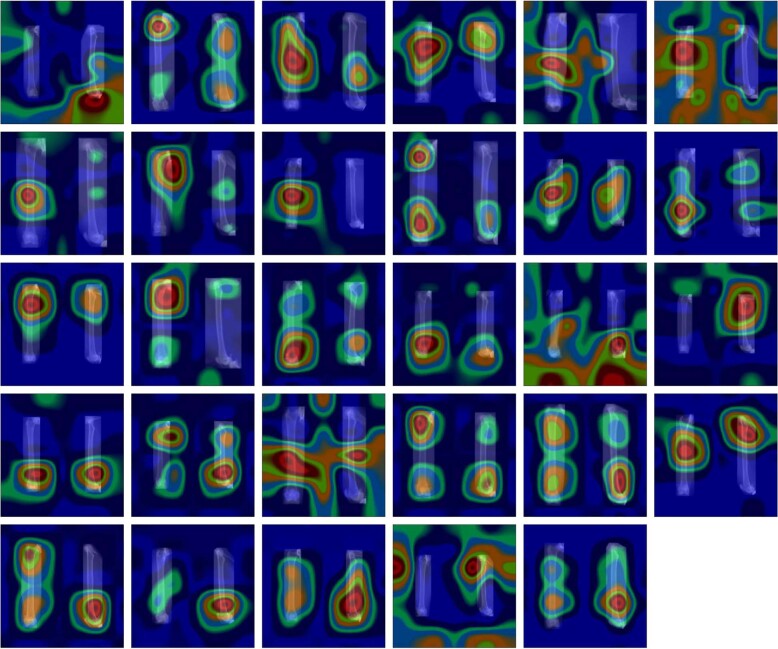
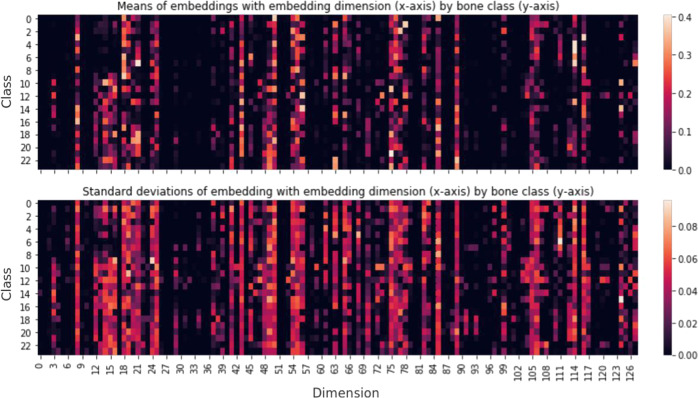
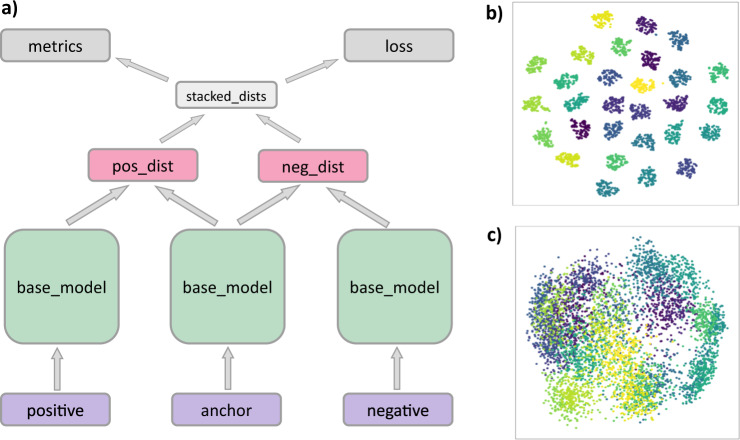
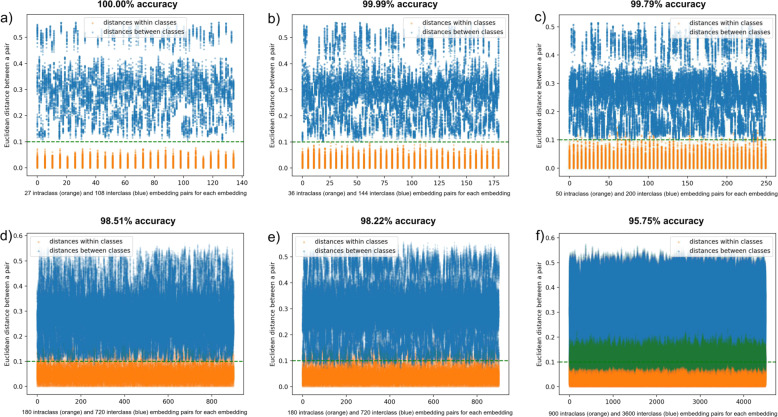
Computing 3D bone models using traditional Computed Tomography (CT) requires a high-radiation dose, cost and time. We present a fully automated, domain-agnostic method for estimating the 3D structure of a bone from a pair of 2D X-ray images. Our triplet loss-trained neural network extracts a 128-dimensional embedding of the 2D X-ray images. A classifier then finds the most closely matching 3D bone shape from a predefined set of shapes. Our predictions have an average root mean square (RMS) distance of 1.08 mm between the predicted and true shapes, making our approach more accurate than the average achieved by eight other examined 3D bone reconstruction approaches. Each embedding extracted from a 2D bone image is optimized to uniquely identify the 3D bone CT from which the 2D image originated and can serve as a kind of fingerprint of each bone; possible applications include faster, image content-based bone database searches for forensic purposes.
使用传统的计算机断层扫描(CT)计算三维骨骼模型需要高辐射剂量、成本和时间。我们提出了一种完全自动化的、与领域无关的方法,用于从一对二维 X 射线图像估计骨骼的三维结构。我们的三元组损失训练的神经网络从二维 X 射线图像中提取 128 维嵌入。然后,分类器从预定义的形状集中找到最匹配的三维骨骼形状。我们的预测在预测形状和真实形状之间的平均均方根(RMS)距离为 1.08 毫米,这使得我们的方法比其他八种检查过的三维骨骼重建方法的平均水平更准确。从二维骨骼图像中提取的每个嵌入都经过优化,以唯一识别二维图像所源自的三维骨骼 CT,并可用作每个骨骼的某种指纹;可能的应用包括更快的、基于图像内容的法医骨骼数据库搜索。