Pittaway Islay, Ishkova Anna, Bean Helena, McCarthy Stephanie, Lay Isabella, Avraam Joanne, Dawson Andrew, Thornton Therese, Nicholas Christian L, Trinder John, O'Donoghue Fergal J, Jackson Melinda L, Jordan Amy S
Melbourne School of Psychological Sciences, The University of Melbourne, Parkville, VIC 3010, Australia.
Institute for Breathing and Sleep, Austin Health, Heidelberg, VIC 3084, Australia.
Nat Sci Sleep. 2020 Jun 22;12:347-355. doi: 10.2147/NSS.S254473. eCollection 2020.
Obstructive sleep apnea (OSA) is less prevalent among women and is associated with different symptoms and consequences to OSA in men. The reasons for these differences are unknown and difficult to tease apart in clinical populations. If OSA could be temporarily induced in healthy men and women, the causes of some of these differences could be investigated. Nasal blocking has been used to induce OSA in healthy men but its effect in women has not been reported.
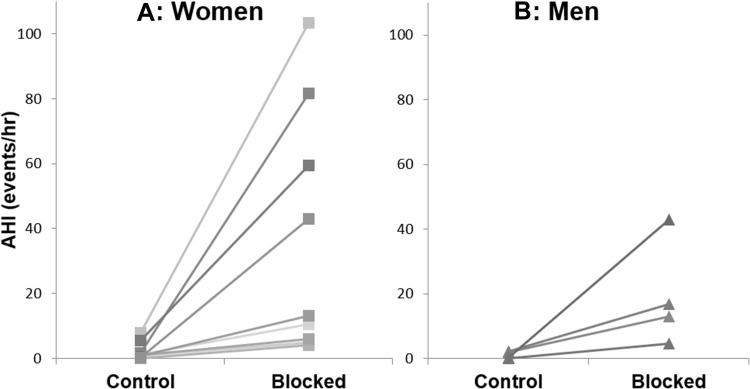
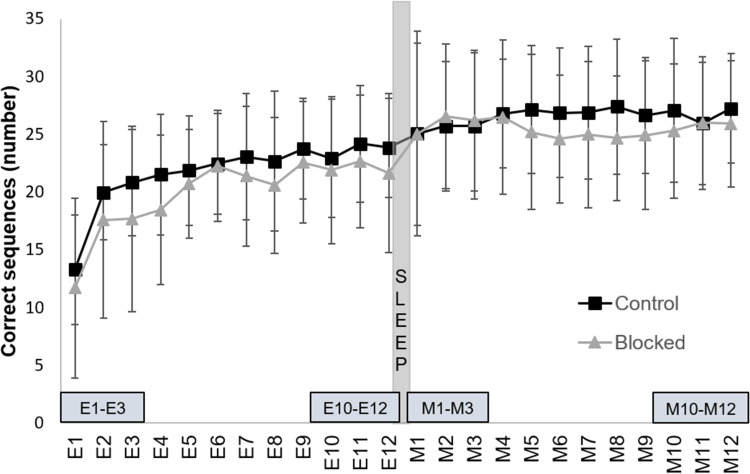
A total of 14 healthy individuals (10 women) underwent in-laboratory diagnostic sleep studies on two occasions separated by a week. On one occasion, the nasal passages were blocked, whereas on the other occasion, participants slept naturally. In both conditions, a full-face mask was used to monitor respiratory events. Participants' self-reported sleepiness, mood and performance on a motor learning task were assessed in the evening and morning of both sleep studies. Furthermore, endothelial function and self-reported sleep quality were assessed in the morning following each study.
Nasal blockage induced OSA in healthy young (age=22±3 years) and slim (BMI=22.2±3.2 kg/m) women (control AHI=2.0±2.6, blocked AHI=33.1±36.7 events/hr, p=0.02). One night of OSA was associated with poorer self-reported sleep quality (p<0.001) and increased self-reported snoring (p<0.04), choking and gasping during sleep (p<0.001) but was not associated with alterations in mood, neurocognitive or endothelial function on the following morning.
Nasal blockage induces OSA in healthy, young, and normal weight women. However, whether the induced OSA is representative of naturally occurring OSA and the technique useful for future studies is unclear.
阻塞性睡眠呼吸暂停(OSA)在女性中的患病率较低,且与男性OSA的症状和后果不同。这些差异的原因尚不清楚,在临床人群中也难以区分。如果能在健康男性和女性中暂时诱发OSA,就可以研究其中一些差异的原因。鼻阻塞已被用于在健康男性中诱发OSA,但尚未报道其在女性中的效果。
共有14名健康个体(10名女性)在相隔一周的两个时间段内接受了实验室诊断性睡眠研究。一次是鼻道被阻塞,另一次是参与者自然睡眠。在两种情况下,均使用全面罩监测呼吸事件。在两次睡眠研究的晚上和早上,评估参与者自我报告的嗜睡程度、情绪以及在运动学习任务中的表现。此外,在每次研究后的早晨评估内皮功能和自我报告的睡眠质量。
鼻阻塞在健康的年轻(年龄=22±3岁)且身材苗条(BMI=22.2±3.2kg/m²)的女性中诱发了OSA(对照组平均每小时呼吸暂停低通气指数[AHI]=2.0±2.6,阻塞组AHI=33.1±36.7次/小时,p=0.02)。一晚的OSA与自我报告的睡眠质量较差(p<0.001)以及自我报告的打鼾增加(p<0.04)、睡眠期间窒息和喘气增加(p<0.001)有关,但与次日早晨的情绪、神经认知或内皮功能改变无关。
鼻阻塞可在健康、年轻且体重正常的女性中诱发OSA。然而,诱发的OSA是否代表自然发生的OSA以及该技术对未来研究是否有用尚不清楚。