Department of Orthopaedic Surgery, Asahikawa Medical University, 2-1E Midorigaoka, Asahikawa, Hokkaido, 078-8510, Japan.
Department of Rehabilitation and Physical Therapy, Furano Kyokai Hospital, Furano, Japan.
BMC Musculoskelet Disord. 2020 Jul 1;21(1):422. doi: 10.1186/s12891-020-03464-2.
Age-related height loss is a normal physical change that occurs in all individuals over 50 years of age. Although many epidemiological studies on height loss have been conducted worldwide, none have been long-term longitudinal epidemiological studies spanning over 30 years. This study was designed to investigate changes in adult spinal deformity and examine the relationship between adult spinal deformity and height loss.
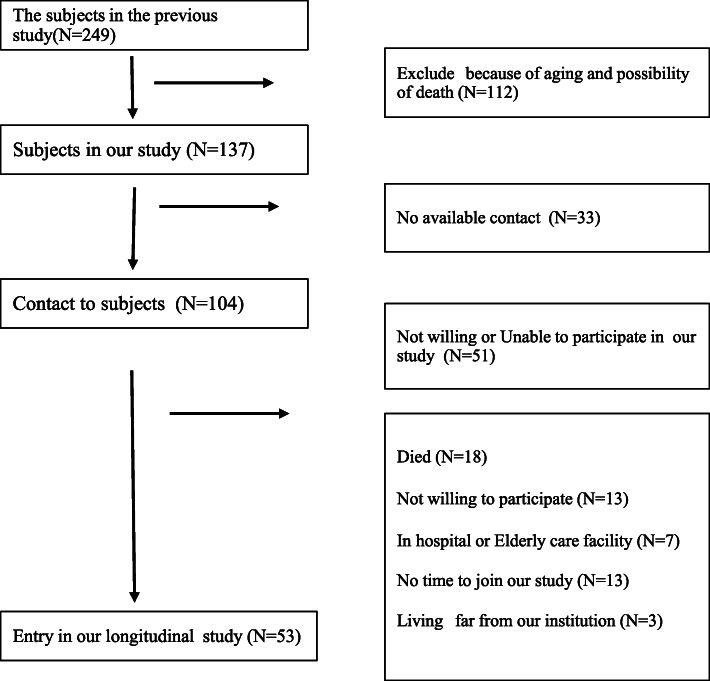
Fifty-three local healthy subjects (32 men, 21 women) from Furano, Hokkaido, Japan, volunteered for this longitudinal cohort study. Their heights were measured in 1983 and again in 2017. Spino-pelvic parameters were compared between measurements obtained in 1983 and 2017. Individuals with height loss were then divided into two groups, those with degenerative spondylosis and those with degenerative lumbar scoliosis, and different characteristics were compared between the two groups.
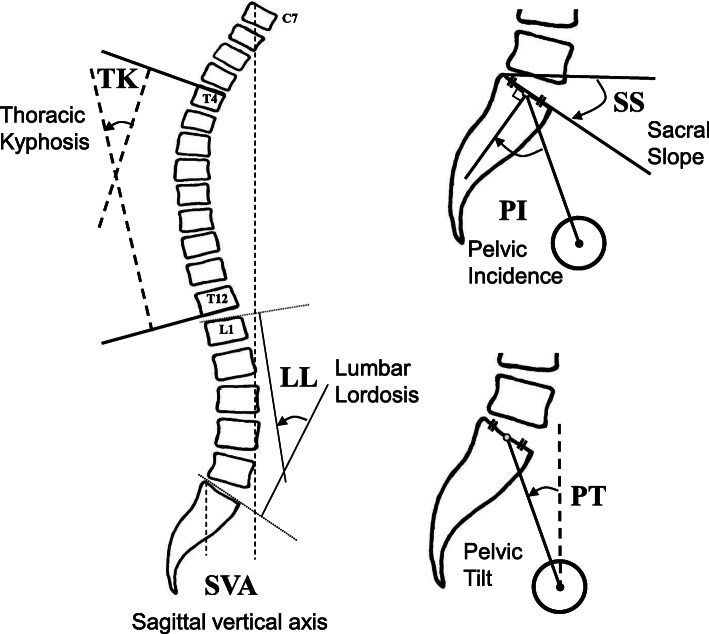
The mean age of the subjects was 44.4 (31-55) years at baseline and 78.6 (65-89) years at the final follow-up. The mean height was 157.4 cm at baseline and 153.6 cm at the final follow-up, with a mean height loss of 3.8 cm over 34.2 years. All parameters except for thoracic kyphosis were significantly different between measurements taken in 1983 and 2017 (p < 0.05). Height loss in both sexes was related to changes in pelvic parameters including pelvic incidence-lumbar lordosis (R = 0.460 p = 0.008 in men, R = 0.553 p = 0.012 in women), pelvic tilt (R = 0.374 p = 0.035 in men, R = 0.540 p = 0.014 in women), and sagittal vertical axis (R = 0.535 p = 0.002 in men, R = 0.527 p = 0.017 in women). Greater height loss was more commonly seen in women (p = 0.001) and in patients with degenerative lumbar scoliosis (p = 0.02).
This longitudinal study revealed that height loss is more commonly observed in women and is associated with adult spinal deformity and degenerative lumbar scoliosis. Height loss is a normal physical change with aging, but excessive height loss is due to spinal kyphosis and scoliosis leading to spinal malalignment. Our findings suggest that height loss might be an early physical symptom for spinal malalignment.
与年龄相关的身高损失是所有 50 岁以上人群中发生的正常生理变化。尽管全球已经进行了许多关于身高损失的流行病学研究,但没有一项是跨越 30 多年的长期纵向流行病学研究。本研究旨在探讨成年人脊柱畸形的变化,并研究成年人脊柱畸形与身高损失之间的关系。
来自日本北海道富良野的 53 名当地健康受试者(32 名男性,21 名女性)自愿参加这项纵向队列研究。他们的身高在 1983 年和 2017 年进行了测量。比较了 1983 年和 2017 年测量的脊柱骨盆参数。然后将身高下降的个体分为两组,一组为退行性脊椎病,另一组为退行性腰椎侧凸,比较两组之间的不同特征。
受试者的平均年龄在基线时为 44.4(31-55)岁,在最终随访时为 78.6(65-89)岁。平均身高在基线时为 157.4cm,在最终随访时为 153.6cm,34.2 年内平均身高下降 3.8cm。除了胸椎后凸外,所有参数在 1983 年和 2017 年的测量值之间均有显著差异(p<0.05)。两性的身高下降均与骨盆参数的变化有关,包括骨盆入射角-腰椎前凸角(男性 R=0.460,p=0.008;女性 R=0.553,p=0.012)、骨盆倾斜度(男性 R=0.374,p=0.035;女性 R=0.540,p=0.014)和矢状垂直轴(男性 R=0.535,p=0.002;女性 R=0.527,p=0.017)。女性(p=0.001)和退行性腰椎侧凸患者(p=0.02)中身高下降更为常见。
这项纵向研究表明,身高下降在女性中更为常见,与成年人脊柱畸形和退行性腰椎侧凸有关。身高下降是衰老过程中的一种正常生理变化,但过度的身高下降是由于脊柱后凸和侧凸导致脊柱失稳。我们的发现表明,身高下降可能是脊柱失稳的早期身体症状。