González Rodríguez Isela I, Francisco Aleff F, Moreira-Dill Leandro S, Quintero Aristides, Guimarães César L S, Fernandes Carlos A H, Takeda Agnes A S, Zanchi Fernando B, Caldeira Cléopatra A S, Pereira Paulo S, Fontes Marcos R M, Zuliani Juliana P, Soares Andreimar M
Faculdade de Ciências Farmacêuticas de Ribeirão Preto, FCFRP, Universidade de São Paulo, USP, Ribeirão Preto, SP, Brazil.
Departamento de Física e Biofísica, Instituto de Biociências, Universidade Estadual Paulista, UNESP, Botucatu, SP, Brazil.
Toxicon X. 2020 Jun 20;7:100049. doi: 10.1016/j.toxcx.2020.100049. eCollection 2020 Sep.
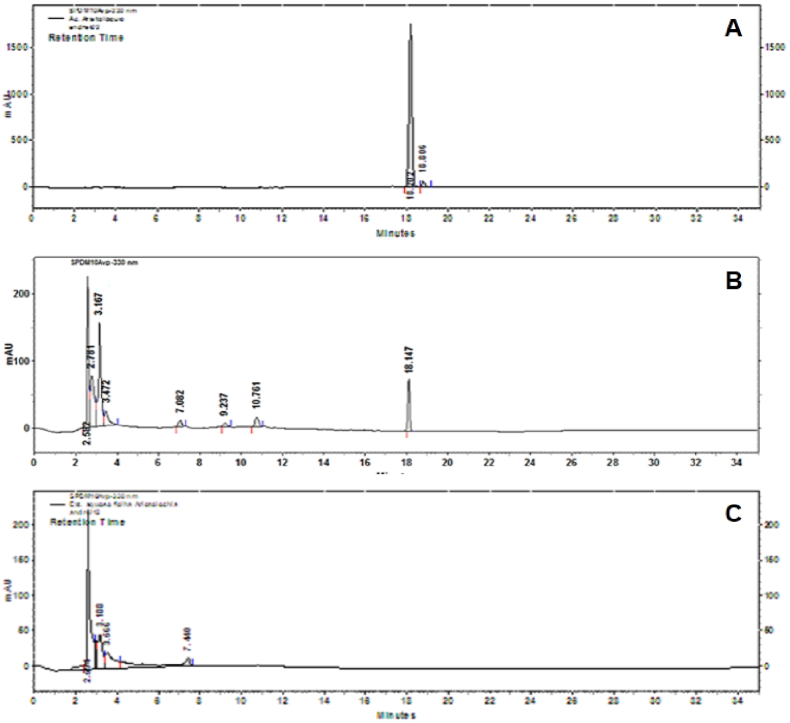
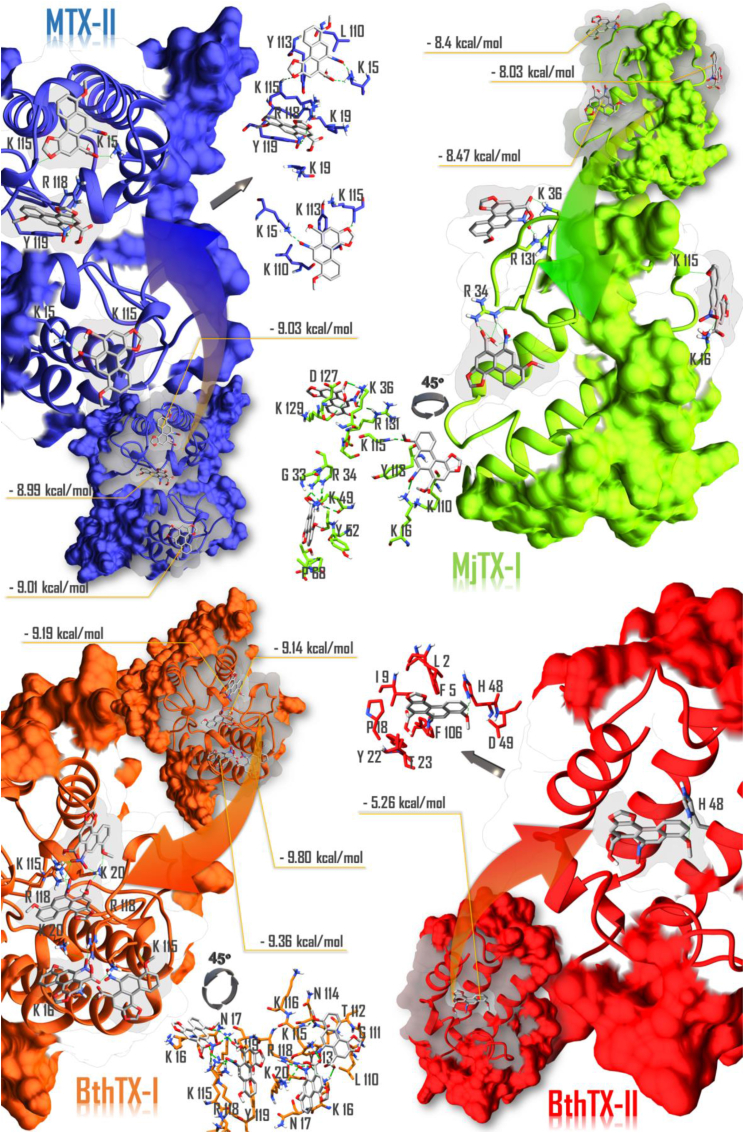
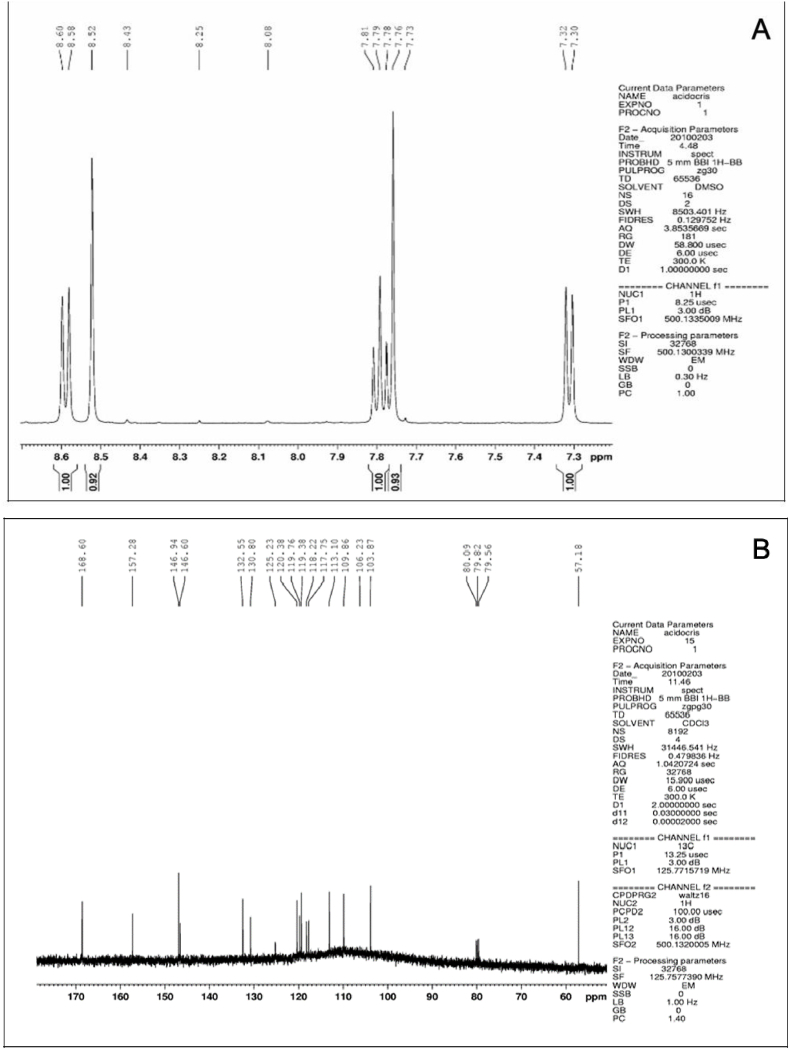
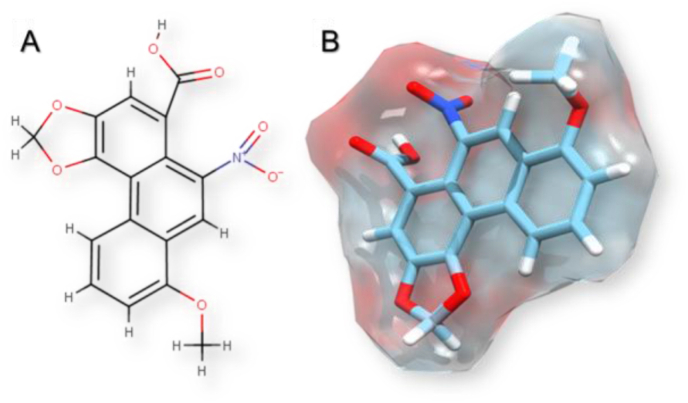
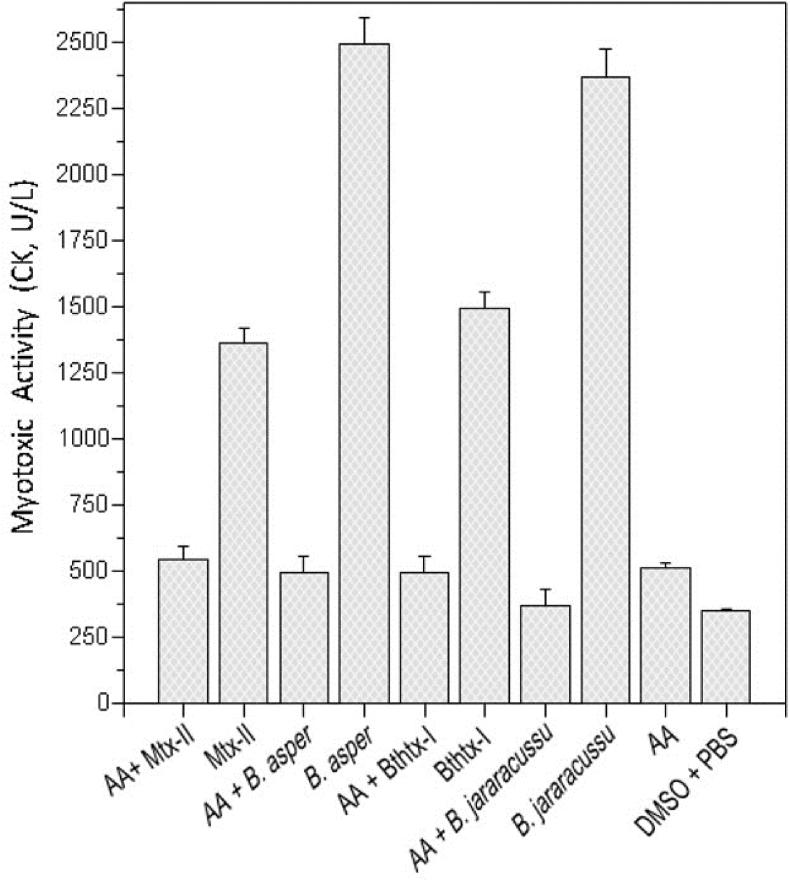
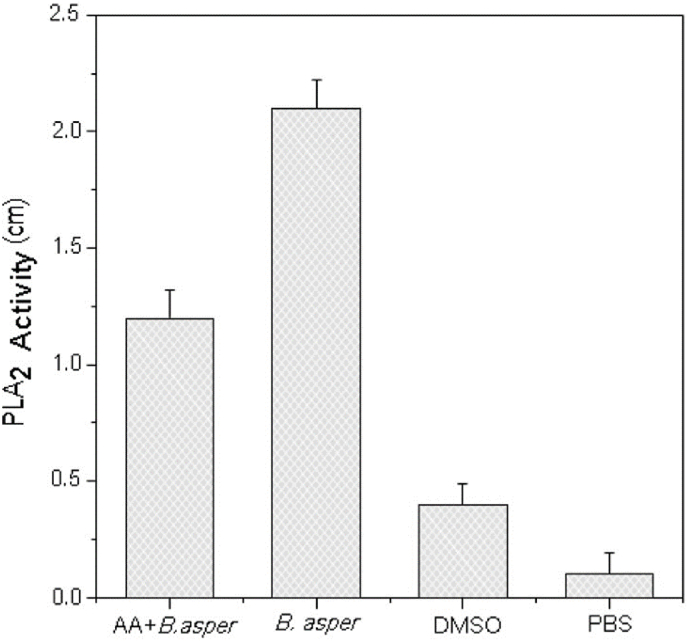
A bioactive compound isolated from the stem extract of through High Performance Liquid Chromatography (HPLC) was identified via Nuclear Magnetic Resonance (NMR) as the aristolochic acid (AA). This compound showed an inhibitory effect over the myotoxic activity of and venoms, being also effective against the indirect hemolytic activity of venom. Besides, AA also inhibited the myotoxic activity of BthTX-I and MTX-II with an efficiency greater than 60% against both myotoxins. Docking predictions revealed an interesting mechanism, through which the AA displays an interaction profile consistent with its inhibiting abilities, binding to both active and putative sites of svPLA. Overall, the present findings indicate that AA may bind to critical regions of myotoxic Asp 49 and Lys49-PLAs from snake venoms, highlighting the relevance of domains comprising the active and putative sites to inhibit these toxins.
通过高效液相色谱(HPLC)从[植物名称]茎提取物中分离出的一种生物活性化合物,经核磁共振(NMR)鉴定为马兜铃酸(AA)。该化合物对[蛇名称1]和[蛇名称2]毒液的肌毒性活性具有抑制作用,对[蛇名称3]毒液的间接溶血活性也有效。此外,AA对BthTX-I和MTX-II的肌毒性活性也有抑制作用,对这两种肌毒素的抑制效率均大于60%。对接预测揭示了一种有趣的机制,通过该机制,AA显示出与其抑制能力一致的相互作用模式,与svPLA的活性位点和假定位点均结合。总体而言,目前的研究结果表明,AA可能与蛇毒中肌毒性Asp 49和Lys49-PLAs的关键区域结合,突出了包含活性位点和假定位点的结构域对抑制这些毒素的相关性。