Cancer Research UK-AstraZeneca Antibody Alliance Laboratory, CB21 6GP Cambridge, United Kingdom.
Antibody Discovery & Protein Engineering, BioPharmaceuticals Research & Development, AstraZeneca, CB21 6GH Cambridge, United Kingdom.
Proc Natl Acad Sci U S A. 2020 Jul 21;117(29):16949-16960. doi: 10.1073/pnas.1919565117. Epub 2020 Jul 2.
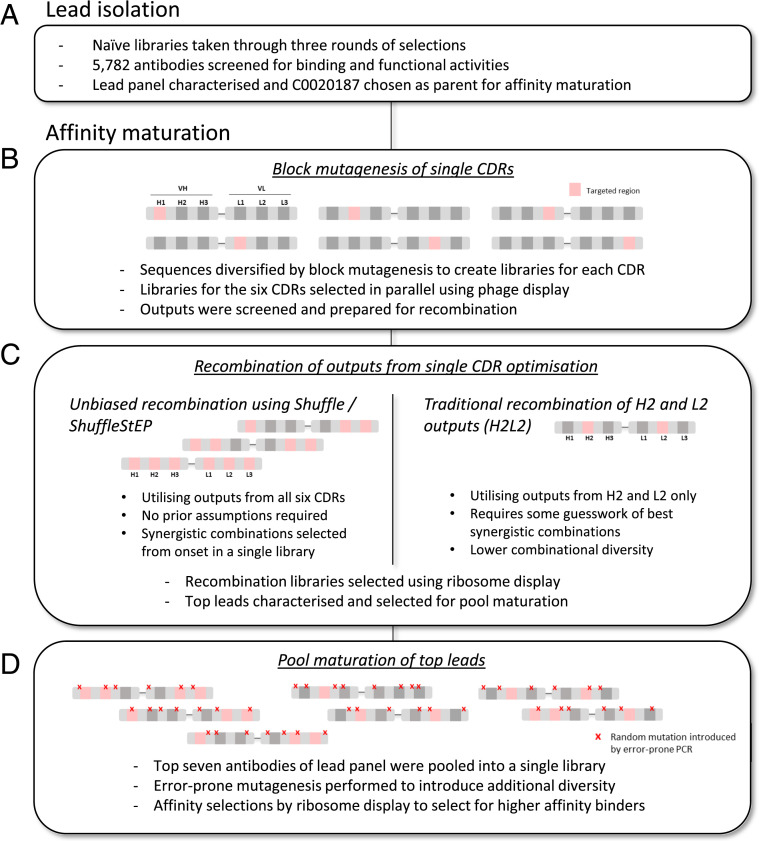
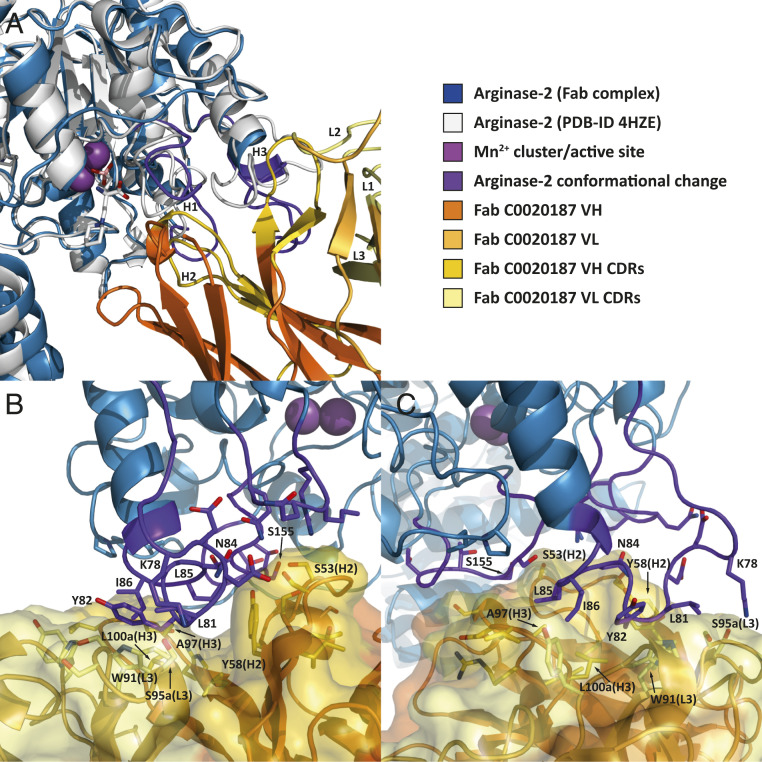
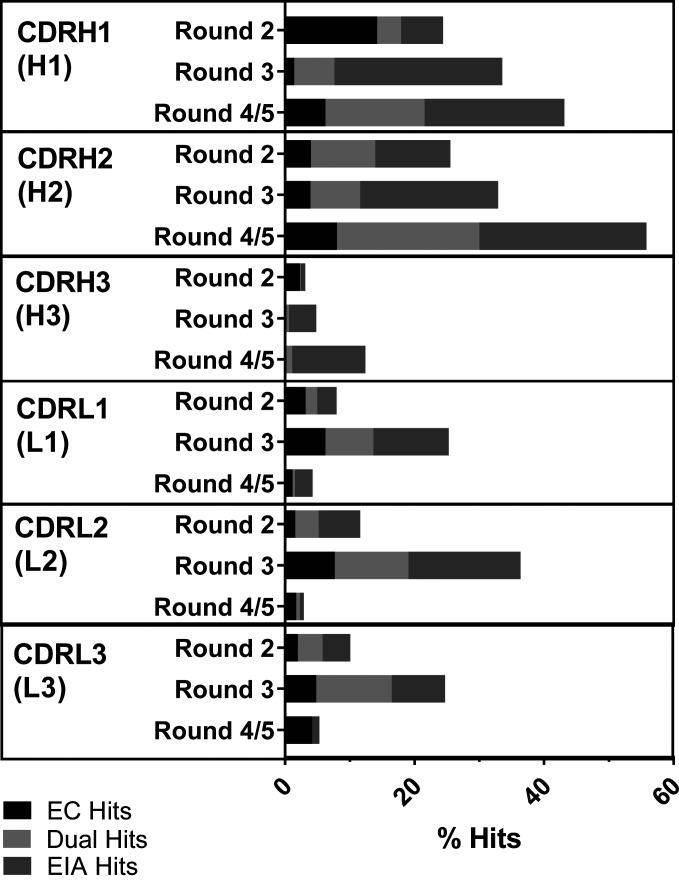
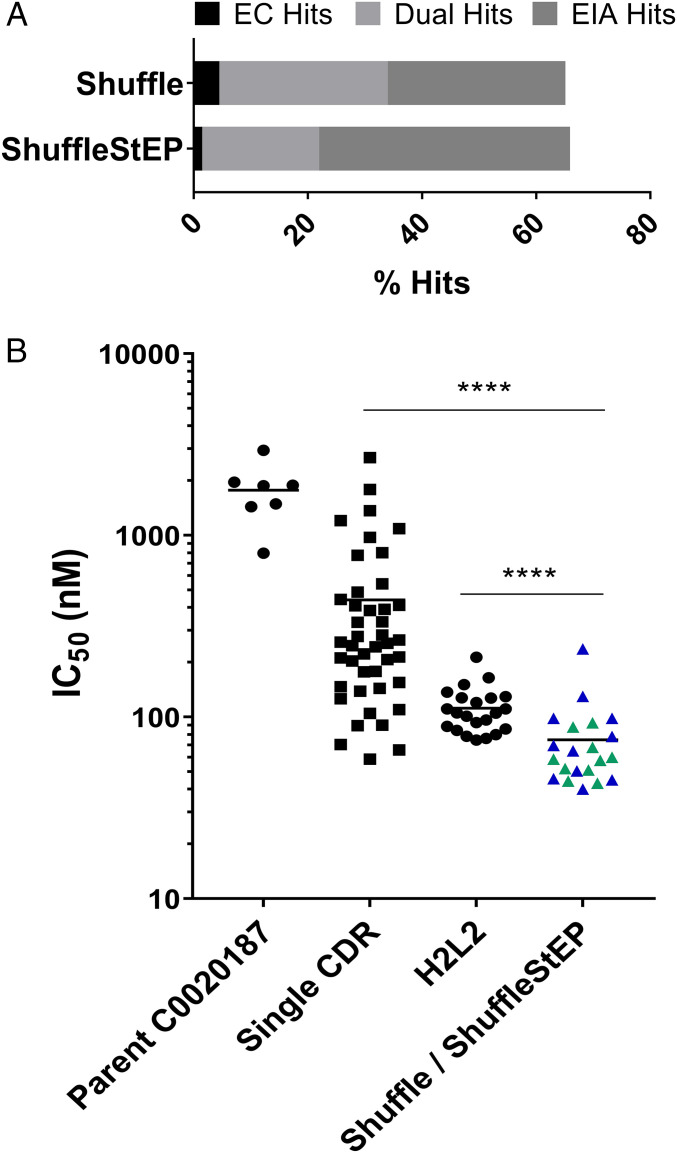
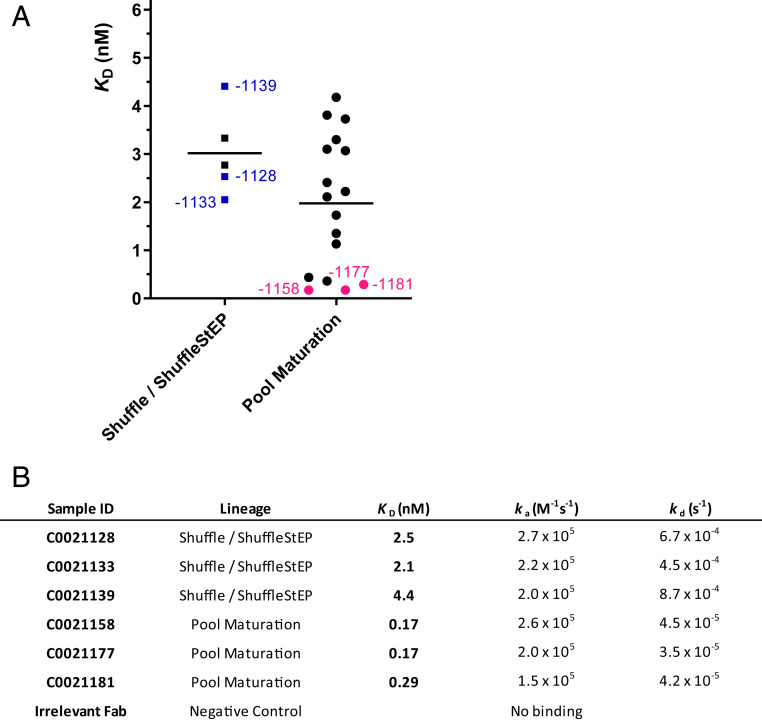
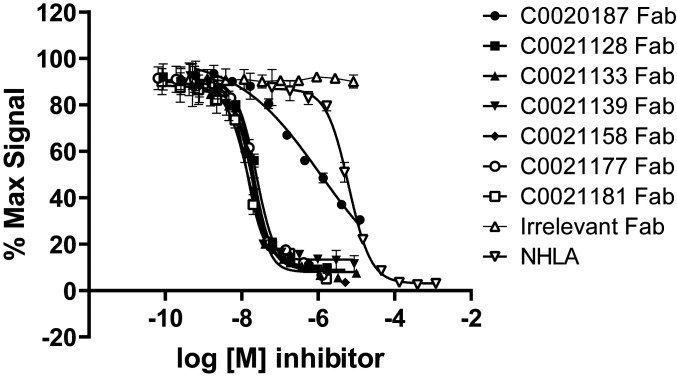
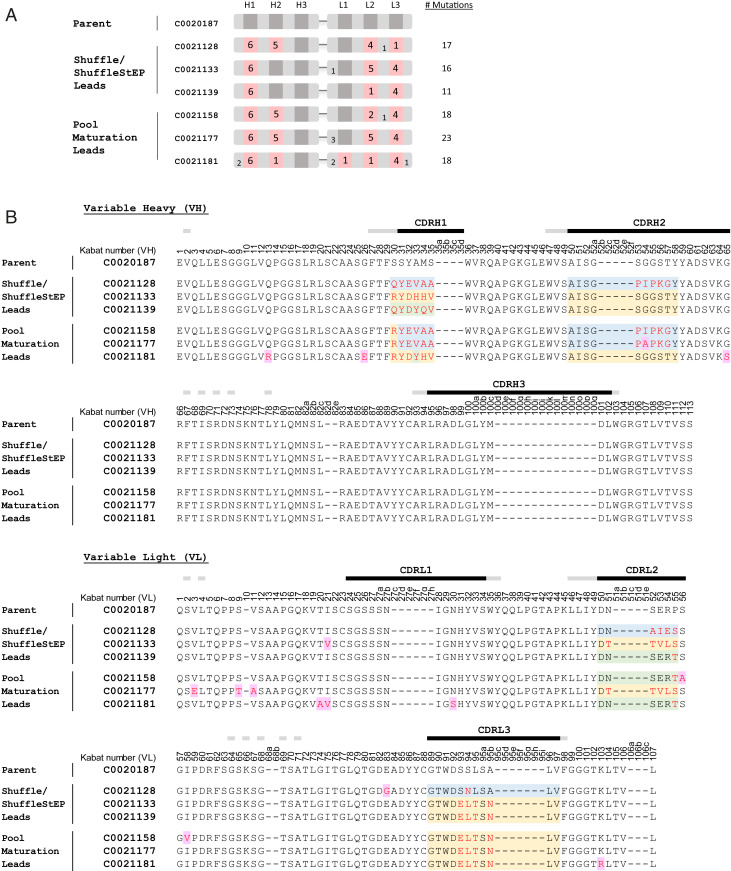
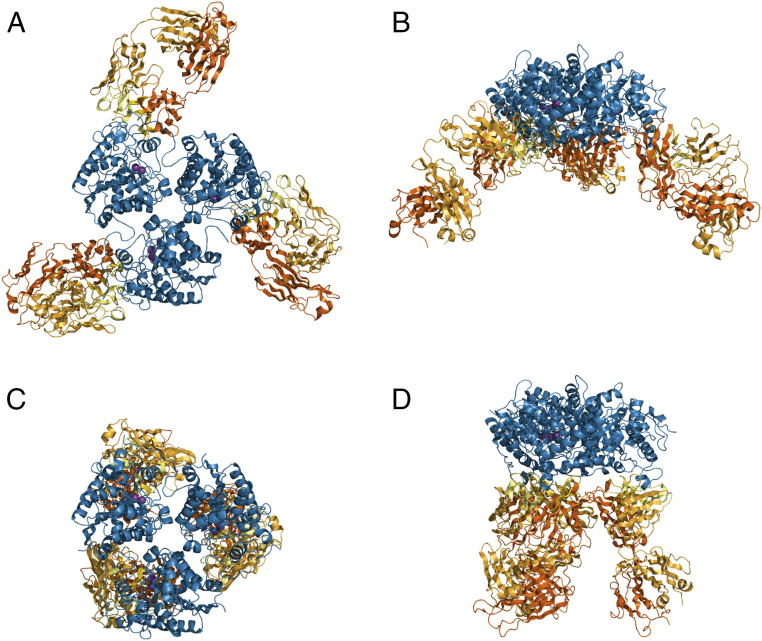
Affinity maturation is a powerful technique in antibody engineering for the in vitro evolution of antigen binding interactions. Key to the success of this process is the expansion of sequence and combinatorial diversity to increase the structural repertoire from which superior binding variants may be selected. However, conventional strategies are often restrictive and only focus on small regions of the antibody at a time. In this study, we used a method that combined antibody chain shuffling and a staggered-extension process to produce unbiased libraries, which recombined beneficial mutations from all six complementarity-determining regions (CDRs) in the affinity maturation of an inhibitory antibody to Arginase 2 (ARG2). We made use of the vast display capacity of ribosome display to accommodate the sequence space required for the diverse library builds. Further diversity was introduced through pool maturation to optimize seven leads of interest simultaneously. This resulted in antibodies with substantial improvements in binding properties and inhibition potency. The extensive sequence changes resulting from this approach were translated into striking structural changes for parent and affinity-matured antibodies bound to ARG2, with a large reorientation of the binding paratope facilitating increases in contact surface and shape complementarity to the antigen. The considerable gains in therapeutic properties seen from extensive sequence and structural evolution of the parent ARG2 inhibitory antibody clearly illustrate the advantages of the unbiased approach developed, which was key to the identification of high-affinity antibodies with the desired inhibitory potency and specificity.
亲和力成熟是抗体工程中体外进化抗原结合相互作用的一种强大技术。该过程成功的关键是扩展序列和组合多样性,以增加可能被选择的更优结合变体的结构库。然而,传统策略通常具有局限性,并且一次只关注抗体的小区域。在这项研究中,我们使用了一种结合抗体链改组和交错延伸过程的方法来产生无偏库,该方法在 Arg 酶 2(ARG2)抑制性抗体的亲和力成熟过程中重新组合了所有六个互补决定区(CDR)中的有益突变。我们利用核糖体展示的巨大展示能力来容纳多样化文库构建所需的序列空间。通过池成熟进一步引入多样性,同时优化七个感兴趣的先导物。这导致了结合性质和抑制效力的显著提高。这种方法产生的广泛序列变化转化为与 ARG2 结合的亲本和亲和力成熟抗体的显著结构变化,结合变构域的大重定向促进了与抗原的接触表面和形状互补的增加。从亲本 ARG2 抑制性抗体的广泛序列和结构进化中看到的治疗性质的显著提高清楚地说明了所开发的无偏方法的优势,这是鉴定具有所需抑制效力和特异性的高亲和力抗体的关键。