Laboratory Prof. Gisela Enders and colleagues, MVZ, Stuttgart, Germany.
BMC Infect Dis. 2020 Jul 3;20(1):474. doi: 10.1186/s12879-020-05199-w.
After the introduction of a vaccine against B. pertussis the seasonal pattern with the highest number of infections in the spring to summer months changed. Recent studies from around the world suggest that B. pertussis infections again follow a seasonal pattern with increased incidence in summer.The aim of this study was to investigate whether respiratory infections caused by B. pertussis in the period from January 2008 to December 2018 also seasonally spread in Germany and if so, when the B. pertussis activity peaked.
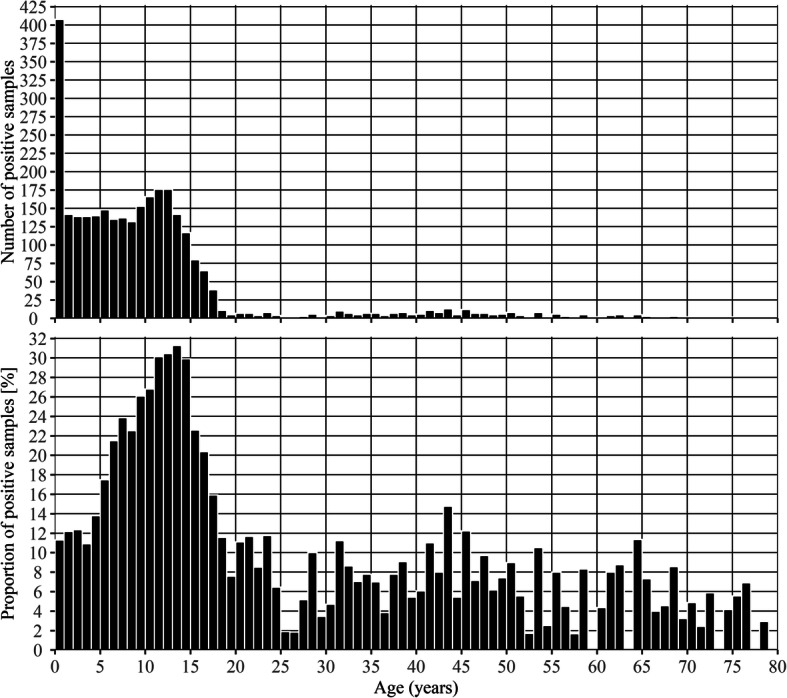
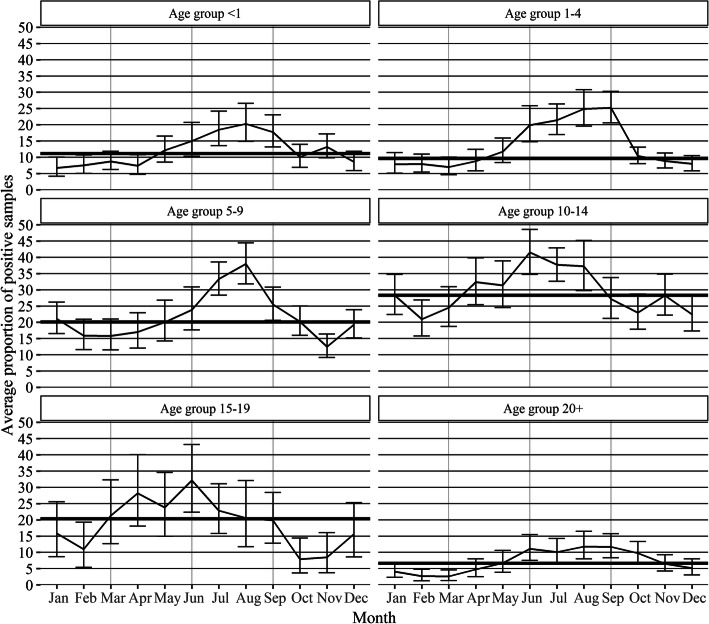
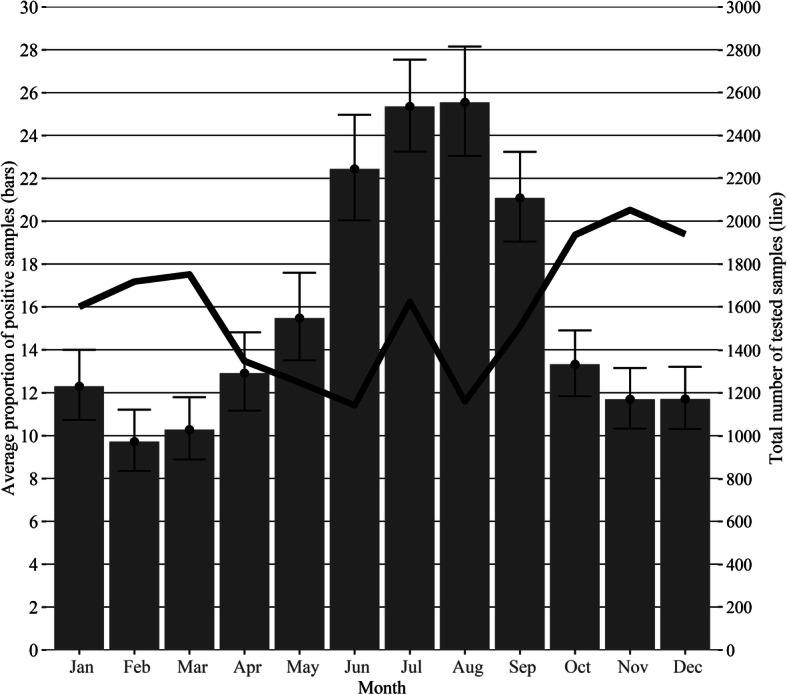
We tested 19,031 samples, mainly from Southern Germany, collected in the period from January 2008 to December 2018 using a Multiplex PCR assay. We assessed the number and proportion of samples positive for B. pertussis, stratified by patient's age and month. The seasonal distribution was investigated by plotting the average proportion of positive samples for each month.
We observed a B. pertussis seasonality with the highest number of positive samples in the months from June until September. In contrast, testing of samples for B. pertussis was requested most frequently in the period from October until March. The proportion of positive samples increased earlier in adolescents (age 10 to 19) than in other age groups.
We found a seasonality of B. pertussis infections in Germany, which differs from the time when most samples are sent in for testing of B. pertussis. Our study suggests that clinicians should be more aware of B. pertussis infections in the months from June until September to prevent further transmission to vulnerable family members.
自从引入针对百日咳杆菌的疫苗以来,春季到夏季感染人数最多的季节性模式发生了变化。最近来自世界各地的研究表明,百日咳杆菌感染再次呈现季节性模式,夏季发病率增加。本研究旨在调查 2008 年 1 月至 2018 年 12 月期间德国是否也存在由百日咳杆菌引起的呼吸道感染的季节性传播,如果存在,百日咳杆菌活动的高峰期是什么时候。
我们使用多重 PCR 检测方法检测了 19031 份主要来自德国南部的样本,检测时间为 2008 年 1 月至 2018 年 12 月。我们根据患者年龄和月份对百日咳杆菌阳性样本的数量和比例进行分层,并通过绘制每个月阳性样本的平均比例来评估季节性分布。
我们观察到百日咳杆菌具有季节性,阳性样本数量最多的月份是 6 月至 9 月。相比之下,10 月至 3 月期间请求检测百日咳杆菌的样本最多。青少年(10 至 19 岁)阳性样本的比例比其他年龄组更早增加。
我们发现德国存在百日咳杆菌感染的季节性,这与大多数样本进行百日咳杆菌检测的时间不同。我们的研究表明,临床医生应更加注意 6 月至 9 月期间的百日咳杆菌感染,以防止进一步传播给易感染的家庭成员。