Mailho-Fontana Pedro Luiz, Antoniazzi Marta Maria, Alexandre Cesar, Pimenta Daniel Carvalho, Sciani Juliana Mozer, Brodie Edmund D, Jared Carlos
Structural Biology Lab, Butantan Institute, São Paulo, Brazil.
Biochemistry Lab, Butantan Institute, São Paulo, Brazil.
iScience. 2020 Jul 24;23(7):101234. doi: 10.1016/j.isci.2020.101234. Epub 2020 Jul 3.
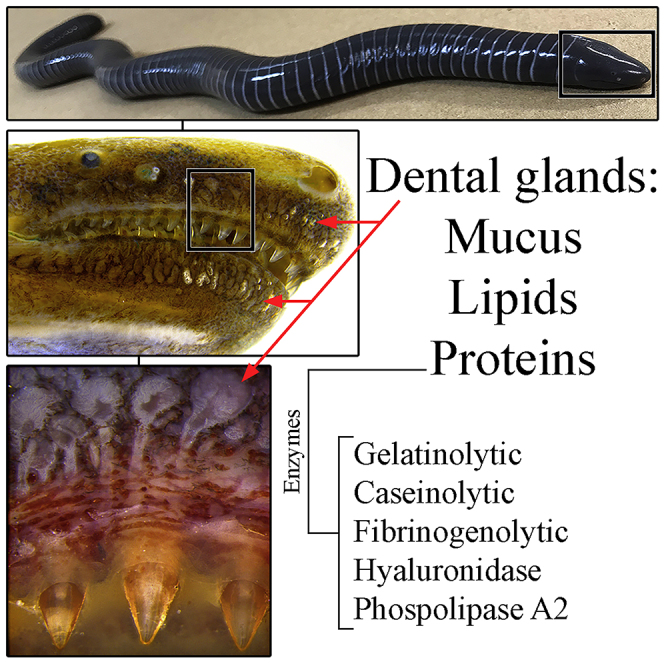
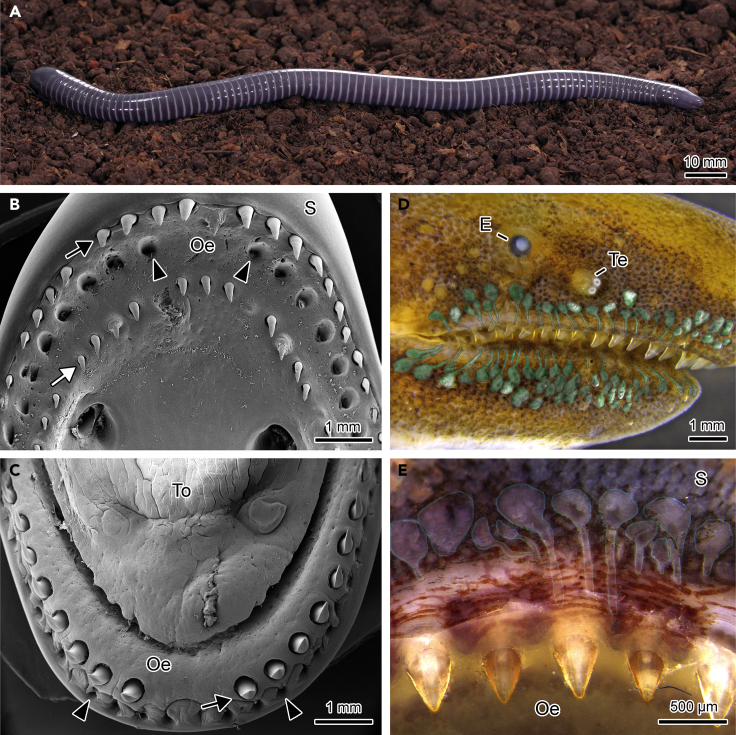
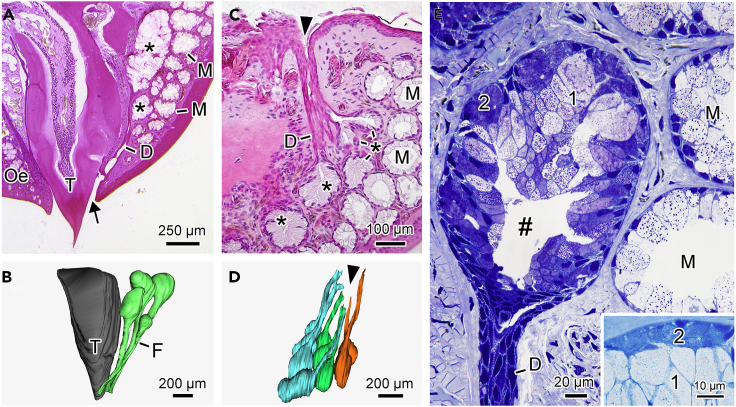
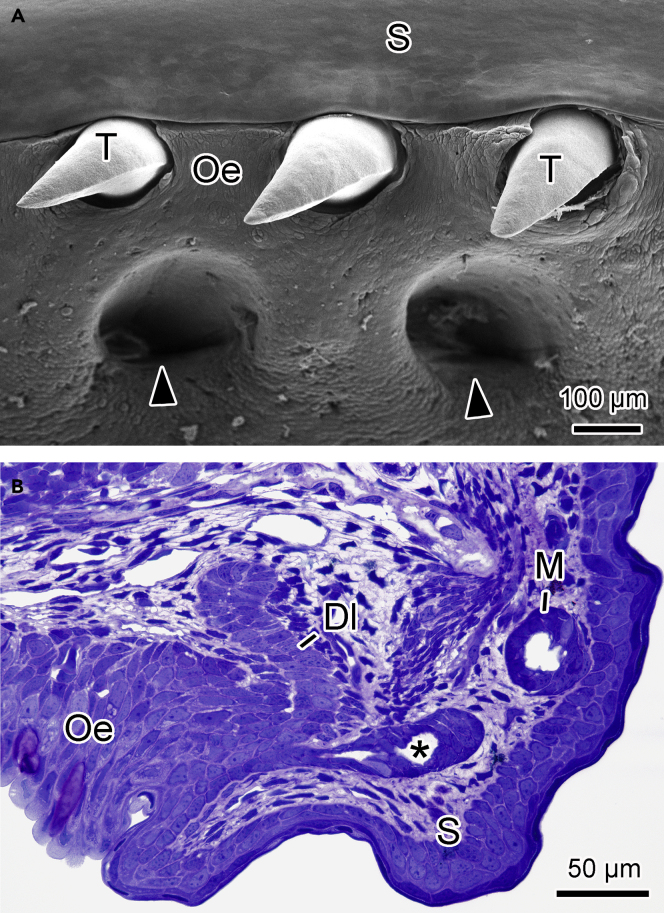
Amphibians are known for their skin rich in glands containing toxins employed in passive chemical defense against predators, different from, for example, snakes that have active chemical defense, injecting their venom into the prey. Caecilians (Amphibia, Gymnophiona) are snake-shaped animals with fossorial habits, considered one of the least known vertebrate groups. We show here that amphibian caecilians, including species from the basal groups, besides having cutaneous poisonous glands as other amphibians do, possess specific glands at the base of the teeth that produce enzymes commonly found in venoms. Our analysis of the origin of these glands shows that they originate from the same tissue that gives rise to teeth, similar to the venom glands in reptiles. We speculate that caecilians might have independently developed mechanisms of production and injection of toxins early in their evolutionary history.
两栖动物以其皮肤富含腺体而闻名,这些腺体含有用于被动化学防御捕食者的毒素,这与例如具有主动化学防御能力、将毒液注入猎物的蛇不同。蚓螈(两栖纲,蚓螈目)是具有穴居习性的蛇形动物,被认为是最鲜为人知的脊椎动物类群之一。我们在此表明,两栖蚓螈,包括基部类群的物种,除了像其他两栖动物一样具有皮肤毒腺外,在牙齿基部还拥有特定的腺体,这些腺体产生毒液中常见的酶。我们对这些腺体起源的分析表明,它们起源于产生牙齿的相同组织,类似于爬行动物的毒腺。我们推测,蚓螈可能在其进化历史早期就独立发展出了毒素产生和注射机制。