Chen Ze-Hua, Ye Xiang-Ling, Chen Wei-Jian, Chen Guo-Qian, Wu Jia-Tao, Wu Huai, Xu Xue-Meng
The Fifth Clinical Medical School, Guangzhou University of Chinese Medicine.
Guangdong Second Traditional Chinese Medicine Hospital, Guangzhou, China.
Medicine (Baltimore). 2020 Jul 2;99(27):e20731. doi: 10.1097/MD.0000000000020731.
Backward walking (BW) training is increasingly used in rehabilitation for stroke, but relevant evidence remains unclear.
To determine the effect of BW training on patients with stroke.
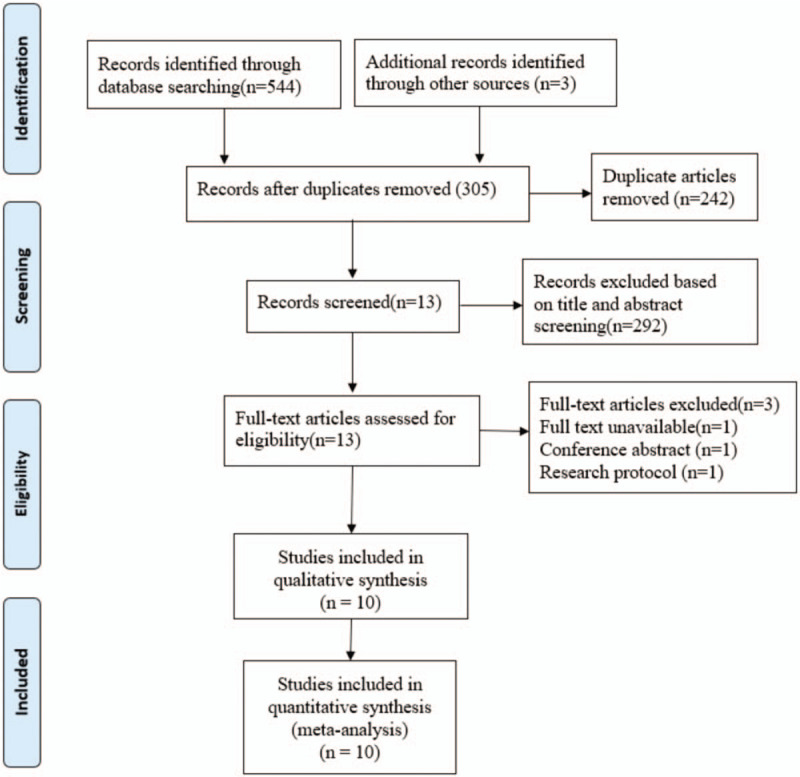
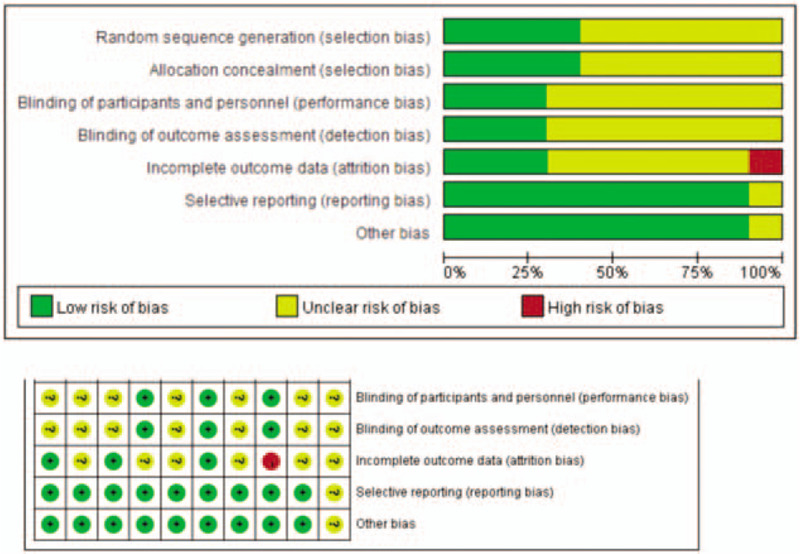
A keyword search was conducted in PubMed, EMBASE, CINAHL, and China National Knowledge Infrastructure database for articles published until November, 2019. Two investigators screened the articles and extract data from each included study. Meta-analysis was performed to estimate the effect of BW on stroke. In addition, the quality of evidence was evaluated by GRADE (grading of recommendations, assessment, development, and evaluation; version:3.6) approach.
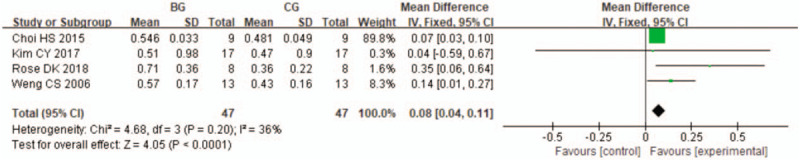
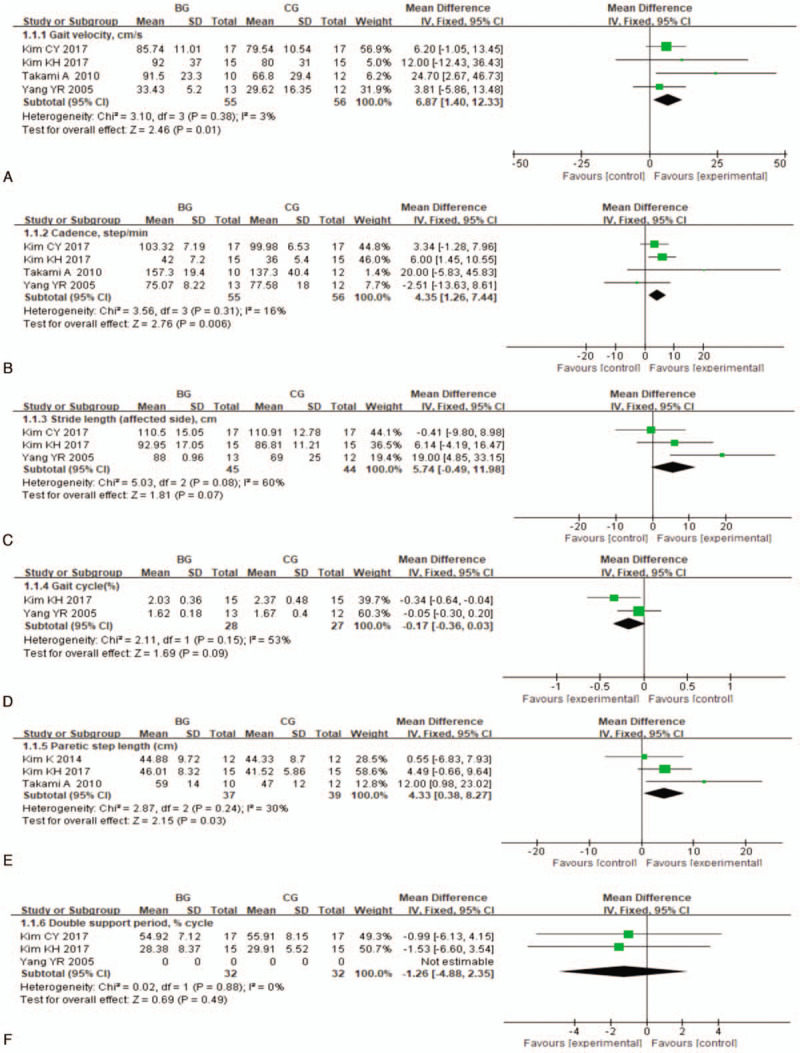
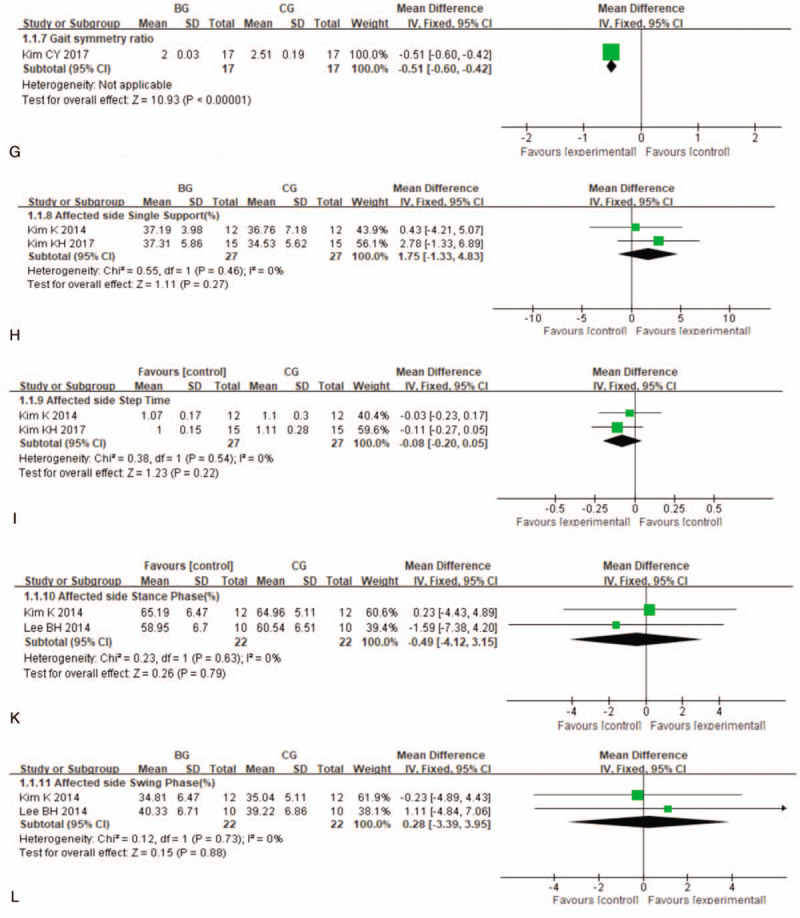
A total of ten studies were included according to the inclusion and exclusion criteria in the review. All included studies described some positive influences of BW on stroke relative to the control group (forward walking or conventional treatment). Compared to control group, there is a statistically significant improvement for BW group in gait velocity (mean difference [MD] = 6.87, 95%CI: [1.40, 12.33], P = .01, I = 3%), Berg balance score (MD =3.82, 95%CI: [2.12, 5.52], P < .0001, I = 0%), and walk test (MD =0.11, 95%CI: [0.02, 0.20], P = .02, I = 36%).
For patients with stroke, BW training, as an adjunct an adjunct to conventional treatment, can improve Berg balance score (moderate evidence), walk test performance (very low evidence), gait velocity (very low evidence). More large-scale and high-quality studies are warranted.
倒走训练在中风康复中的应用日益广泛,但相关证据仍不明确。
确定倒走训练对中风患者的影响。
在PubMed、EMBASE、CINAHL和中国知网数据库中进行关键词检索,检索截至2019年11月发表的文章。两名研究者筛选文章并从每项纳入研究中提取数据。进行荟萃分析以评估倒走对中风的影响。此外,采用GRADE(推荐分级、评估、制定与评价;版本:3.6)方法评估证据质量。
根据纳入和排除标准,本综述共纳入10项研究。所有纳入研究均描述了倒走相对于对照组(正走或传统治疗)对中风有一些积极影响。与对照组相比,倒走组在步速(平均差[MD]=6.87,95%置信区间:[1.40,12.33],P=0.01,I²=3%)、伯格平衡量表评分(MD=3.82,95%置信区间:[2.12,5.52],P<0.0001,I²=0%)和步行试验(MD=0.11,95%置信区间:[0.02,0.20],P=0.02,I²=36%)方面有统计学显著改善。
对于中风患者,倒走训练作为传统治疗的辅助手段,可改善伯格平衡量表评分(中等质量证据)、步行试验表现(极低质量证据)和步速(极低质量证据)。需要更多大规模、高质量的研究。