Information Management, National Yunlin University of Science and Technology, Yunlin 64002, Taiwan.
Plastic surgery, National Taiwan University Hospital Yunlin Branch, Yunlin 640203, Taiwan.
Sensors (Basel). 2020 Jun 30;20(13):3667. doi: 10.3390/s20133667.
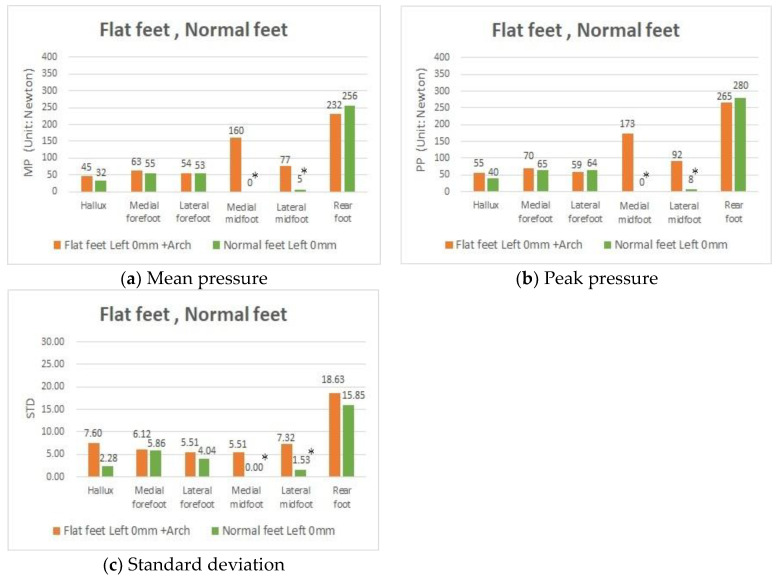
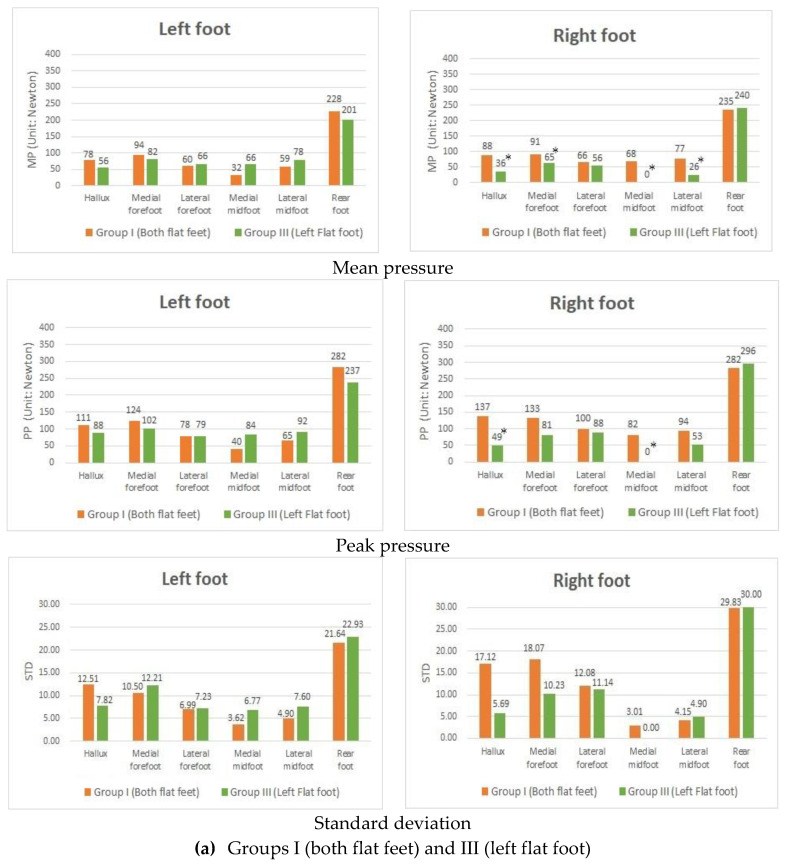
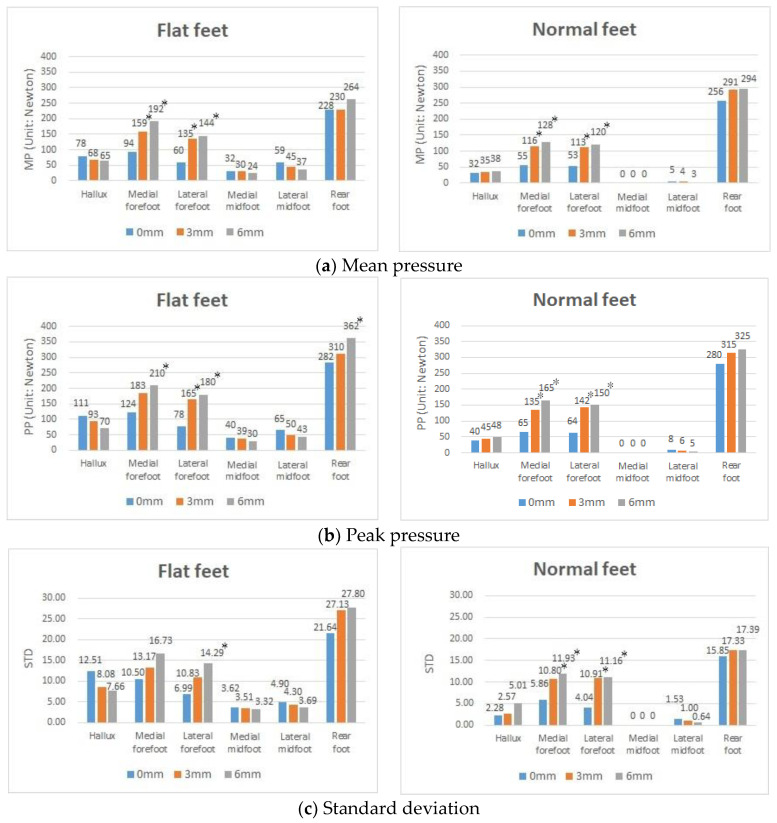
The arches of the foot play a vital role in cushioning the impact and pressure generated from ground reaction forces due to body weight. Owing to a lack of normal human arch structure, people diagnosed as having flat feet often have discomfort in the soles of their feet. The results may not only cause inappropriate foot pressure distribution on the sole but also further cause foot injuries. This study heavily relies on a homemade foot pressure sensing device equipped with textured insoles of different heights and artificial arches. This was to explore the extent to which the pressure distribution of the foot in people with flat feet could be improved. A further comparison was made of the effects of using the textured insoles with different heights on two different groups of people diagnosed with flat and normal feet respectively. Sixty-five undergraduate and postgraduate volunteers were invited to receive the ink footprint test for measuring their degrees of arch index. Nine of these 65 had 2 flat feet, 3 had a left flat foot, 5 had a right flat foot, and 48 had 2 normal feet. To ensure the same number of subjects in both the control and the experimental groups, 9 of the 48 subjects who had normal feet were randomly selected. In total, 26 subjects (Male: 25, Female: 1; Age: 22 ± 1 years; height: 173.6 ± 2.5 cm; body mass: 68.3 ± 5.4 kg; BMI: 22.6 ± 1.2) were invited to participate in this foot pressure sensing insoles study. The experimental results showed that the use of textured insoles designed with different heights could not effectively improve the plantar pressure distribution and body stability in subjects with flat feet. Conversely, the use of an artificial arch effectively improved the excessive peak in pressure and poor body stability, and alleviated the problem of plantar collapse for patients with flat feet, especially in the inner part of their hallux and forefoot.
足弓在缓冲因体重产生的地面反作用力而产生的冲击和压力方面起着至关重要的作用。由于缺乏正常的人类足弓结构,被诊断为扁平足的人通常会感到脚底不适。其结果不仅可能导致足底的压力分布不当,还可能进一步导致足部受伤。本研究主要依赖于一种自制的足底压力传感装置,该装置配备了具有不同高度的纹理鞋垫和人工足弓。这是为了探索改善扁平足患者足底压力分布的程度。还进一步比较了使用具有不同高度的纹理鞋垫对分别患有扁平足和正常足的两组人的影响。邀请 65 名本科生和研究生志愿者接受墨足印测试,以测量他们的足弓指数。其中 9 人有 2 个扁平足,3 人有左扁平足,5 人有右扁平足,48 人有 2 个正常足。为了确保对照组和实验组的受试者数量相同,随机从 48 名正常足的受试者中选择了 9 名。共有 26 名受试者(男性:25 名,女性:1 名;年龄:22 ± 1 岁;身高:173.6 ± 2.5cm;体重:68.3 ± 5.4kg;BMI:22.6 ± 1.2)受邀参加这项足底压力传感鞋垫研究。实验结果表明,使用具有不同高度的纹理鞋垫并不能有效地改善扁平足患者的足底压力分布和身体稳定性。相反,使用人工足弓可以有效地改善过度的峰值压力和较差的身体稳定性,并缓解扁平足患者的足底塌陷问题,尤其是在他们的大脚趾和前脚掌内侧。