Pediatric Genomics Discovery Program, Department of Pediatrics and Genetics, Yale University School of Medicine, New Haven, Connecticut, USA.
Division of Nephrology, Boston Children's Hospital and Harvard Medical School, Boston, Massachusetts, USA.
J Med Genet. 2021 Jul;58(7):453-464. doi: 10.1136/jmedgenet-2019-106805. Epub 2020 Jul 6.
Cilia are dynamic cellular extensions that generate and sense signals to orchestrate proper development and tissue homeostasis. They rely on the underlying polarisation of cells to participate in signalling. Cilia dysfunction is a well-known cause of several diseases that affect multiple organ systems including the kidneys, brain, heart, respiratory tract, skeleton and retina.
Among individuals from four unrelated families, we identified variants in ( that manifested in a variety of pathologies. In our proband, we also examined patient tissues. We depleted in frog embryos to generate a loss-of-function model. Finally, we tested the pathogenicity of patient variants through rescue experiments in the frog model.
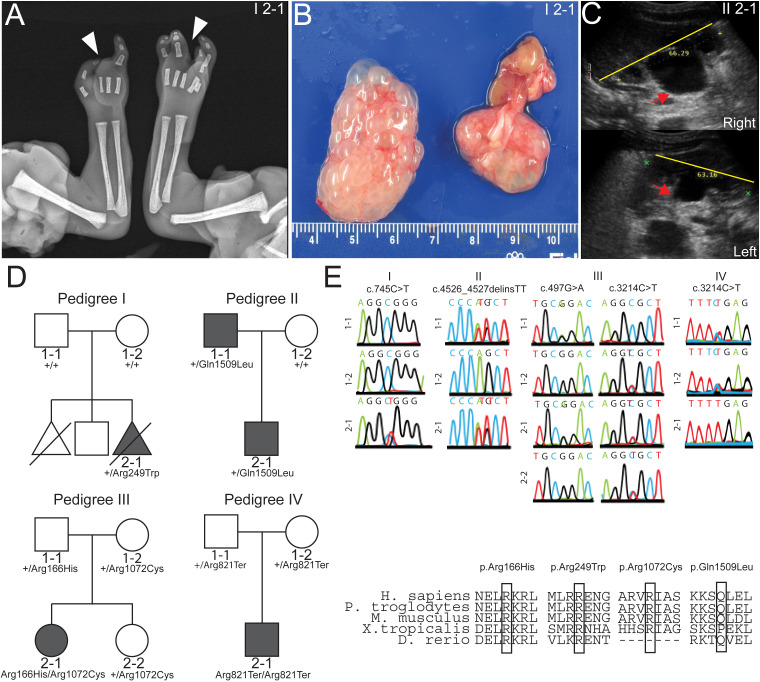
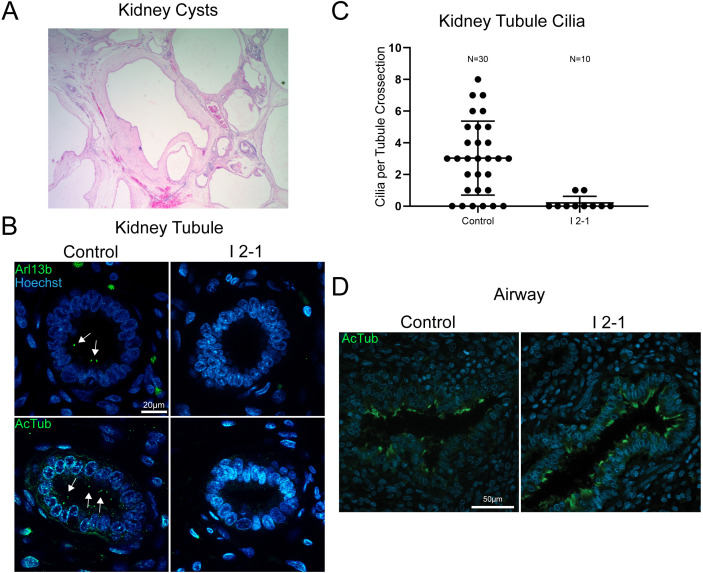
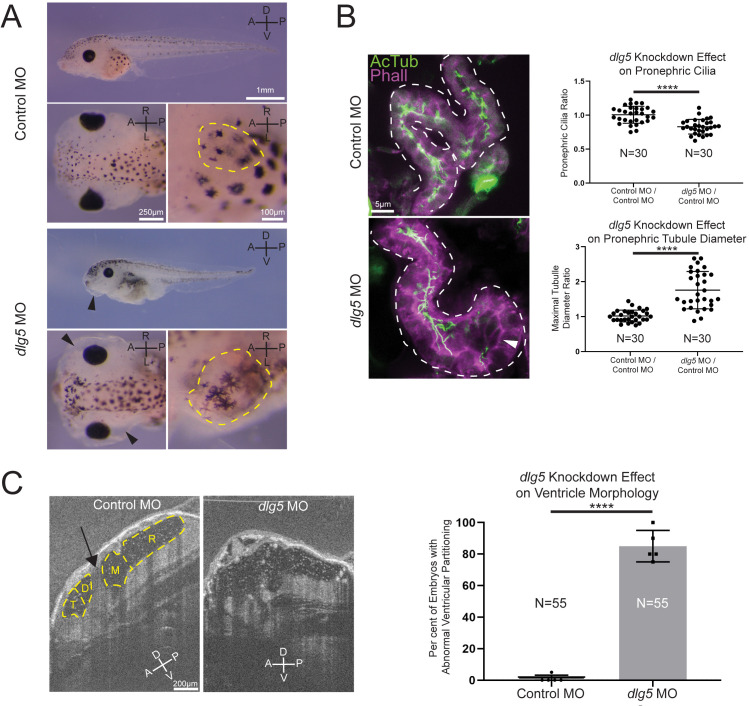
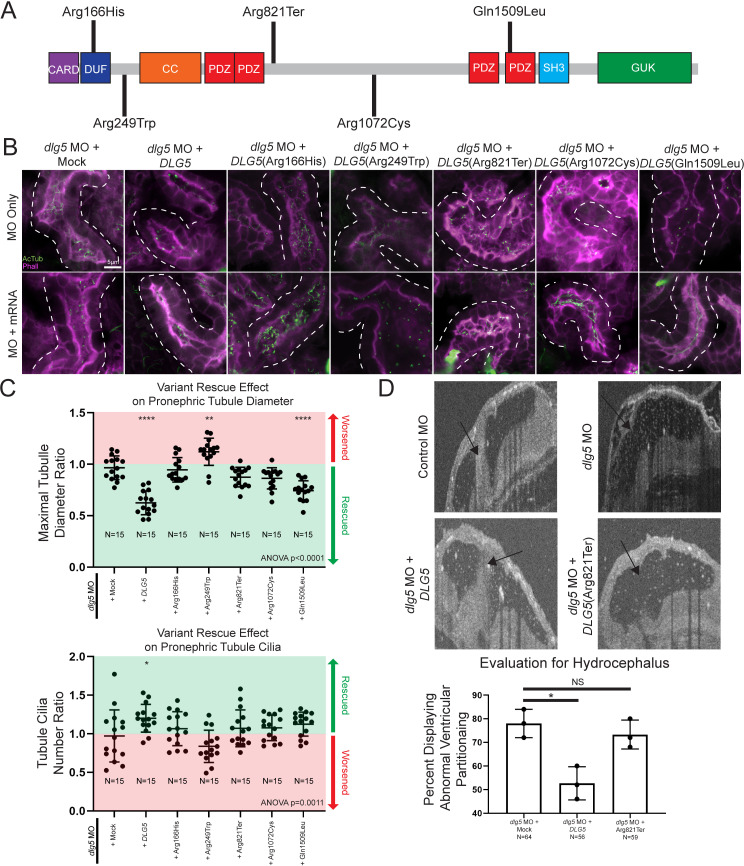
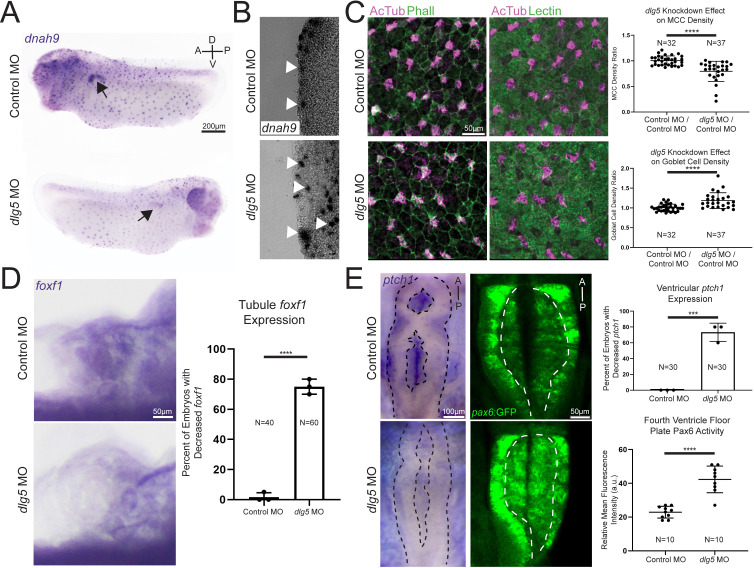
Patients with variants of were found to have a variety of phenotypes including cystic kidneys, nephrotic syndrome, hydrocephalus, limb abnormalities, congenital heart disease and craniofacial malformations. We also observed a loss of cilia in cystic kidney tissue of our proband. Knockdown of in embryos recapitulated many of these phenotypes and resulted in a loss of cilia in multiple tissues. Unlike introduction of wildtype in frog embryos depleted of introduction of patient variants was largely ineffective in restoring proper ciliation and tissue morphology in the kidney and brain suggesting that the variants were indeed detrimental to function.
These findings in both patient tissues and shed light on how mutations in may lead to tissue-specific manifestations of disease. DLG5 is essential for cilia and many of the patient phenotypes are in the ciliopathy spectrum.
纤毛是一种动态的细胞延伸结构,能够产生和感知信号,从而协调正常的发育和组织稳态。它们依赖于细胞的基础极性来参与信号转导。纤毛功能障碍是多种疾病的已知原因,这些疾病影响多个器官系统,包括肾脏、大脑、心脏、呼吸道、骨骼和视网膜。
在来自四个无关家庭的个体中,我们鉴定了 中的变体,这些变体在各种病理中表现出来。在我们的先证者中,我们还检查了患者的组织。我们在青蛙胚胎中敲除 以生成功能丧失模型。最后,我们通过在青蛙模型中的挽救实验测试了 患者变体的致病性。
发现携带 变体的患者具有多种表型,包括囊性肾病、肾病综合征、脑积水、肢体异常、先天性心脏病和颅面畸形。我们还观察到我们的先证者囊性肾病组织中的纤毛丧失。在 胚胎中敲低 可再现许多这些表型,并导致多个组织中的纤毛丧失。与野生型 的引入不同,引入 患者变体在很大程度上不能有效地恢复肾脏和大脑中正常的纤毛化和组织形态,表明这些变体确实对功能有害。
这些在患者组织和 中的发现揭示了 突变如何导致疾病的组织特异性表现。DLG5 对纤毛是必需的,许多患者表型都在纤毛病谱中。