Van Doorne Luc, Gholami Pedram, D'haese Jan, Hommez Geert, Meijer Gert, De Bruyn Hugo
Department of Oral and Maxillo-Facial Surgery, Medical & Cosmetic Treatments, Cosmipolis Clinic, Sint Claradreef 77, 8000 Brugge, Belgium.
Department of Periodontology and oral implantology, Oral and Maxillo-Facial Surgery, Dental Radiology, Ghent University Hospital, Corneel Heymanslaan 10, 9000 Ghent, Belgium.
J Clin Med. 2020 Jul 5;9(7):2120. doi: 10.3390/jcm9072120.
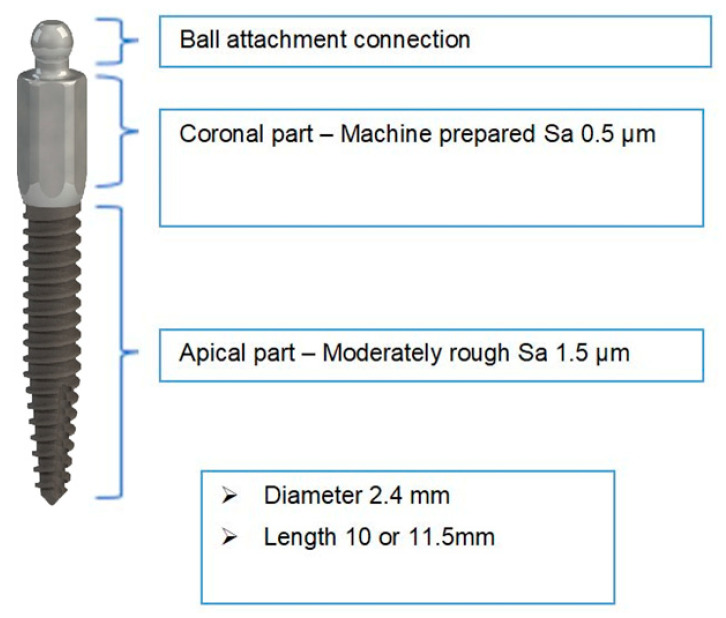
Free-handed, flaplessly placed mini dental implants (MDIs) are a valuable, more affordable and minimally invasive treatment to support overdentures in fully edentulous jaws, especially for medically compromised patients. However, critical 3D radiographic evaluation is lacking. This multicenter prospective case series assessed clinical outcome and carried out 3D- cone-beam computerized tomography (CBCT) analysis of free-handed flaplessly placed one-piece maxillary MDIs by an experienced maxillofacial surgeon.
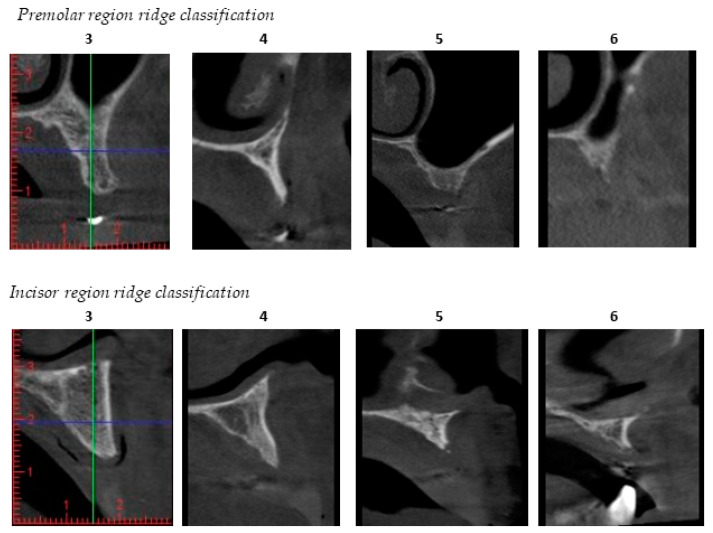
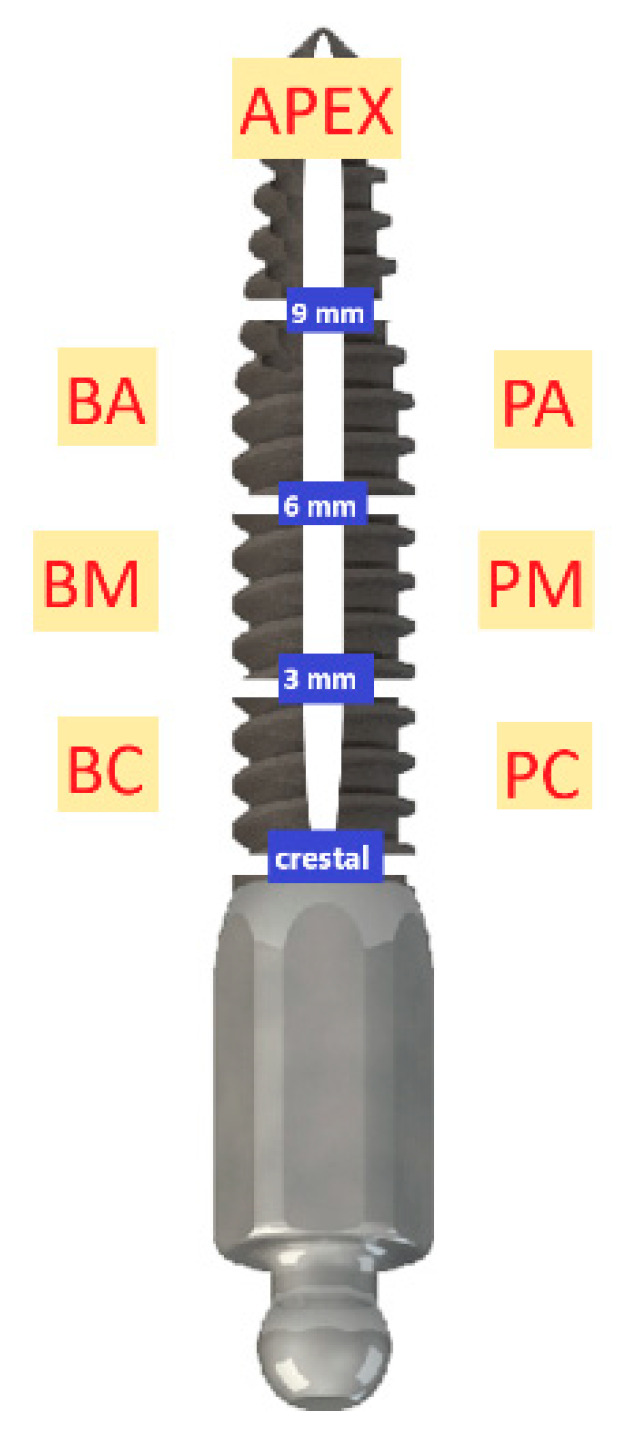
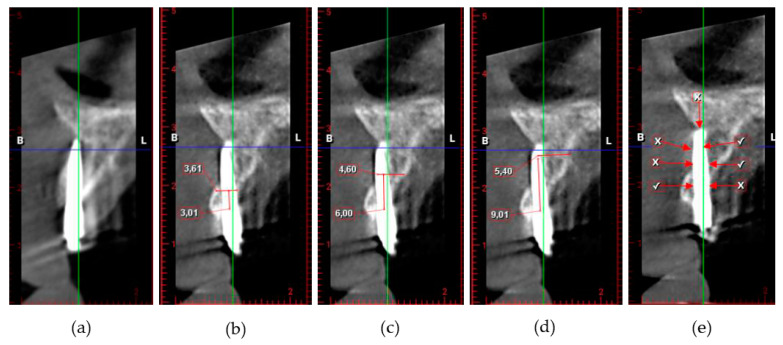
Thirty-one patients suffering from an ill-fitting maxillary denture relating to compromised bone volume (as confirmed on CBCT), with a dentate mandible, were selected. They received 5-6 MDIs free-hand flaplessly placed and mentally guided with preoperative CBCT. Final connection and attachment activation took place six months later. After two years each implant was individually assessed with CBCT for perforations on eight sites. Implant survival, prosthetic failure, clinical stability and sinus/nasal complaints were registered after three years.
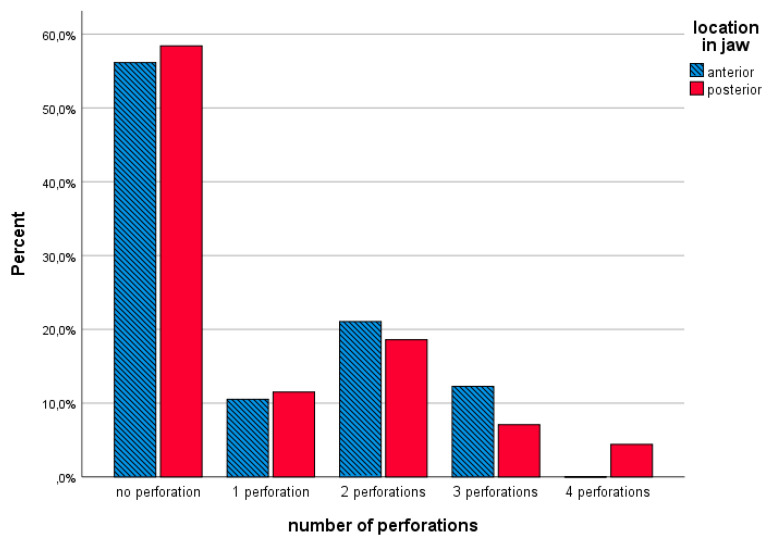
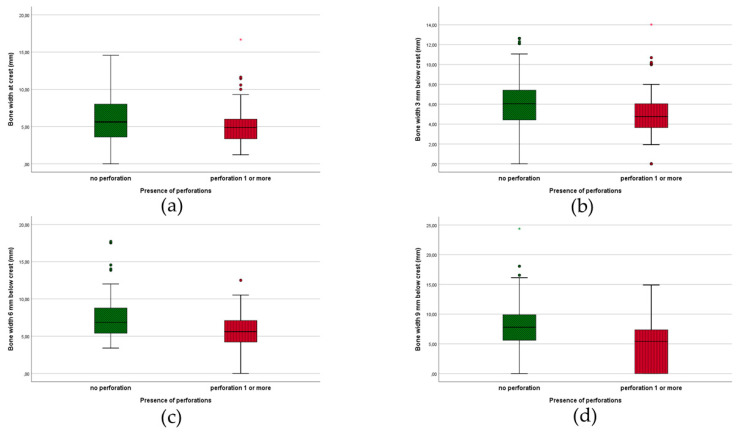
32/185 (17.3%) MDIs failed during the provisional loading with non-activated attachments; 17 replacements in 10 patients were performed. Of the 170 actively loaded 170 MDIs, 82.3% survived and 27/31 prostheses (87%) were fully functional. In total 98/170 MDIs showed no perforation. Based on 1360 CBCT observations, 231 perforations (16.9%) were registered. Of most perforations 37 (25%) were observed at the apical tip and 37 were positioned (21%) into the sinus/nasal cavity, although without clinical complaints.
Given the compromised population, the minimally invasive procedure and the low treatment cost involved, a failure rate of 17% is substantial, however clinically acceptable given the critical bone condition. However, even in experienced surgical hands, freehanded and flapless placement yield a high risk for implant perforation, although this did not necessarily lead to complications.
徒手无瓣植入微型牙种植体(MDIs)是一种有价值、更经济且微创的治疗方法,用于支持全口无牙颌的覆盖义齿,尤其适用于有医疗并发症的患者。然而,缺乏关键的三维影像学评估。本多中心前瞻性病例系列评估了临床结果,并由经验丰富的颌面外科医生对徒手无瓣植入的一体式上颌MDIs进行了三维锥形束计算机断层扫描(CBCT)分析。
选择31例上颌义齿不合适且骨量受损(CBCT证实)、下颌有牙的患者。他们接受了5 - 6颗MDIs的徒手无瓣植入,并在术前CBCT的引导下进行操作。六个月后进行最终连接和附着激活。两年后,对每颗种植体进行CBCT单独评估,检查八个部位是否有穿孔。三年后记录种植体存活率、修复失败情况、临床稳定性以及鼻窦/鼻腔相关症状。
在临时加载未激活附着体期间,32/185(17.3%)颗MDIs失败;对10例患者进行了17次种植体替换。在170颗进行了有效加载的MDIs中,82.3%存活,27/31(87%)个修复体功能完好。总共98/170颗MDIs未显示穿孔。基于1360次CBCT观察,记录到231处穿孔(16.9%)。大多数穿孔中,37处(25%)出现在根尖,37处(21%)位于鼻窦/鼻腔内,尽管没有临床症状。
考虑到患者情况不佳、手术微创且治疗成本低,17%的失败率虽高,但鉴于骨条件较差,在临床上仍可接受。然而,即使是经验丰富的外科医生,徒手无瓣植入也会导致种植体穿孔的高风险,尽管这不一定会引发并发症。