Li Juyi, Li Yuanyuan, Ni Haichun, Yang Zhibin, Chen Jian, Li Yarong, Ding Sheng, Jiang Xiaowan, Wang Mengjie, Li Li, Lv Xiaoyu, Ruan Xiaoyun, Jiang Qian, Lei Zhang, Cheng Yong, Huang Juan, Deng Aiping
Department of Pharmacy, The Central Hospital of Wuhan, Tongji Medical College, Huazhong University of Science and Technology, Wuhan, China.
Department of Pathology, The Central Hospital of Wuhan, Tongji Medical College, Huazhong University of Science and Technology, Wuhan, China.
Front Oncol. 2020 Jun 19;10:983. doi: 10.3389/fonc.2020.00983. eCollection 2020.
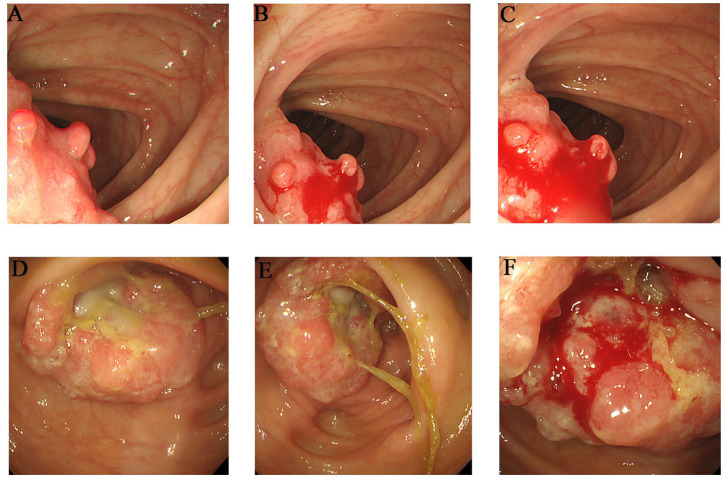
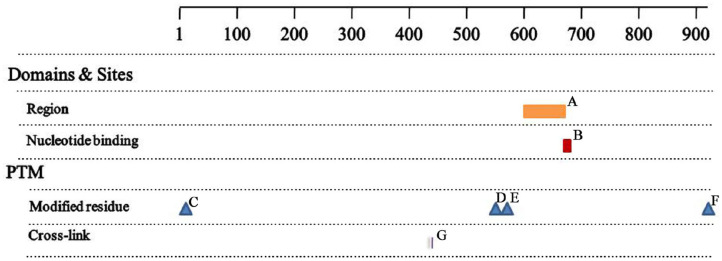
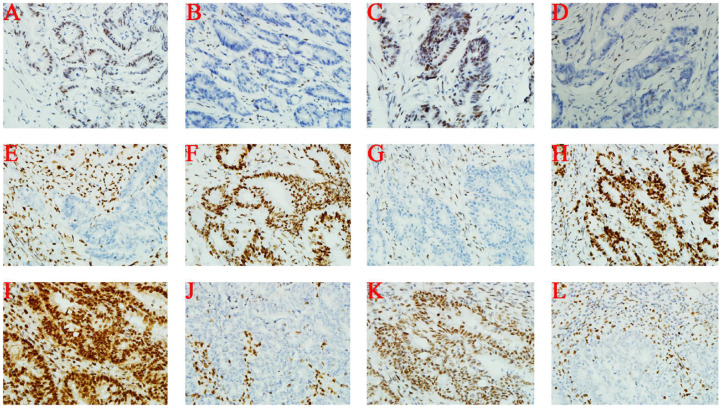
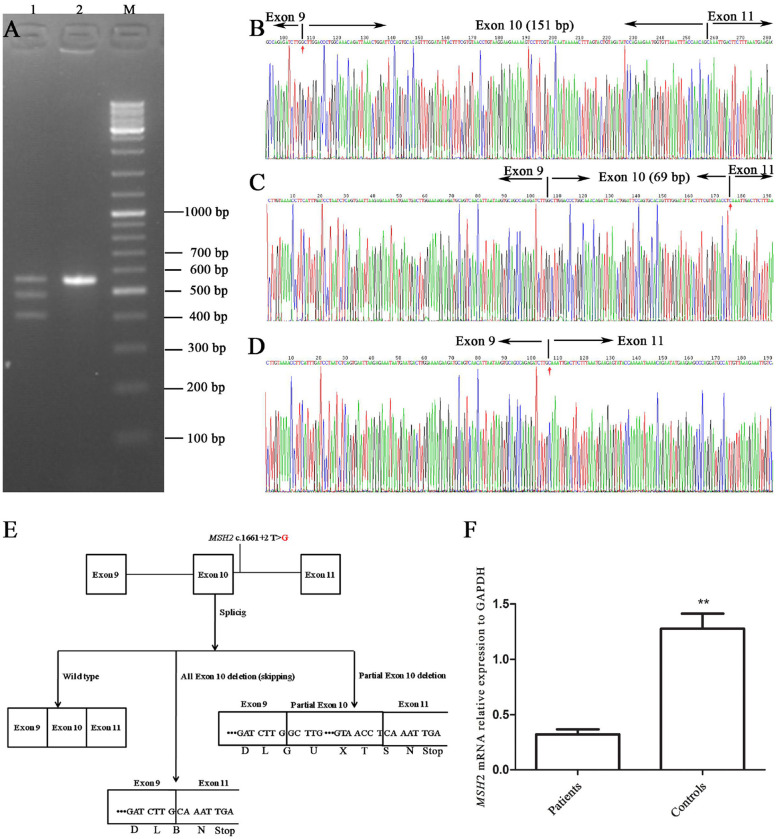
Lynch syndrome (LS) is an inherited autosomal dominant disorder caused by germline mutations of mismatch repair (MMR) genes, including , and . This study aimed to analyze the molecular defects and clinical manifestations of an affected family and propose appropriate individual prevention strategies for all mutation carriers. A novel splicing mutation (c.1661+2 T>G) was identified in the gene, which was found to co-segregate among affected family members by Whole exome sequencing (WES). RT-PCR analysis confirmed that c.1661+2 T>G could produce 3 transcripts, including 1 normal transcript and 2 aberrant transcripts. The 2 aberrant transcripts resulted in premature termination at the 6th nucleotide codon of exon 11, so that the predicted products of the mutant mRNAs were truncated proteins of 505 amino acids (with all of exon 10 deleted) and 528 amino acids (with a deletion of 82-nucleotides in exon 10), resulting in the loss of the interaction domain, the ATP domain and post-translationally modified residues. Quantitative RT-PCR (qRT-PCR) analysis showed that mRNA levels in all patients were reduced to only 1/4 of the control levels. Our study reveals that a novel splicing mutation (c.1661+2 T>G) in the gene causes LS and reaffirms the importance of genetic testing for LS.
林奇综合征(LS)是一种由错配修复(MMR)基因的种系突变引起的常染色体显性遗传疾病,这些基因包括 、 和 。本研究旨在分析一个患病家族的分子缺陷和临床表现,并为所有突变携带者提出适当的个体预防策略。通过全外显子组测序(WES)在 基因中鉴定出一种新的剪接突变(c.1661+2 T>G),该突变在受影响的家族成员中共同分离。逆转录-聚合酶链反应(RT-PCR)分析证实,c.1661+2 T>G可产生3种转录本,包括1种正常转录本和2种异常转录本。这2种异常转录本导致第11外显子的第6个核苷酸密码子处提前终止,因此突变mRNA的预测产物是505个氨基酸的截短蛋白(第10外显子全部缺失)和528个氨基酸的截短蛋白(第10外显子缺失82个核苷酸),导致相互作用结构域、ATP结构域和翻译后修饰残基的丧失。定量逆转录-聚合酶链反应(qRT-PCR)分析表明,所有患者的 mRNA水平均降至对照水平的1/4。我们的研究揭示, 基因中的一种新的剪接突变(c.1661+2 T>G)导致林奇综合征,并再次证实了林奇综合征基因检测的重要性。