Arlt Heike, Mullarkey Tara, Hu Dorothy, Baron Roland, Ominsky Michael S, Mitlak Bruce, Lanske Beate, Besschetnova Tatiana
Radius Health Inc., Waltham, MA, USA.
Harvard School of Dental Medicine, Boston, MA, USA.
Bone Rep. 2020 Jun 26;13:100291. doi: 10.1016/j.bonr.2020.100291. eCollection 2020 Dec.
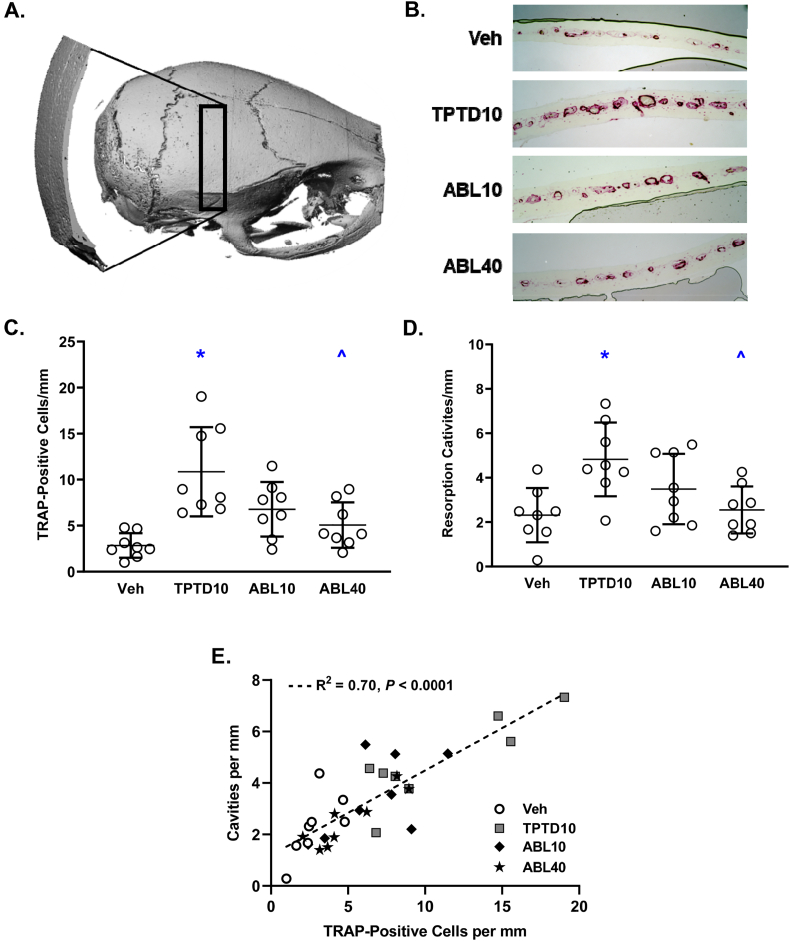
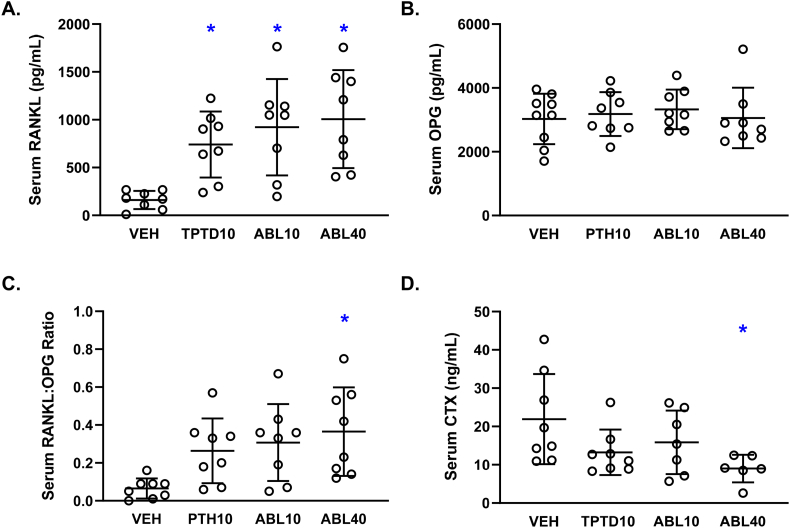
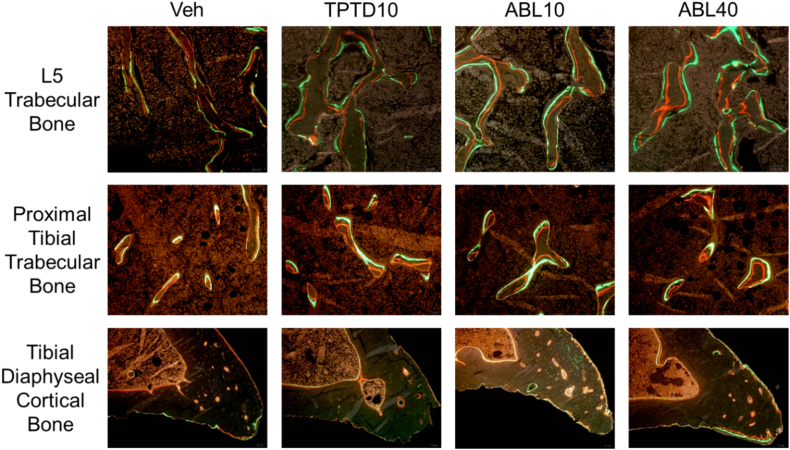
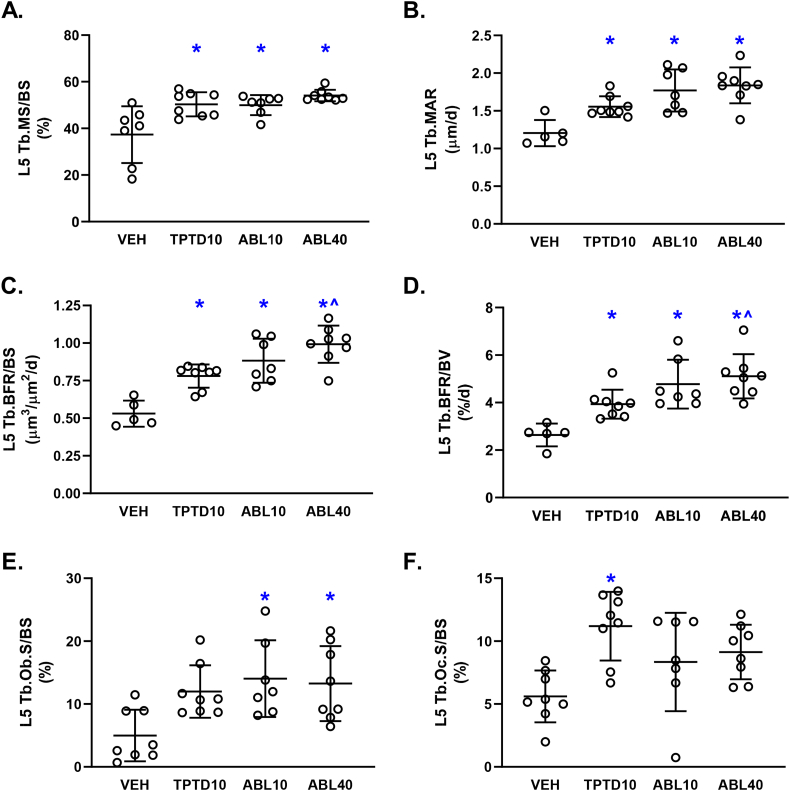
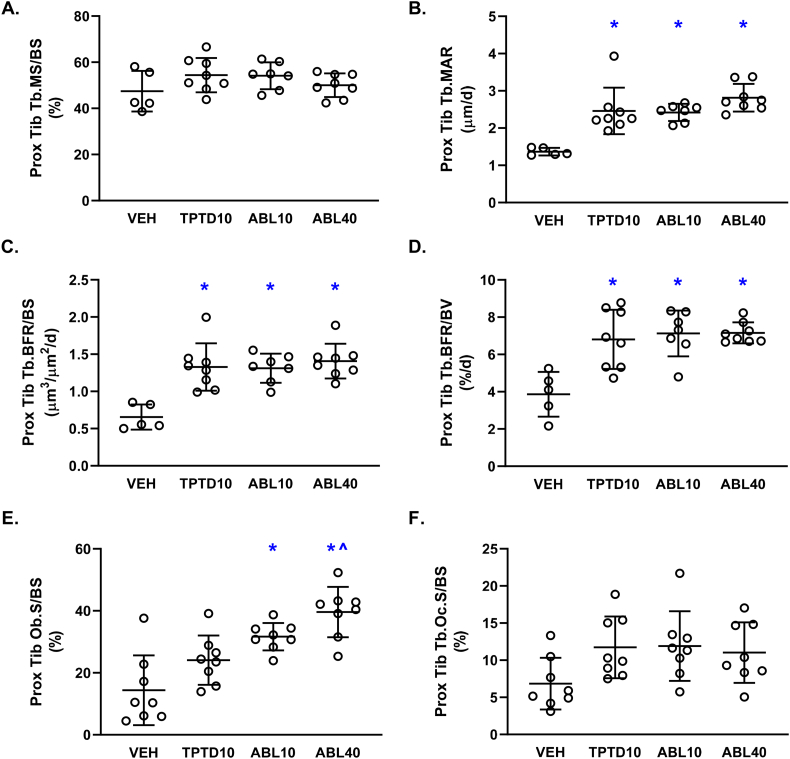
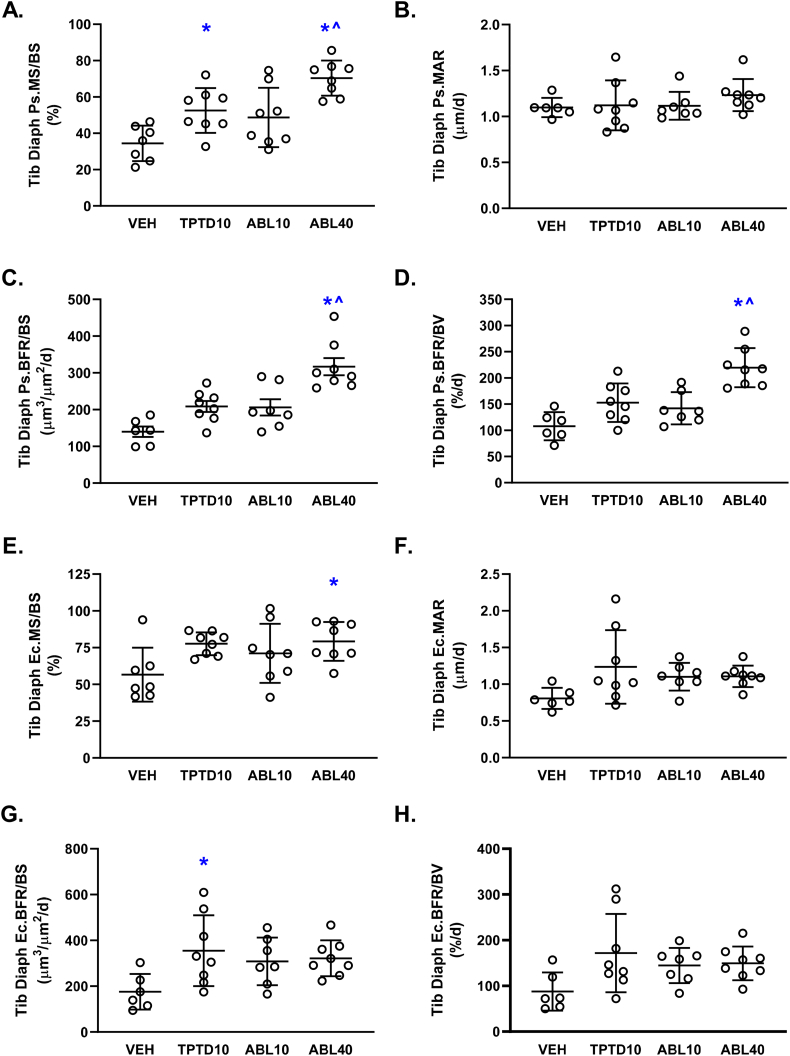
Intermittent administration of PTH type 1 receptor (PTH1R) agonists increases bone remodeling, with greater stimulation of bone formation relative to bone resorption causing net gains in bone mass. This pharmacodynamic feature underlies the bone-building effects of teriparatide and abaloparatide, the only PTH1R agonists approved to reduce osteoporotic fracture risk in postmenopausal women. This study in 8-week-old female mice compared bone resorption and formation responses to these agents delivered at the same 10 μg/kg dose, and a 40 μg/kg abaloparatide dose was also included to reflect its 4-fold higher approved clinical dose. Peptides or vehicle were administered by daily supra-calvarial subcutaneous injection for 12 days, and local (calvarial) and systemic (L5 vertebral and tibial) responses were evaluated by histomorphometry. Terminal bone histomorphometry data indicated that calvarial resorption cavities were similar in both abaloparatide groups versus vehicle controls, whereas the teriparatide group had more calvarial resorption cavities compared with the vehicle or abaloparatide 40 μg/kg groups. The bone resorption marker serum CTX was significantly lower in the abaloparatide 40 μg/kg group and similar in the other two active treatment groups compared with vehicle controls. Both peptides increased trabecular bone formation rate (BFR) in L5 and proximal tibia versus vehicle, and L5 BFR was higher with abaloparatide 40 μg/kg versus teriparatide. At the tibial diaphysis, periosteal BFR was higher with abaloparatide 40 μg/kg versus vehicle or teriparatide, and endocortical BFR was higher with teriparatide but not with abaloparatide 10 or 40 μg/kg versus vehicle. Few differences in structural or microarchitectural bone parameters were observed with this brief duration of treatment. In summary, calvarial bone resorption cavity counts were higher in the teriparatide group versus the vehicle and abaloparatide 40 μg/kg groups, and the abaloparatide 40 μg/kg group had lower serum CTX versus vehicle. L5 and tibial trabecular bone formation indices were higher in all three active treatment groups versus vehicle. The abaloparatide 40 μg/kg group had higher L5 trabecular BFR and tibial periosteal BFR versus teriparatide, whereas tibial endocortical BFR was higher with teriparatide but not abaloparatide. Together, these findings in female mice indicate that an improved balance of bone formation versus bone resorption is established shortly after initiating treatment with abaloparatide.
间歇性给予1型甲状旁腺激素受体(PTH1R)激动剂可增加骨重塑,相对于骨吸收,对骨形成的刺激更大,从而导致骨量净增加。这种药效学特征是特立帕肽和阿巴洛帕肽促骨生成作用的基础,这两种药物是唯一被批准用于降低绝经后女性骨质疏松性骨折风险的PTH1R激动剂。本研究在8周龄雌性小鼠中比较了以相同的10μg/kg剂量给予这些药物后骨吸收和形成反应,还纳入了40μg/kg的阿巴洛帕肽剂量以反映其批准的临床剂量高4倍。通过每日颅骨皮下注射给予肽或赋形剂,持续12天,并通过组织形态计量学评估局部(颅骨)和全身(L5椎体和胫骨)反应。终末骨组织形态计量学数据表明,与赋形剂对照组相比,两个阿巴洛帕肽组的颅骨吸收腔相似,而与赋形剂或40μg/kg阿巴洛帕肽组相比,特立帕肽组的颅骨吸收腔更多。与赋形剂对照组相比,40μg/kg阿巴洛帕肽组的骨吸收标志物血清CTX显著降低,其他两个活性治疗组则相似。与赋形剂相比,两种肽均增加了L5和胫骨近端的小梁骨形成率(BFR),且40μg/kg阿巴洛帕肽组的L5 BFR高于特立帕肽组。在胫骨骨干,40μg/kg阿巴洛帕肽组的骨膜BFR高于赋形剂组或特立帕肽组,而与赋形剂相比,特立帕肽组的皮质内BFR较高,但10或40μg/kg阿巴洛帕肽组则无此差异。在这种短期治疗中,未观察到骨结构或微观结构参数的明显差异。总之,与赋形剂组和40μg/kg阿巴洛帕肽组相比,特立帕肽组的颅骨骨吸收腔计数更高,且40μg/kg阿巴洛帕肽组的血清CTX低于赋形剂组。与赋形剂相比,所有三个活性治疗组的L5和胫骨小梁骨形成指数均较高。与特立帕肽相比,40μg/kg阿巴洛帕肽组的L5小梁BFR和胫骨骨膜BFR更高,而特立帕肽组的胫骨皮质内BFR更高,阿巴洛帕肽组则无此差异。总之,雌性小鼠的这些研究结果表明,开始使用阿巴洛帕肽治疗后不久,骨形成与骨吸收之间的平衡得到改善。