Department of Neurobiology, University of Alabama at Birmingham, Birmingham, AL 35294, USA.
Civitan International Research Center, University of Alabama at Birmingham, Birmingham, AL 35294, USA.
Sci Adv. 2020 Jun 24;6(26):eaba4221. doi: 10.1126/sciadv.aba4221. eCollection 2020 Jun.
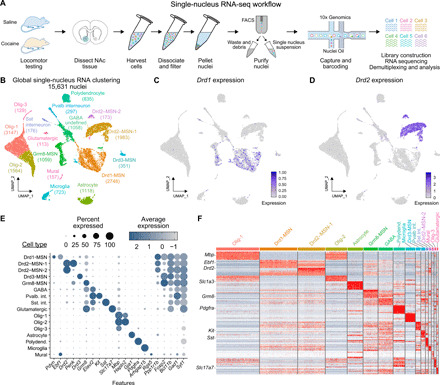
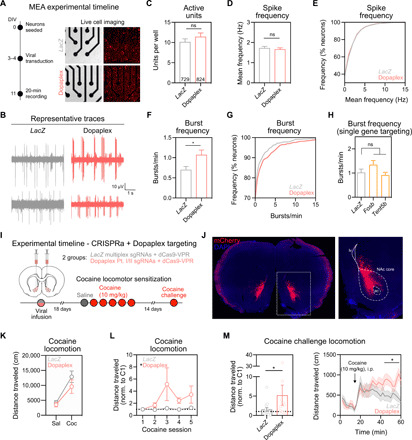
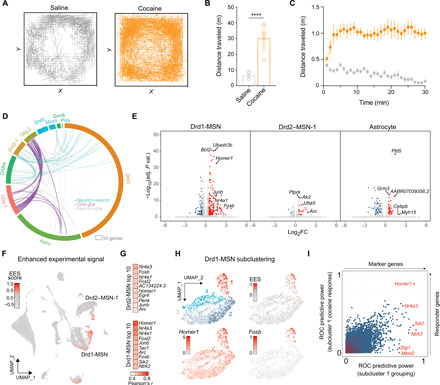
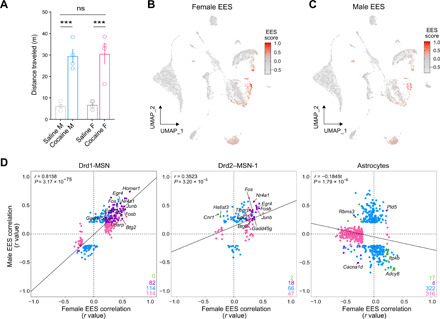
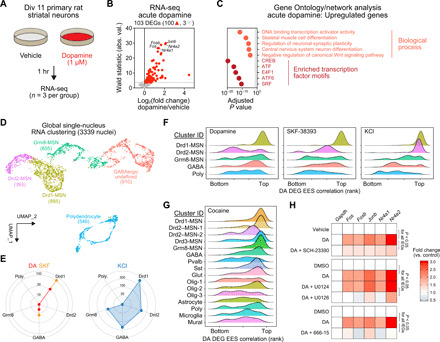
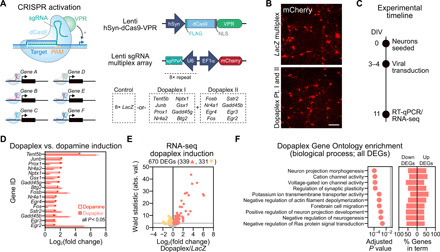
Drugs of abuse elevate dopamine levels in the nucleus accumbens (NAc) and alter transcriptional programs believed to promote long-lasting synaptic and behavioral adaptations. Here, we leveraged single-nucleus RNA-sequencing to generate a comprehensive molecular atlas of cell subtypes in the NAc, defining both sex-specific and cell type-specific responses to acute cocaine experience in a rat model system. Using this transcriptional map, we identified an immediate early gene expression program that is up-regulated following cocaine experience in vivo and dopamine receptor activation in vitro. Multiplexed induction of this gene program with a large-scale CRISPR-dCas9 activation strategy initiated a secondary synapse-centric transcriptional profile, altered striatal physiology in vitro, and enhanced cocaine sensitization in vivo. Together, these results define the transcriptional response to cocaine with cellular precision and demonstrate that drug-responsive gene programs can potentiate both physiological and behavioral adaptations to drugs of abuse.
滥用药物会提高伏隔核(NAc)中的多巴胺水平,并改变转录程序,这些程序被认为有助于促进持久的突触和行为适应。在这里,我们利用单细胞 RNA 测序生成了 NAc 中细胞亚型的综合分子图谱,定义了在大鼠模型系统中急性可卡因体验的性别特异性和细胞类型特异性反应。使用这个转录图谱,我们鉴定了一个即时早期基因表达程序,该程序在体内可卡因体验和体外多巴胺受体激活后上调。使用大规模的 CRISPR-dCas9 激活策略对这个基因程序进行多重诱导,引发了一个二次以突触为中心的转录特征,改变了体外纹状体的生理学,并增强了体内可卡因敏化。总之,这些结果以细胞精度定义了可卡因的转录反应,并表明药物反应基因程序可以增强对滥用药物的生理和行为适应。