
一项针对降低黏蛋白-1化合物的高内涵筛选将磷酸芦可替尼鉴定为在新冠疫情期间急性肺损伤快速重新利用的候选药物。
A High Content Screen for Mucin-1-Reducing Compounds Identifies Fostamatinib as a Candidate for Rapid Repurposing for Acute Lung Injury during the COVID-19 pandemic.
作者信息
Alimova Maria, Sidhom Eriene-Heidi, Satyam Abhigyan, Dvela-Levitt Moran, Melanson Michelle, Chamberlain Brian T, Alper Seth L, Santos Jean, Gutierrez Juan, Subramanian Ayshwarya, Grinkevich Elizabeth, Bricio Estefania Reyes, Kim Choah, Clark Abbe, Watts Andrew, Thompson Rebecca, Marshall Jamie, Pablo Juan Lorenzo, Coraor Juliana, Roignot Julie, Vernon Katherine A, Keller Keith, Campbell Alissa, Emani Maheswarareddy, Racette Matthew, Bazua-Valenti Silvana, Padovano Valeria, Weins Astrid, McAdoo Stephen P, Tam Frederick W K, Ronco Lucienne, Wagner Florence, Tsokos George C, Shaw Jillian L, Greka Anna
机构信息
The Broad Institute of MIT and Harvard, Cambridge, Massachusetts, USA.
Brigham and Women's Hospital and Harvard Medical School, Boston, Massachusetts, USA.
出版信息
bioRxiv. 2020 Jun 30:2020.06.30.180380. doi: 10.1101/2020.06.30.180380.
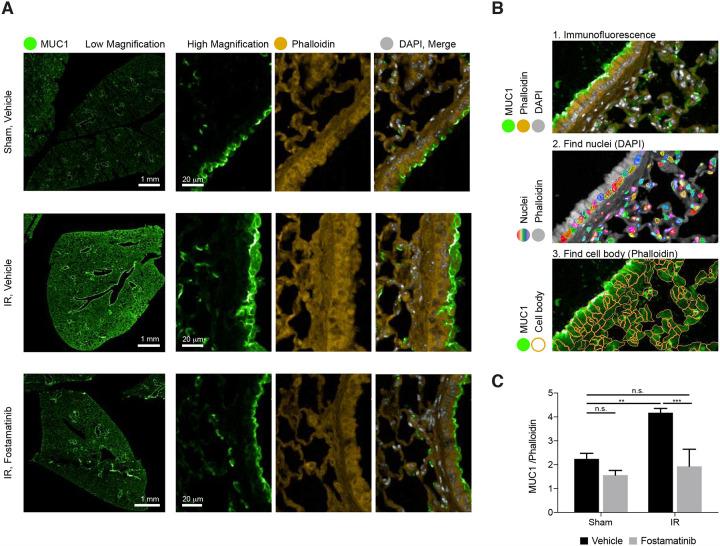
Drug repurposing is the only method capable of delivering treatments on the shortened time-scale required for patients afflicted with lung disease arising from SARS-CoV-2 infection. Mucin-1 (MUC1), a membrane-bound molecule expressed on the apical surfaces of most mucosal epithelial cells, is a biochemical marker whose elevated levels predict the development of acute lung injury (ALI) and respiratory distress syndrome (ARDS), and correlate with poor clinical outcomes. In response to the pandemic spread of SARS-CoV-2, we took advantage of a high content screen of 3,713 compounds at different stages of clinical development to identify FDA-approved compounds that reduce MUC1 protein abundance. Our screen identified Fostamatinib (R788), an inhibitor of spleen tyrosine kinase (SYK) approved for the treatment of chronic immune thrombocytopenia, as a repurposing candidate for the treatment of ALI. , Fostamatinib reduced MUC1 abundance in lung epithelial cells in a mouse model of ALI. , SYK inhibition by Fostamatinib promoted MUC1 removal from the cell surface. Our work reveals Fostamatinib as a repurposing drug candidate for ALI and provides the rationale for rapidly standing up clinical trials to test Fostamatinib efficacy in patients with COVID-19 lung injury.
药物重新利用是唯一能够在感染SARS-CoV-2引发肺部疾病的患者所需的缩短时间范围内提供治疗的方法。粘蛋白-1(MUC1)是一种在大多数粘膜上皮细胞顶端表面表达的膜结合分子,是一种生化标志物,其水平升高预示着急性肺损伤(ALI)和呼吸窘迫综合征(ARDS)的发展,并与不良临床结果相关。为应对SARS-CoV-2的大流行传播,我们利用对处于临床开发不同阶段的3713种化合物进行的高内涵筛选,来鉴定可降低MUC1蛋白丰度的FDA批准化合物。我们的筛选确定了 fostamatinib(R788),一种已被批准用于治疗慢性免疫性血小板减少症的脾酪氨酸激酶(SYK)抑制剂,作为治疗ALI的重新利用候选药物。在ALI小鼠模型中,fostamatinib降低了肺上皮细胞中MUC1的丰度。此外,fostamatinib对SYK的抑制促进了MUC1从细胞表面的清除。我们的工作揭示了fostamatinib作为ALI的重新利用药物候选物,并为迅速开展临床试验以测试fostamatinib对COVID-19肺损伤患者的疗效提供了理论依据。


 Zotero 插件