National Agricultural Research and Innovation Centre, Research Institute for Fisheries and Aquaculture, H-5540 Szarvas, Hungary.
Festetics György Doctoral School, Georgikon Faculty, University of Pannonia, H-8360 Keszthely, Hungary.
Genes (Basel). 2020 Jul 6;11(7):753. doi: 10.3390/genes11070753.
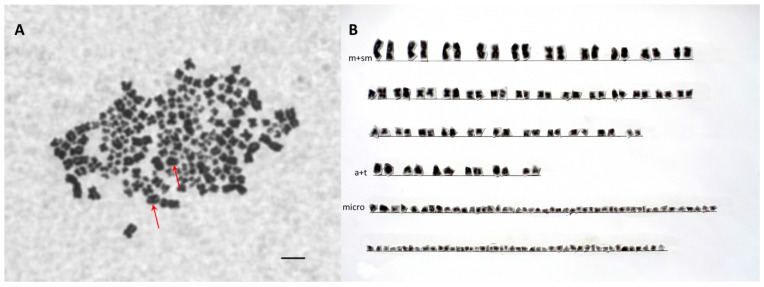
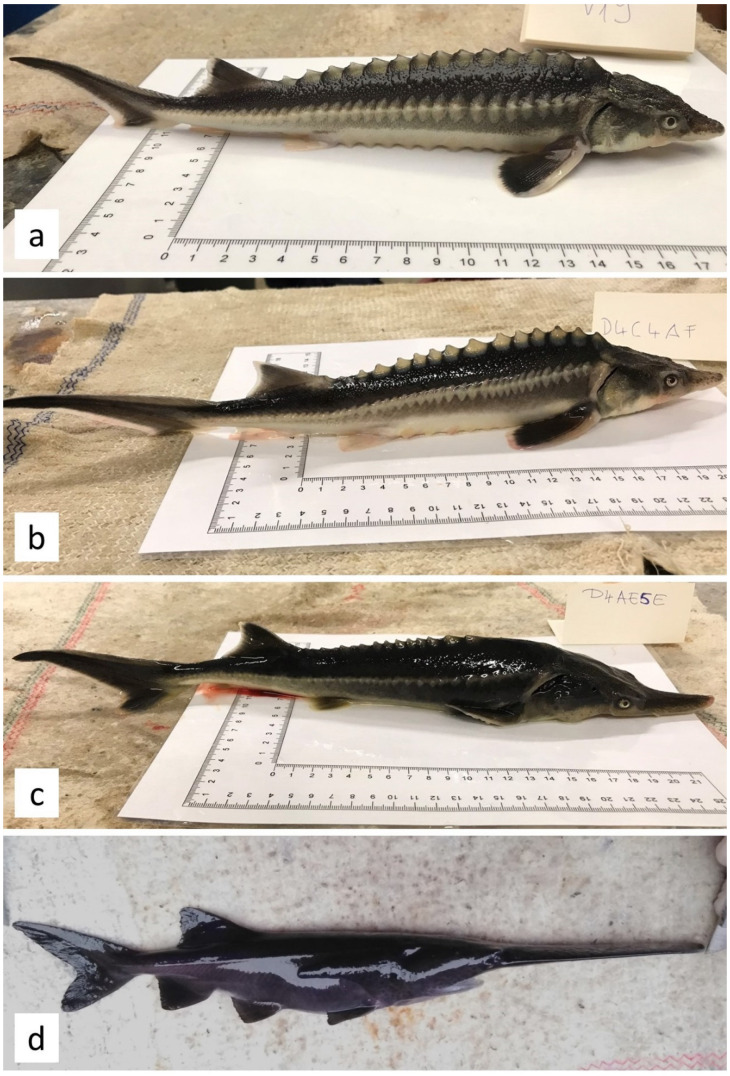
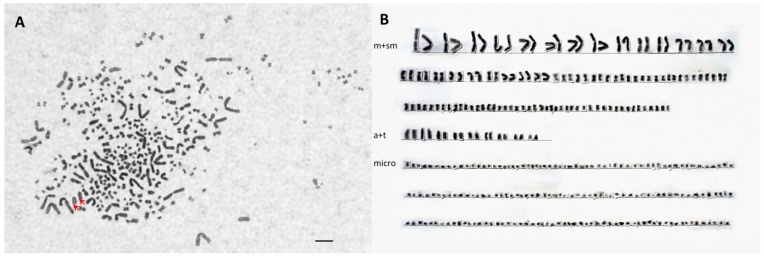
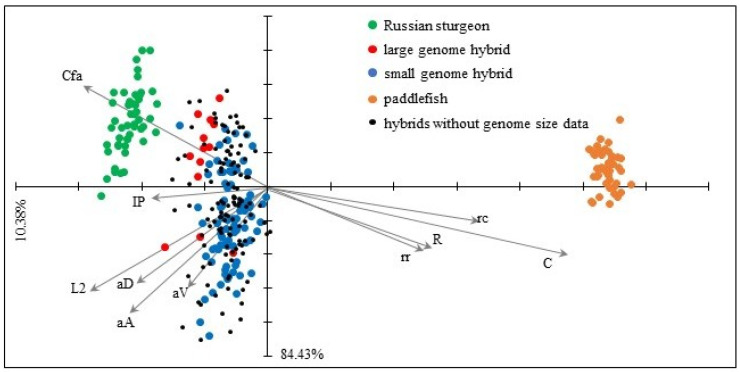
Two species from the families Acipenseridae and Polyodontidae, Russian sturgeon (, Brandt and Ratzeberg, 1833; functional tetraploid) and American paddlefish (, Walbaum 1792, functional diploid) were hybridized. The hybridization was repeated using eggs from three sturgeon and sperm from four paddlefish individuals. Survival in all hybrid family groups ranged from 62% to 74% 30 days after hatching. This was the first successful hybridization between these two species and between members of the family Acipenseridae and Polyodontidae. Flow cytometry and chromosome analysis revealed two ploidy levels in hybrids. The chromosome numbers of the hybrids ranged between 156-184 and 300-310, in "functional" triploids and "functional" pentaploids, respectively. The hybrid origin and the ploidy levels were also confirmed by microsatellite analyses. In hybrids, the size and the number of dorsal and ventral scutes correlated with the ploidy levels as well as with the calculated ratio of the maternal and paternal chromosome sets. An extra haploid cell lineage was found in three hybrid individuals irrespective of the ploidy level, suggesting polyspermy. Although the growth performance showed high variance in hybrids (mean: 1.2 kg, SD: 0.55), many individuals reached a size of approximately 1 kg by the age of one year under intensive rearing conditions.
两种来自鲟科和白鲟科的物种,俄罗斯鲟(,Brandt 和 Ratzeberg,1833;功能四倍体)和美洲匙吻鲟(,Walbaum 1792,功能二倍体)进行了杂交。使用来自三个鲟鱼的卵子和来自四个匙吻鲟个体的精子重复了杂交。在孵化后 30 天,所有杂交家族群体的存活率从 62%到 74%不等。这是这两个物种之间以及鲟科和白鲟科成员之间首次成功的杂交。流式细胞术和染色体分析显示杂交种存在两个倍性水平。杂交种的染色体数量在“功能”三倍体和“功能”五倍体之间分别在 156-184 和 300-310 之间。杂种的起源和倍性水平也通过微卫星分析得到证实。在杂交种中,背鳍和腹鳍的大小和数量与倍性水平以及计算出的母本和父本染色体组的比例相关。在三个杂交个体中发现了一个额外的单倍体细胞谱系,无论倍性水平如何,都表明多精受精。尽管杂种的生长性能表现出很高的变异性(平均值:1.2 公斤,标准差:0.55),但在密集养殖条件下,许多个体在一岁时达到了大约 1 公斤的大小。