KEMRI-Wellcome Trust Research Programme, Kilifi, Kenya.
Centre for Tropical Medicine and Global Health, Nuffield Department of Medicine, University of Oxford, Oxford, UK.
Bioethics. 2020 Oct;34(8):819-832. doi: 10.1111/bioe.12781. Epub 2020 Jul 9.
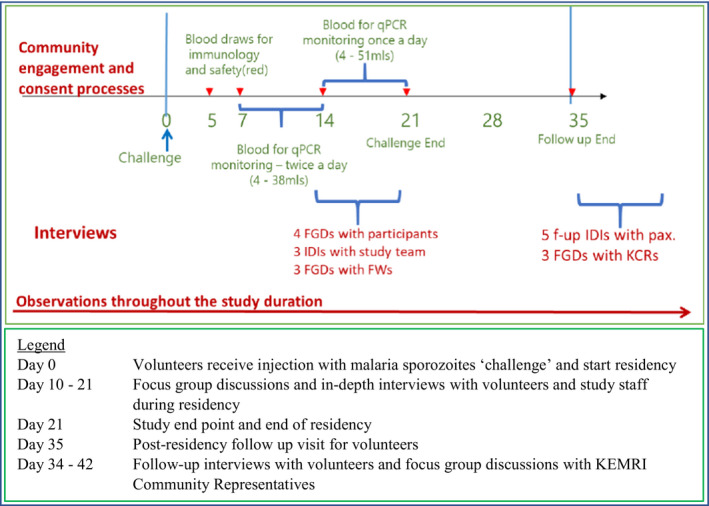
Controlled human malaria infection (CHMI) studies involve the deliberate infection of healthy volunteers with malaria parasites under controlled conditions to study immune responses and/or test drug or vaccine efficacy. An empirical ethics study was embedded in a CHMI study at a Kenyan research programme to explore stakeholders' perceptions and experiences of deliberate infection and moral implications of these. Data for this qualitative study were collected through focus group discussions, in-depth interviews and non-participant observation. Sixty-nine participants were involved, including CHMI study volunteers, community representatives and research staff. Data were managed using QSR Nvivo 10 and analysed using an inductive-deductive approach, guided by ethics literature. CHMI volunteers had reasonable understanding of the study procedures. Decisions to join were influenced by study incentives, trust in the research institution, their assessment of associated burdens and motivation to support malaria vaccine development. However, deliberate malaria infection was a highly unusual research strategy for volunteers, community representatives and some study staff. Volunteers' experiences of physical, emotional and social burdens or harms were often greater than anticipated initially, and fluctuated over time, related to specific procedures and events. Although unlikely to deter volunteers' participation in similar studies in furture, we argue that the dissonance between level of understanding of the burdens involved and actual experiences are morally relevant in relation to community engagement, informed consent processes, and ongoing support for volunteers and research staff. We further argue that ethics oversight of CHMI studies should take account of these issues in deciding whether consent, engagement and the balance of benefits and harms are reasonable in a given context.
人体疟疾感染控制(CHMI)研究涉及在受控条件下故意感染健康志愿者疟疾寄生虫,以研究免疫反应和/或测试药物或疫苗的功效。一项经验伦理学研究被嵌入肯尼亚研究计划的 CHMI 研究中,以探讨利益相关者对故意感染的看法和经验,以及这些感染的道德含义。这项定性研究的数据通过焦点小组讨论、深入访谈和非参与观察收集。共有 69 名参与者,包括 CHMI 研究志愿者、社区代表和研究人员。数据使用 QSR Nvivo 10 进行管理,并使用伦理文献指导的归纳演绎方法进行分析。CHMI 志愿者对研究程序有合理的理解。加入的决定受到研究激励、对研究机构的信任、对相关负担的评估以及支持疟疾疫苗开发的动机的影响。然而,对于志愿者、社区代表和一些研究人员来说,故意感染疟疾是一种非常不寻常的研究策略。志愿者的身体、情感和社会负担或伤害的经历往往比最初预期的更严重,并且随着时间的推移而波动,与特定的程序和事件有关。尽管不太可能阻止志愿者未来参与类似的研究,但我们认为,在社区参与、知情同意过程以及对志愿者和研究人员的持续支持方面,与所涉及的负担的理解水平和实际经历之间的不和谐是道德相关的。我们进一步认为,CHMI 研究的伦理监督应考虑到这些问题,以决定在特定背景下同意、参与以及利益和危害的平衡是否合理。