Department of Psychology, Xinxiang Medical University, Henan, 453003, China.
Sci Rep. 2020 Jul 9;10(1):11354. doi: 10.1038/s41598-020-68427-y.
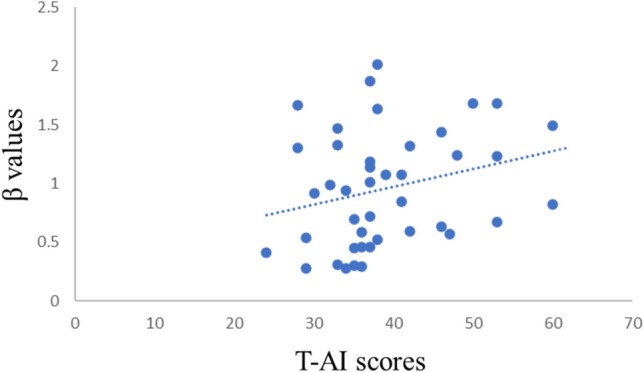
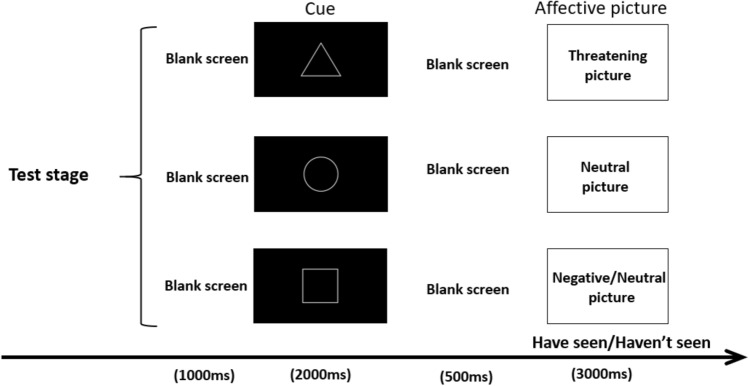
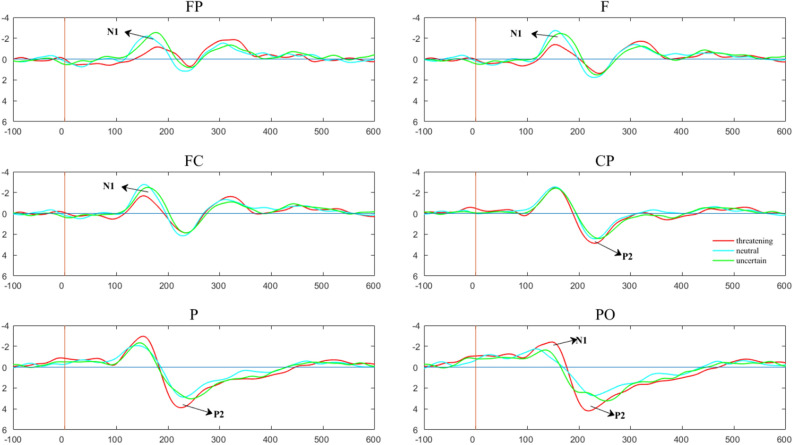
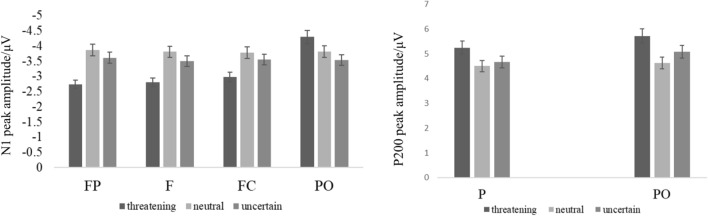
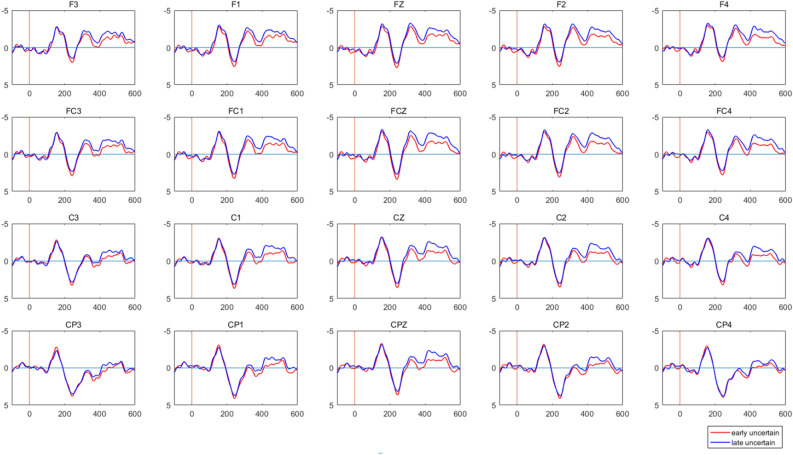
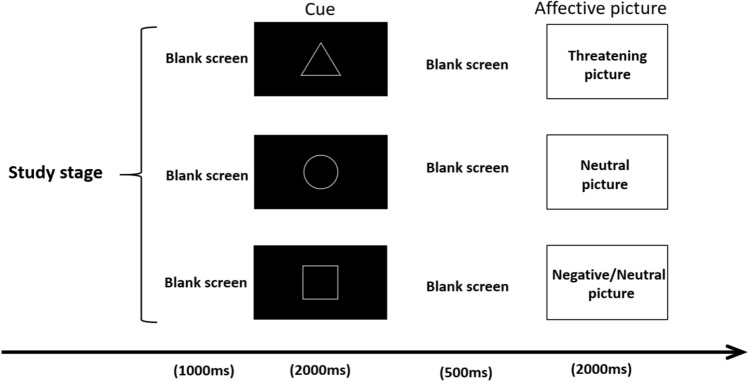
The intolerance of uncertainty (IU) model holds that excessive emotional response under uncertain conditions is conducive to the maintenance of anxiety, and individuals with a high anxiety level may exhibit a negative bias and experience anxiety when processing uncertain information. However, the dynamic electrophysiological correlation of this negative bias is not clear. Therefore, we used an adapted study-test paradigm to explore the changes in the electroencephalography (EEG) of subjects when processing uncertain cues and certain cues (certain neutral and certain threatening) and correlated the differences with anxiety level. The behavioral results showed that there was a significant positive correlation between the trait anxiety score and β value under the threatening condition, which indicated that individuals with high trait anxiety take a more conservative approach in the face of negative stimuli. The results of EEG showed that during the test stage, the components N1 and P2, which are related to early perception, had significant conditional main effects. Meanwhile, under uncertain conditions, the N1 peak was positively correlated with the state anxiety score. In the study stage, we found that the N400 component was significantly larger in the early study stage than in the late study stage under uncertain conditions. In sum, individuals with high anxiety levels had a negative bias in the early cue processing of the test stage, and anxiety did not affect the study stage.
不确定性容忍度(IU)模型认为,在不确定条件下过度的情绪反应有助于维持焦虑,而焦虑水平较高的个体在处理不确定信息时可能会表现出消极偏见并体验到焦虑。然而,这种消极偏见的动态电生理相关性尚不清楚。因此,我们使用了一种经过改编的学习-测试范式,来探索个体在处理不确定线索和确定线索(确定中性和确定威胁)时的脑电图(EEG)变化,并将差异与焦虑水平相关联。行为结果表明,在威胁条件下,特质焦虑得分与β值之间存在显著的正相关,这表明高特质焦虑的个体在面对负面刺激时采取更为保守的策略。EEG 结果表明,在测试阶段,与早期感知相关的 N1 和 P2 成分具有显著的条件主效应。同时,在不确定条件下,N1 峰与状态焦虑得分呈正相关。在学习阶段,我们发现,在不确定条件下,N400 成分在早期学习阶段显著大于晚期学习阶段。总之,焦虑水平较高的个体在测试阶段的早期线索处理中存在消极偏见,而焦虑对学习阶段没有影响。