Department of Biomedical Sciences of Cells and Systems, Section Molecular Neurobiology, University of Groningen, University Medical Center Groningen, A. Deusinglaan 1, 9713 AV, Groningen, the Netherlands.
Department of Biology, University of Virginia, Charlottesville, VA, 22904, USA.
Cell Mol Life Sci. 2021 Jan;78(1):143-171. doi: 10.1007/s00018-020-03586-9. Epub 2020 Jul 9.
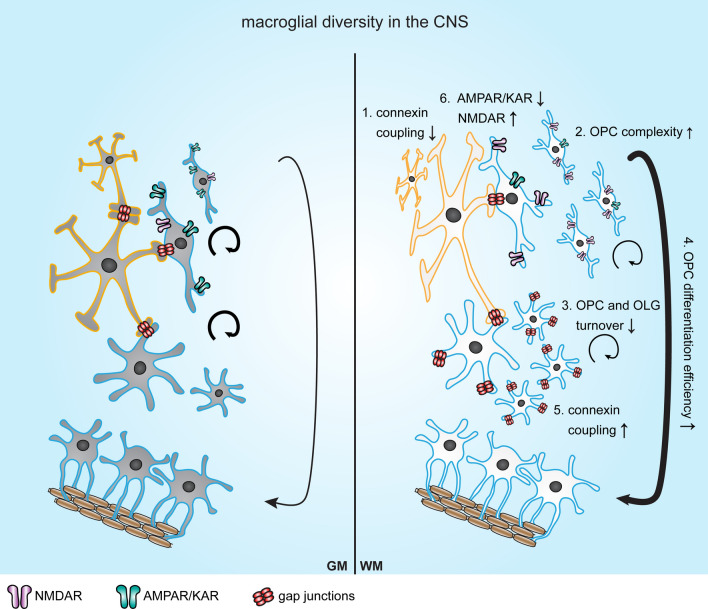
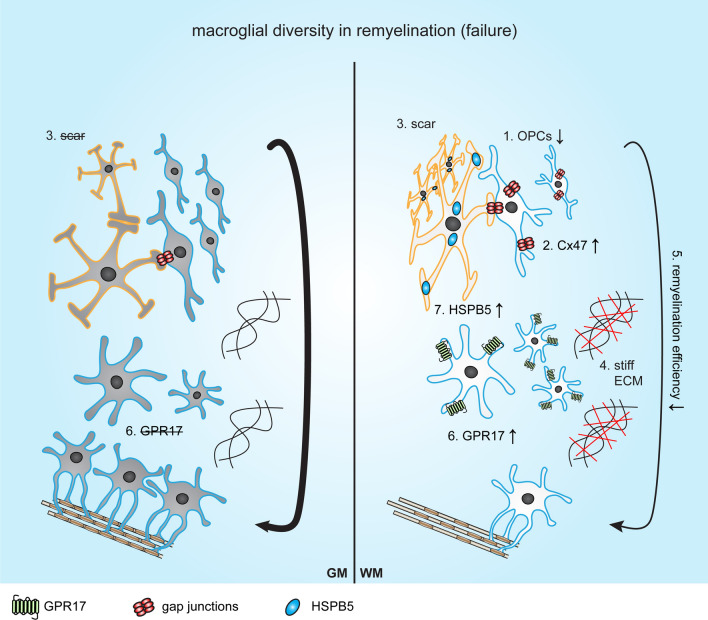
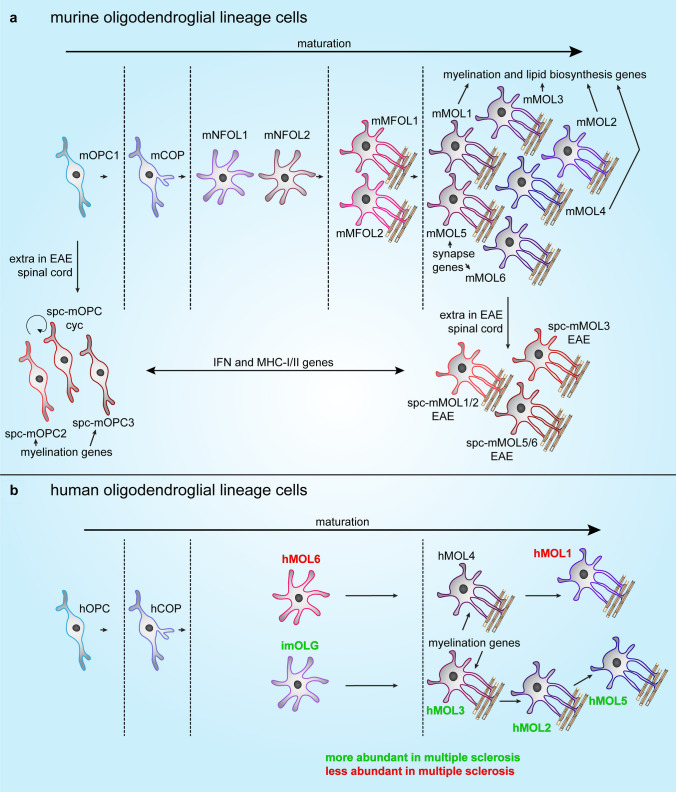
Macroglia, comprising astrocytes and oligodendroglial lineage cells, have long been regarded as uniform cell types of the central nervous system (CNS). Although regional morphological differences between these cell types were initially described after their identification a century ago, these differences were largely ignored. Recently, accumulating evidence suggests that macroglial cells form distinct populations throughout the CNS, based on both functional and morphological features. Moreover, with the use of refined techniques including single-cell and single-nucleus RNA sequencing, additional evidence is emerging for regional macroglial heterogeneity at the transcriptional level. In parallel, several studies revealed the existence of regional differences in remyelination capacity between CNS grey and white matter areas, both in experimental models for successful remyelination as well as in the chronic demyelinating disease multiple sclerosis (MS). In this review, we provide an overview of the diversity in oligodendroglial lineage cells and astrocytes from the grey and white matter, as well as their interplay in health and upon demyelination and successful remyelination. In addition, we discuss the implications of regional macroglial diversity for remyelination in light of its failure in MS. Since the etiology of MS remains unknown and only disease-modifying treatments altering the immune response are available for MS, the elucidation of macroglial diversity in grey and white matter and its putative contribution to the observed difference in remyelination efficiency between these regions may open therapeutic avenues aimed at enhancing endogenous remyelination in either area.
星型胶质细胞和少突胶质细胞谱系细胞构成了神经胶质细胞,长期以来一直被视为中枢神经系统 (CNS) 中均匀的细胞类型。尽管这些细胞类型在一个世纪前被鉴定出来后,其区域形态差异最初就有描述,但这些差异在很大程度上被忽视了。最近,越来越多的证据表明,基于功能和形态特征,神经胶质细胞在整个中枢神经系统中形成独特的群体。此外,随着单细胞和单细胞核 RNA 测序等精细技术的应用,在转录水平上出现了更多关于中枢神经系统灰质和白质区域神经胶质细胞区域异质性的证据。与此同时,几项研究揭示了中枢神经系统灰质和白质区域之间再髓鞘化能力的区域差异,包括成功再髓鞘化的实验模型和慢性脱髓鞘疾病多发性硬化症 (MS)。在这篇综述中,我们概述了灰质和白质中少突胶质细胞谱系细胞和星形胶质细胞的多样性,以及它们在健康和脱髓鞘及成功再髓鞘化时的相互作用。此外,我们还讨论了区域神经胶质细胞多样性对再髓鞘化的影响,因为 MS 的病因仍然未知,只有改变免疫反应的疾病修饰治疗方法可用于 MS。阐明灰质和白质中神经胶质细胞的多样性及其对这些区域之间再髓鞘化效率观察到的差异的潜在贡献,可能为增强这两个区域内的内源性再髓鞘化开辟治疗途径。