Geravandi Shirin, Liu Huan, Maedler Kathrin
Centre for Biomolecular Interactions Bremen, University of Bremen, 28359 Bremen, Germany.
Microorganisms. 2020 Jul 8;8(7):1017. doi: 10.3390/microorganisms8071017.
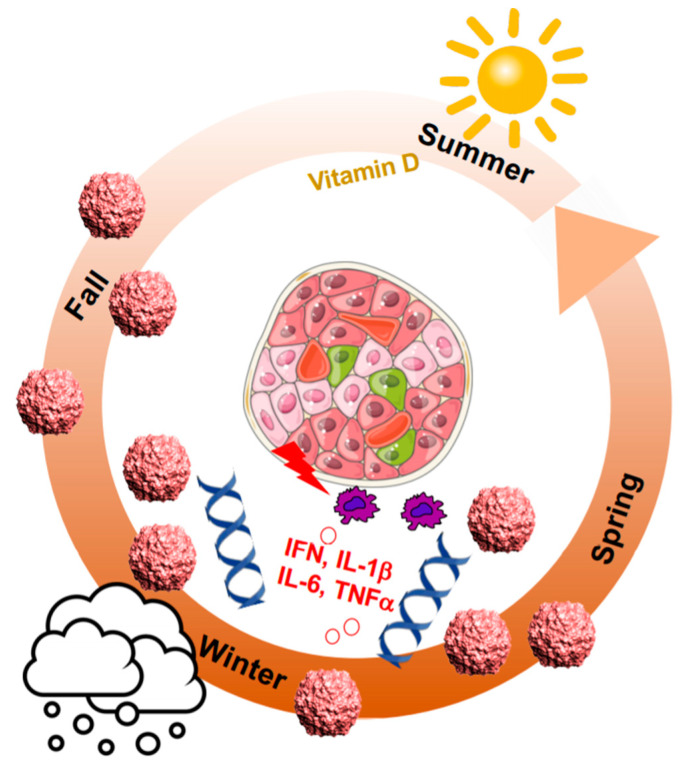
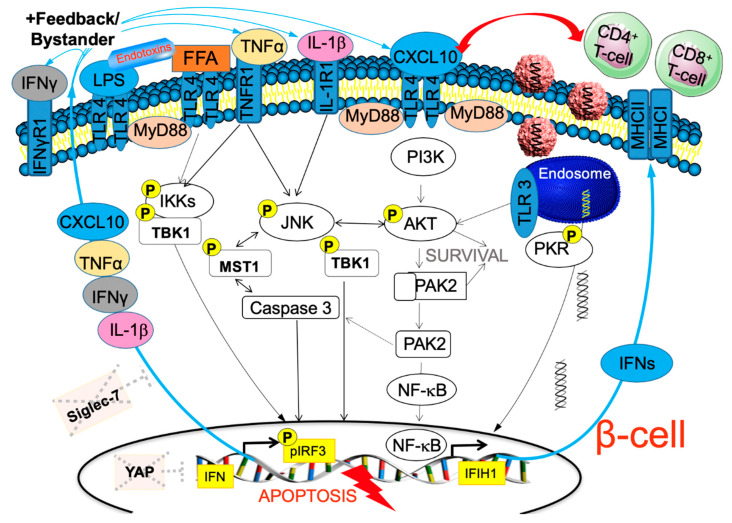
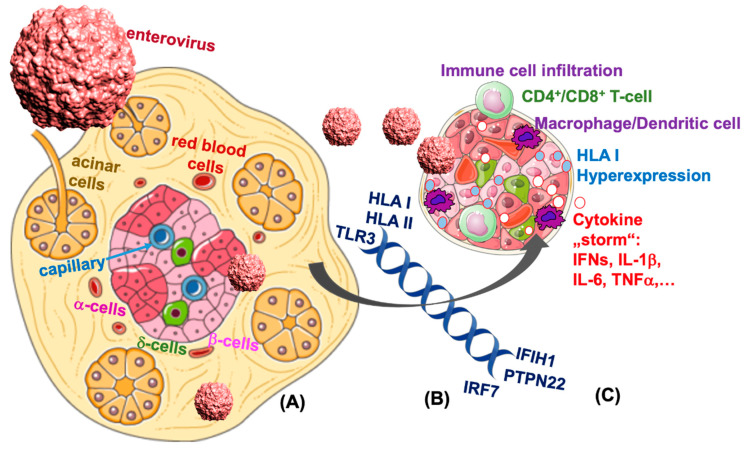
Type 1 diabetes (T1D) is a chronic autoimmune disorder that results from the selective destruction of insulin-producing β-cells in the pancreas. Up to now, the mechanisms triggering the initiation and progression of the disease are, in their complexity, not fully understood and imply the disruption of several tolerance networks. Viral infection is one of the environmental factors triggering diabetes, which is initially based on the observation that the disease's incidence follows a periodic pattern within the population. Moreover, the strong correlation of genetic susceptibility is a prerequisite for enteroviral infection associated islet autoimmunity. Epidemiological data and clinical findings indicate enteroviral infections, mainly of the coxsackie B virus family, as potential pathogenic mechanisms to trigger the autoimmune reaction towards β-cells, resulting in the boost of inflammation following β-cell destruction and the onset of T1D. This review discusses previously identified virus-associated genetics and pathways of β-cell destruction. Is it the virus itself which leads to β-cell destruction and T1D progression? Or is it genetic, so that the virus may activate auto-immunity and β-cell destruction only in genetically predisposed individuals?
1型糖尿病(T1D)是一种慢性自身免疫性疾病,由胰腺中产生胰岛素的β细胞被选择性破坏所致。到目前为止,引发该疾病起始和进展的机制非常复杂,尚未完全明确,涉及多个耐受网络的破坏。病毒感染是引发糖尿病的环境因素之一,这最初基于疾病发病率在人群中呈周期性模式这一观察结果。此外,遗传易感性的强相关性是肠道病毒感染相关胰岛自身免疫的先决条件。流行病学数据和临床发现表明,肠道病毒感染,主要是柯萨奇B病毒家族感染,是触发针对β细胞自身免疫反应的潜在致病机制,导致β细胞破坏后炎症加剧以及T1D发病。本综述讨论了先前确定的与病毒相关的遗传学以及β细胞破坏途径。是病毒本身导致β细胞破坏和T1D进展吗?还是由基因决定,以至于病毒可能仅在具有遗传易感性的个体中激活自身免疫和β细胞破坏?