Mayne G C, Woods C M, Dharmawardana N, Wang T, Krishnan S, Hodge J C, Foreman A, Boase S, Carney A S, Sigston E A W, Watson D I, Ooi E H, Hussey D J
Flinders Health and Medical Research Institute, Flinders University and Flinders Medical Centre, Bedford Park, South Australia, 5042, Australia.
Flinders Health and Medical Research Institute, Flinders University , Bedford Park, South Australia, 5042, Australia.
J Transl Med. 2020 Jul 10;18(1):280. doi: 10.1186/s12967-020-02446-1.
Oropharyngeal squamous cell carcinoma (OPSCC) is often diagnosed at an advanced stage because the disease often causes minimal symptoms other than metastasis to neck lymph nodes. Better tools are required to assist with the early detection of OPSCC. MicroRNAs (miRNAs, miRs) are potential biomarkers for early head and neck squamous cell cancer diagnosis, prognosis, recurrence, and presence of metastatic disease. However, there is no widespread agreement on a panel of miRNAs with clinically meaningful utility for head and neck squamous cell cancers. This could be due to variations in the collection, storage, pre-processing, and isolation of RNA, but several reports have indicated that the selection and reproducibility of biomarkers has been widely affected by the methods used for data analysis. The primary analysis issues appear to be model overfitting and the incorrect application of statistical techniques. The purpose of this study was to develop a robust statistical approach to identify a miRNA signature that can distinguish controls and patients with inflammatory disease from patients with human papilloma virus positive (HPV +) OPSCC.
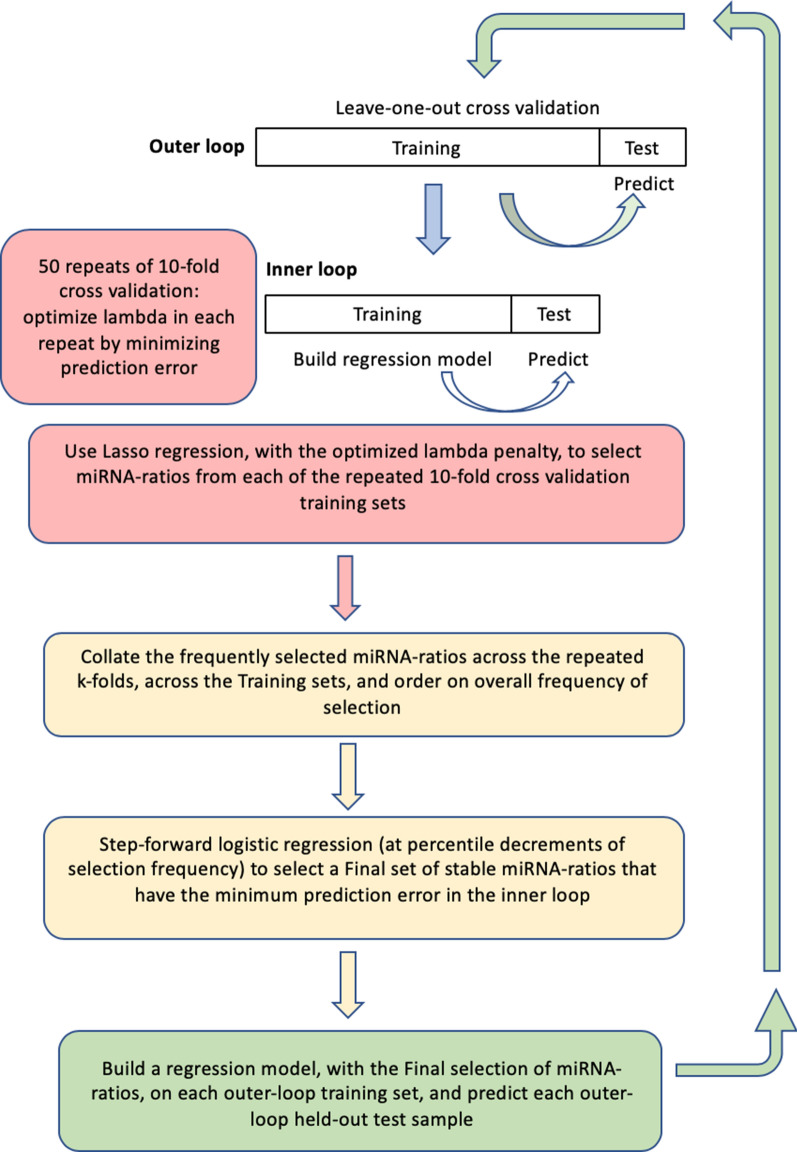
Small extracellular vesicles were harvested from the serum of 20 control patients, 20 patients with gastroesophageal reflux disease (GORD), and 40 patients with locally advanced HPV + OPSCC. MicroRNAs were purified, and expression profiled on OpenArray™. A novel cross validation method, using lasso regression, was developed to stabilise selection of miRNAs for inclusion in a prediction model. The method, named StaVarSel (for Stable Variable Selection), was used to derive a diagnostic biomarker signature.
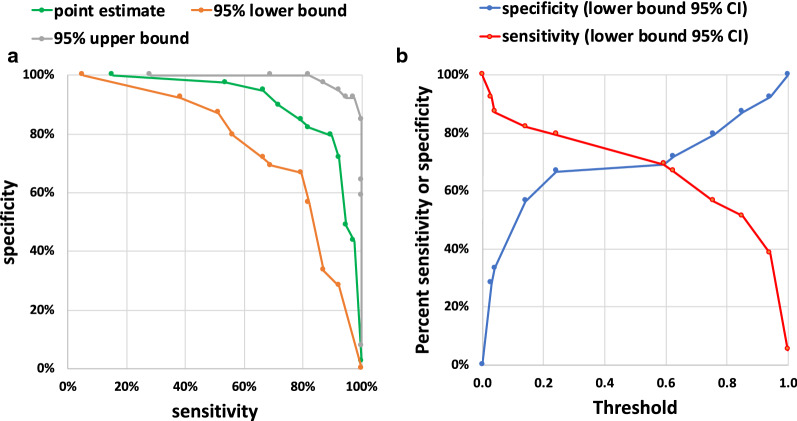
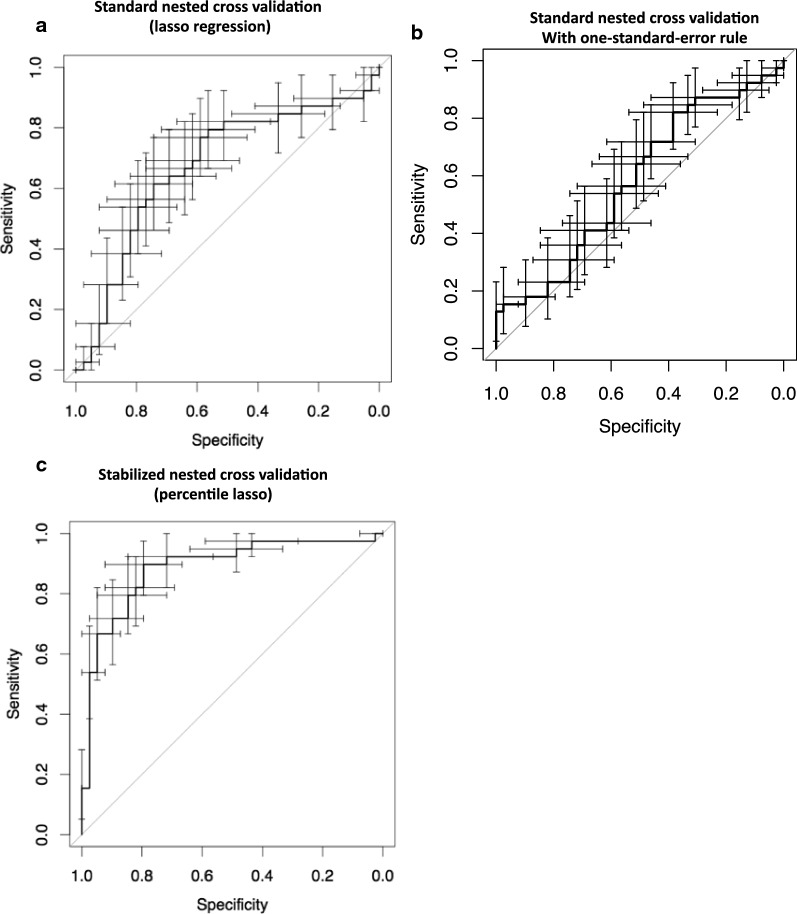
A standard cross validation approach was unable to produce a biomarker signature with good cross validated predictive capacity. In contrast, StaVarSel produced a regression model containing 11 miRNA ratios with potential clinical utility. Sample permutations indicated that the estimated cross validated prediction accuracy of the 11-miR-ratio model was not due to chance alone.
We developed a novel method, StaVarSel, that was able to identify a panel of miRNAs, present in small extracellular vesicles derived from blood serum, that robustly cross validated as a biomarker for the detection of HPV + OPSCC. This approach could be used to derive diagnostic biomarkers of other head and neck cancers.
口咽鳞状细胞癌(OPSCC)通常在晚期才被诊断出来,因为除了转移至颈部淋巴结外,该疾病通常引起的症状极少。需要更好的工具来辅助OPSCC的早期检测。微小RNA(miRNA,miR)是早期头颈鳞状细胞癌诊断、预后、复发及转移疾病存在的潜在生物标志物。然而,对于一组对头颈鳞状细胞癌具有临床意义的实用miRNA,尚未达成广泛共识。这可能是由于RNA的收集、储存、预处理和分离存在差异,但几份报告表明,生物标志物的选择和可重复性受到数据分析所用方法的广泛影响。主要分析问题似乎是模型过度拟合和统计技术的错误应用。本研究的目的是开发一种稳健的统计方法,以识别一种miRNA特征,该特征能够区分对照组和炎症性疾病患者与人类乳头瘤病毒阳性(HPV+)OPSCC患者。
从20名对照患者、20名胃食管反流病(GORD)患者和40名局部晚期HPV+OPSCC患者的血清中收集小细胞外囊泡。纯化微小RNA,并在OpenArray™上进行表达谱分析。开发了一种使用套索回归的新型交叉验证方法,以稳定选择纳入预测模型的miRNA。该方法名为StaVarSel(用于稳定变量选择),用于推导诊断生物标志物特征。
标准的交叉验证方法无法产生具有良好交叉验证预测能力的生物标志物特征。相比之下,StaVarSel产生了一个包含11个miRNA比值的回归模型,具有潜在的临床实用性。样本置换表明,11-miR-比值模型的估计交叉验证预测准确性并非仅由偶然因素导致。
我们开发了一种名为StaVarSel的新方法,该方法能够识别存在于源自血清的小细胞外囊泡中的一组miRNA,这些miRNA经过稳健的交叉验证,可作为检测HPV+OPSCC的生物标志物。这种方法可用于推导其他头颈癌的诊断生物标志物。