Department of Molecular Medicine, "Sapienza" University of Rome, Viale Regina Elena 324, 00161, Rome, Italy.
Radiation Oncology Center, S. Orsola-Malpighi Hospital, Bologna, Italy.
Ann Nucl Med. 2020 Oct;34(10):772-780. doi: 10.1007/s12149-020-01501-7. Epub 2020 Jul 11.
Radium-223 (Ra) has been approved for treatment in patients with metastatic castration-resistant prostatic cancer (mCRPC) and bone metastasis. This α-emitting radionuclide has a beneficial effect on pain and is also capable to increase overall survival (OS). Several studies evaluated the prognostic value of different biomarkers at baseline, such as serum values, imaging parameters or pain. To date, however, clinicians lack a validated and simple system to assess which patients will most likely benefit from Ra treatment. The 3-variable prognostic score (3-PS), proposed in a single-center study in 2017 classifies patients in five prognostic groups with a specific OS. This study aims to validate the 3-PS in a larger multicenter population.
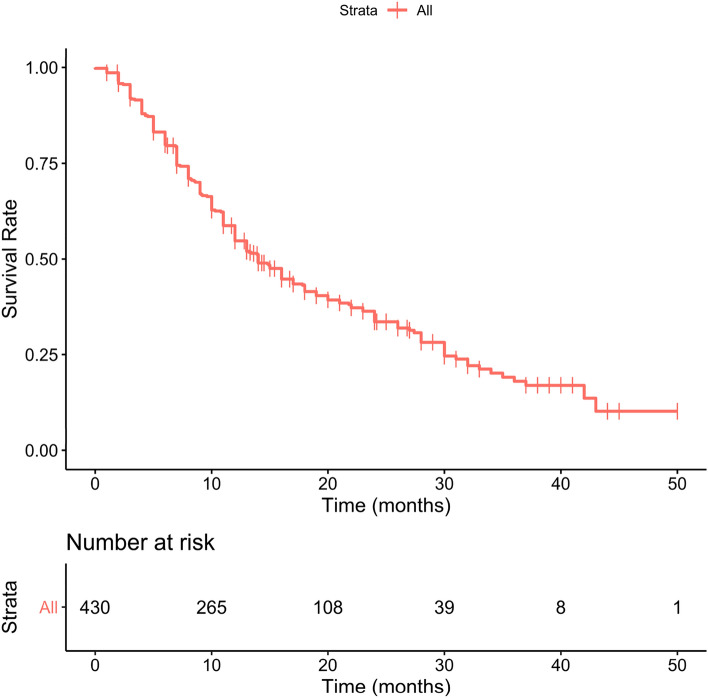
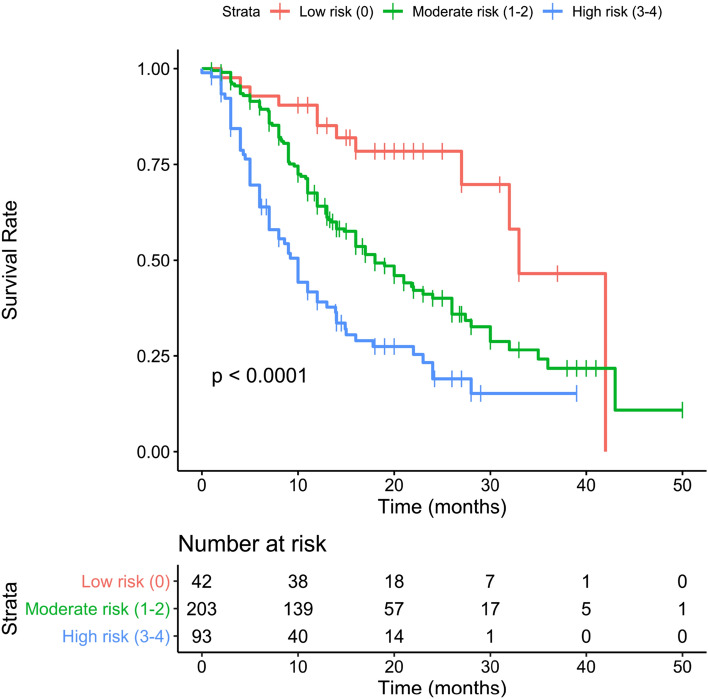
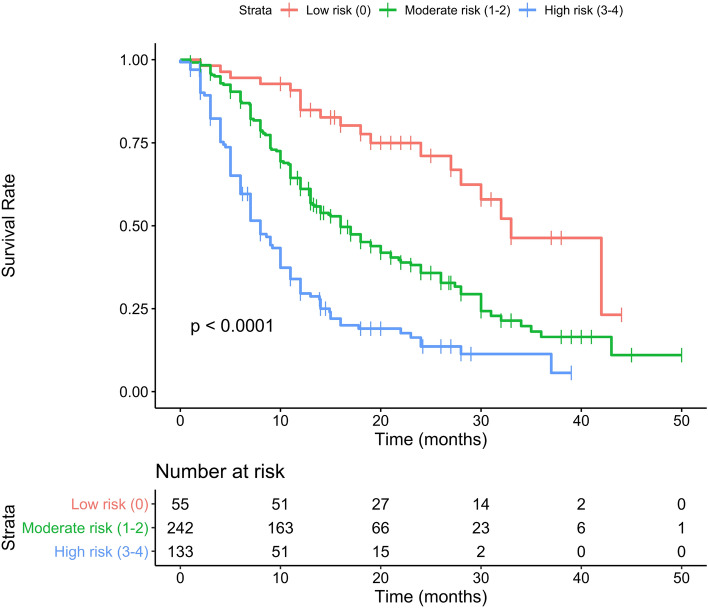
Four hundred and thirty mCRPC patients treated with Ra from six different centers were analyzed. The 3-PS score consists of the collection of baseline hemoglobin, prostatic specific antigen and Eastern cooperative oncology group performance status and was initially applied to the whole population (total group). The score was then validated on the 338 patient's subgroup (clean group) obtained by subtracting the 92 patients enrolled for the original study of the 3-PS score. This purified group served as further validation evidence.
Statistical analysis showed that the 3-PS score was valid on the total group as well as in the clean group as the AUC estimated (0.74) falls within the CI of the AUC calculated on the validation sample (95% CI 0.66-0.82).
This study confirms the validity of the 3-PS score for mCRPC patients. This score is simple, noninvasive and affordable and can be easily used to select patients that will most probably complete Ra treatment. In addition, this tool provides an exact estimate of life expectancy in terms of OS.
镭-223(Ra)已被批准用于治疗转移性去势抵抗性前列腺癌(mCRPC)和骨转移患者。这种α发射放射性核素对疼痛有有益的作用,并且还能够增加总生存期(OS)。几项研究评估了基线时不同生物标志物的预后价值,例如血清值、成像参数或疼痛。然而,迄今为止,临床医生缺乏一种经过验证的简单系统来评估哪些患者最有可能从 Ra 治疗中受益。3 变量预后评分(3-PS)于 2017 年在一项单中心研究中提出,将患者分为五个具有特定 OS 的预后组。本研究旨在在更大的多中心人群中验证 3-PS。
对来自六个不同中心的 430 名接受 Ra 治疗的 mCRPC 患者进行了分析。3-PS 评分由基线血红蛋白、前列腺特异性抗原和东部合作肿瘤组表现状态的收集组成,最初应用于整个人群(总组)。然后,通过从 3-PS 评分的原始研究中减去 92 名入组患者,将评分应用于 338 名患者的亚组(清洁组)。该净化组作为进一步验证证据。
统计分析表明,3-PS 评分在总组和清洁组中均有效,因为估计的 AUC(0.74)落在验证样本计算的 AUC 的置信区间内(95%CI 0.66-0.82)。
本研究证实了 3-PS 评分对 mCRPC 患者的有效性。该评分简单、无创且经济实惠,可用于轻松选择最有可能完成 Ra 治疗的患者。此外,该工具还提供了 OS 方面的准确预期寿命估计。