Sternbach Aaron J, Latini Simone, Chae Sanghoon, Hübener Hannes, De Giovannini Umberto, Shao Yinming, Xiong Lin, Sun Zhiyuan, Shi Norman, Kissin Peter, Ni Guang-Xin, Rhodes Daniel, Kim Brian, Yu Nanfang, Millis Andrew J, Fogler Michael M, Schuck Peter J, Lipson Michal, Zhu X-Y, Hone James, Averitt Richard D, Rubio Angel, Basov D N
Department of Physics, Columbia University, New York, NY, 10027, USA.
Max Planck Institute for the Structure and Dynamics of Matter, Luruper Chaussee 149, 22761, Hamburg, Germany.
Nat Commun. 2020 Jul 16;11(1):3567. doi: 10.1038/s41467-020-17335-w.
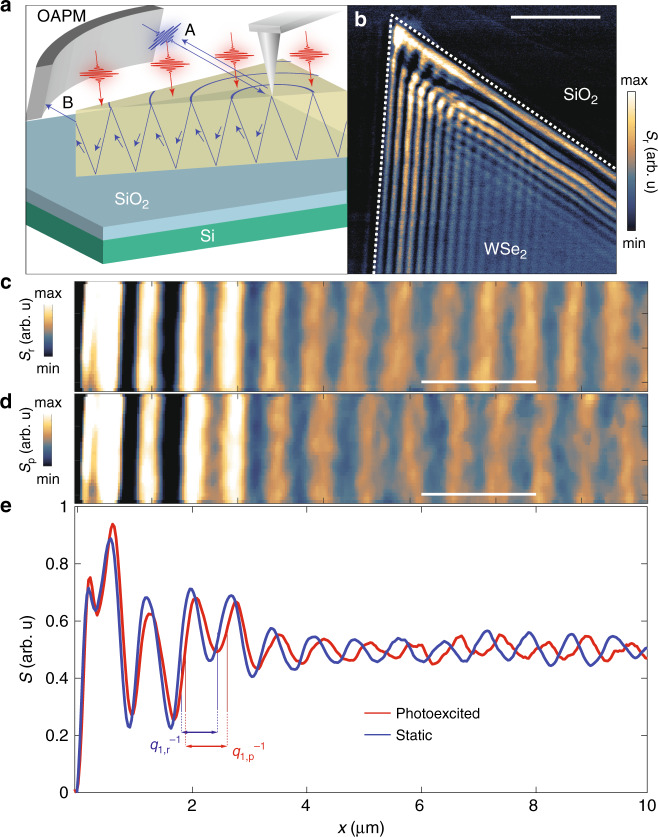
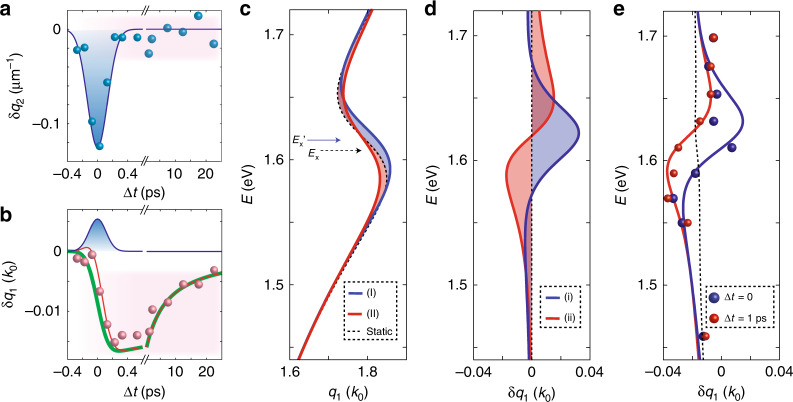
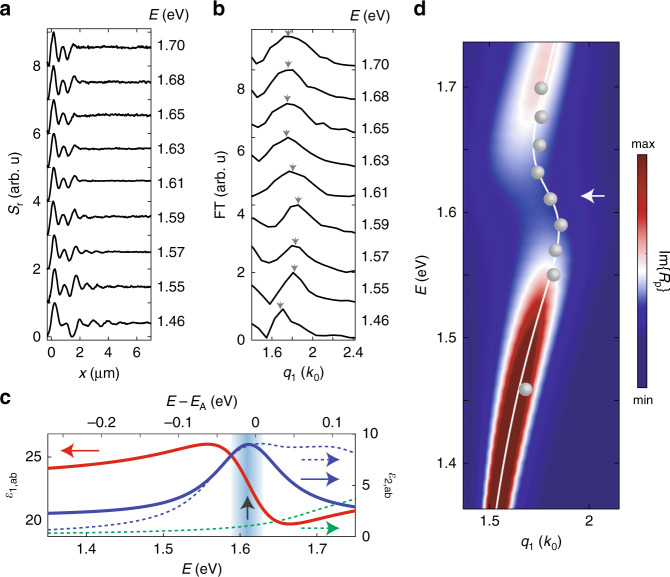
Van-der Waals (vdW) atomically layered crystals can act as optical waveguides over a broad range of the electromagnetic spectrum ranging from Terahertz to visible. Unlike common Si-based waveguides, vdW semiconductors host strong excitonic resonances that may be controlled using non-thermal stimuli including electrostatic gating and photoexcitation. Here, we utilize waveguide modes to examine photo-induced changes of excitons in the prototypical vdW semiconductor, WSe, prompted by femtosecond light pulses. Using time-resolved scanning near-field optical microscopy we visualize the electric field profiles of waveguide modes in real space and time and extract the temporal evolution of the optical constants following femtosecond photoexcitation. By monitoring the phase velocity of the waveguide modes, we detect incoherent A-exciton bleaching along with a coherent optical Stark shift in WSe.
范德瓦尔斯(vdW)原子层晶体在从太赫兹到可见光的广泛电磁光谱范围内可作为光波导。与普通的硅基波导不同,vdW半导体具有强激子共振,可通过包括静电门控和光激发在内的非热刺激来控制。在此,我们利用波导模式来研究由飞秒光脉冲激发的典型vdW半导体WSe中激子的光致变化。使用时间分辨扫描近场光学显微镜,我们在实空间和时间上可视化波导模式的电场分布,并提取飞秒光激发后光学常数的时间演化。通过监测波导模式的相速度,我们在WSe中检测到非相干A激子漂白以及相干光学斯塔克位移。