UCL Institute of Ophthalmology, University College London, London EC1V 9EL, UK.
LiPhy, CNRS, Université Grenoble Alpes, Grenoble 38000, France.
Cell Rep. 2020 Jul 21;32(3):107924. doi: 10.1016/j.celrep.2020.107924.
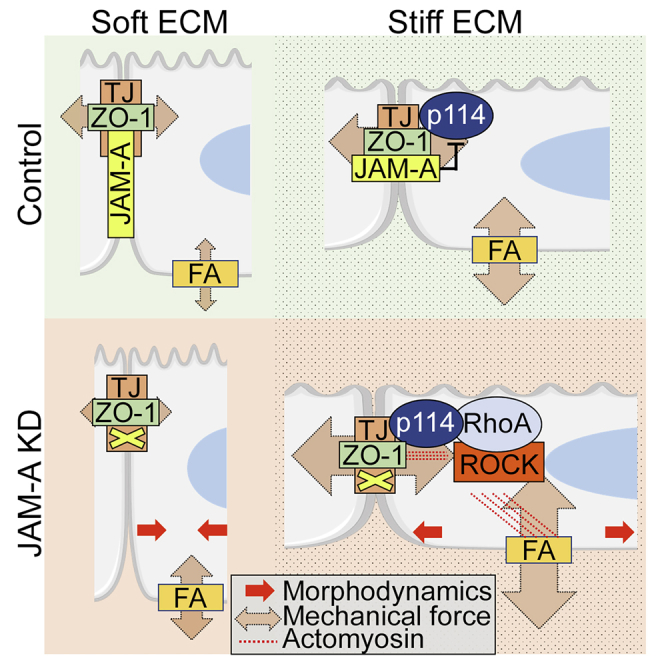
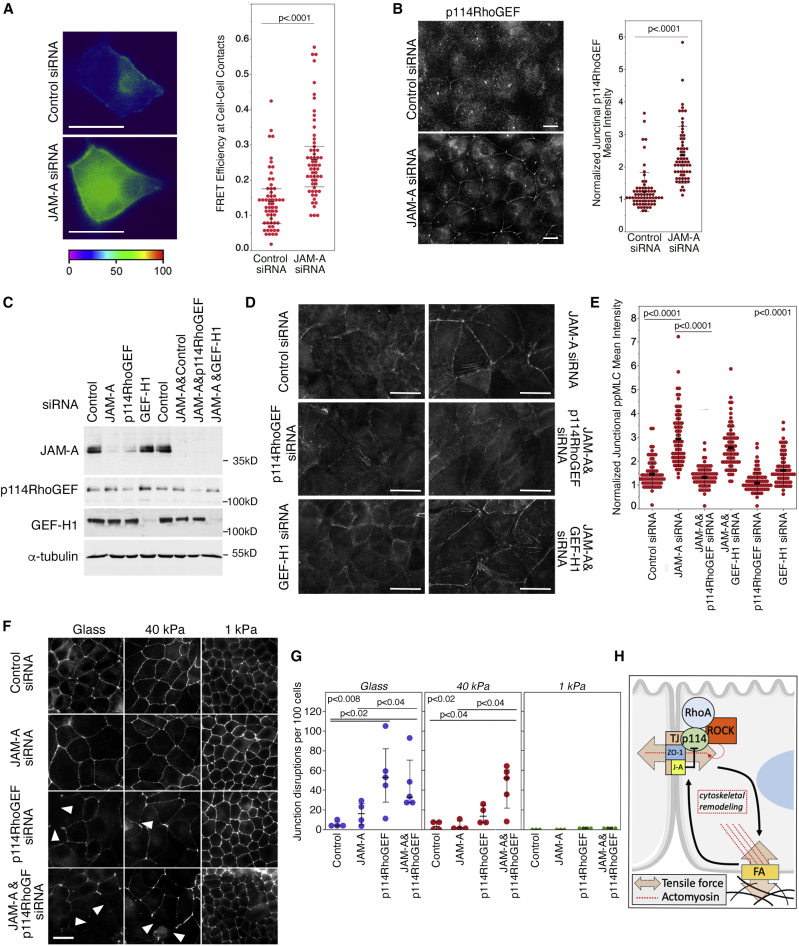
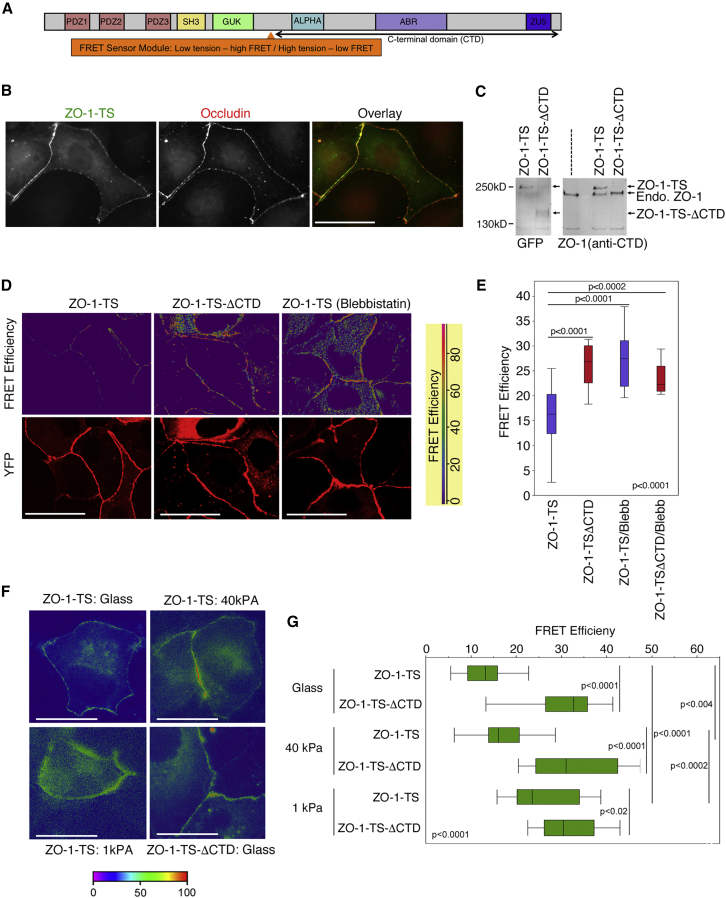
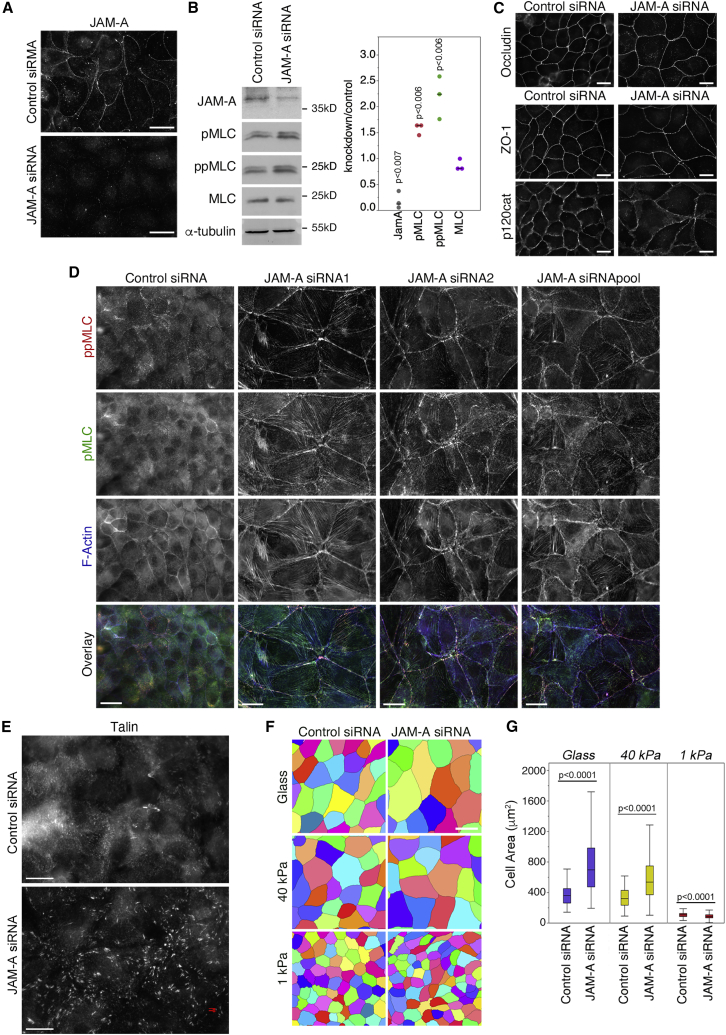
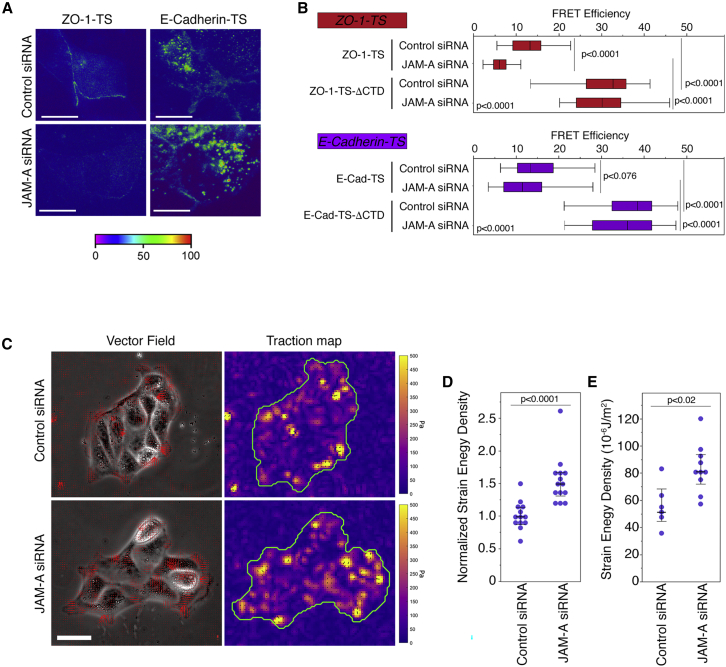
Tight-junction-regulated actomyosin activity determines epithelial and endothelial tension on adherens junctions and drives morphogenetic processes; however, whether or not tight junctions themselves are under tensile stress is not clear. Here, we use a tension sensor based on ZO-1, a scaffolding protein that links the junctional membrane to the cytoskeleton, to determine if tight junctions carry a mechanical load. Our data indicate that ZO-1 is under mechanical tension and that forces acting on ZO-1 are regulated by extracellular matrix (ECM) stiffness and the junctional adhesion molecule JAM-A. JAM-A depletion stimulates junctional recruitment of p114RhoGEF/ARHGEF18, mechanical tension on ZO-1, and traction forces at focal adhesions. p114RhoGEF is required for activation of junctional actomyosin activity and tight junction integrity on stiff but not soft ECM. Thus, junctional ZO-1 bears a mechanical load, and junction assembly is regulated by interplay between the physical properties of the ECM and adhesion-regulated signaling at tight junctions.
紧密连接调节的肌动球蛋白活性决定了上皮细胞和内皮细胞在黏着连接点的张力,并驱动形态发生过程;然而,紧密连接本身是否承受张力尚不清楚。在这里,我们使用基于紧密连接蛋白 ZO-1 的张力传感器来确定紧密连接是否承受机械载荷。我们的数据表明,ZO-1 处于机械张力下,并且作用于 ZO-1 的力受细胞外基质 (ECM) 硬度和连接黏附分子 JAM-A 的调节。JAM-A 的耗竭会刺激 p114RhoGEF/ARHGEF18 在连接点募集、ZO-1 上的机械张力以及黏着斑处的牵引力。p114RhoGEF 对于在坚硬但不是柔软的 ECM 上激活连接点肌动球蛋白活性和紧密连接完整性是必需的。因此,连接点 ZO-1 承受机械载荷,并且连接组装受到细胞外基质的物理性质和紧密连接处黏附调节信号之间的相互作用的调节。