Swedish Medical Products Agency, Dag Hammarskjölds väg 42, Box 26, 751 03, Uppsala, Sweden.
National Board of Health and Welfare, Rålambsvägen 3, 116 30, Stockholm, Sweden.
Eur Child Adolesc Psychiatry. 2021 Sep;30(9):1339-1350. doi: 10.1007/s00787-020-01598-1. Epub 2020 Jul 22.
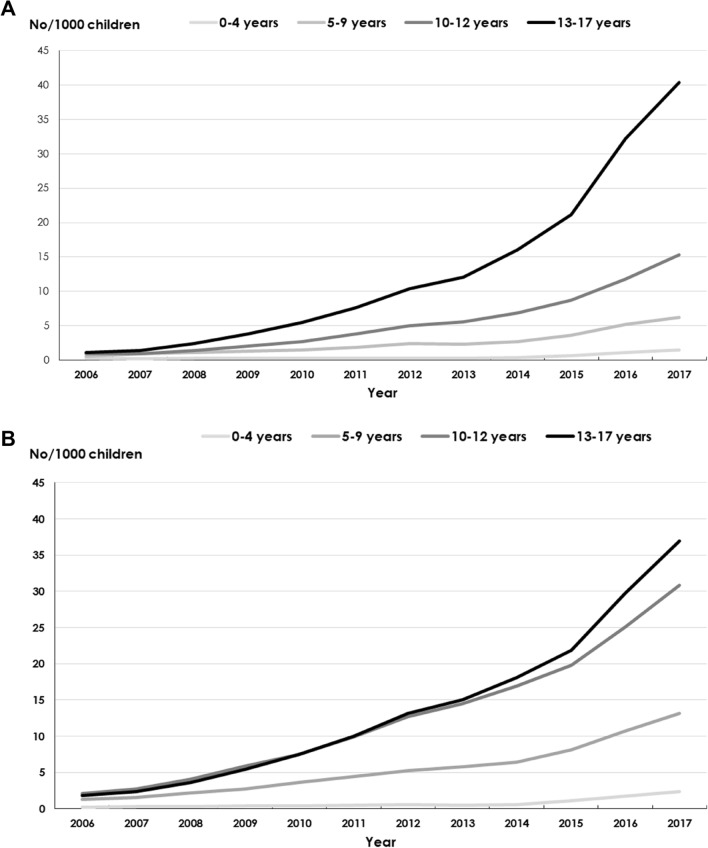
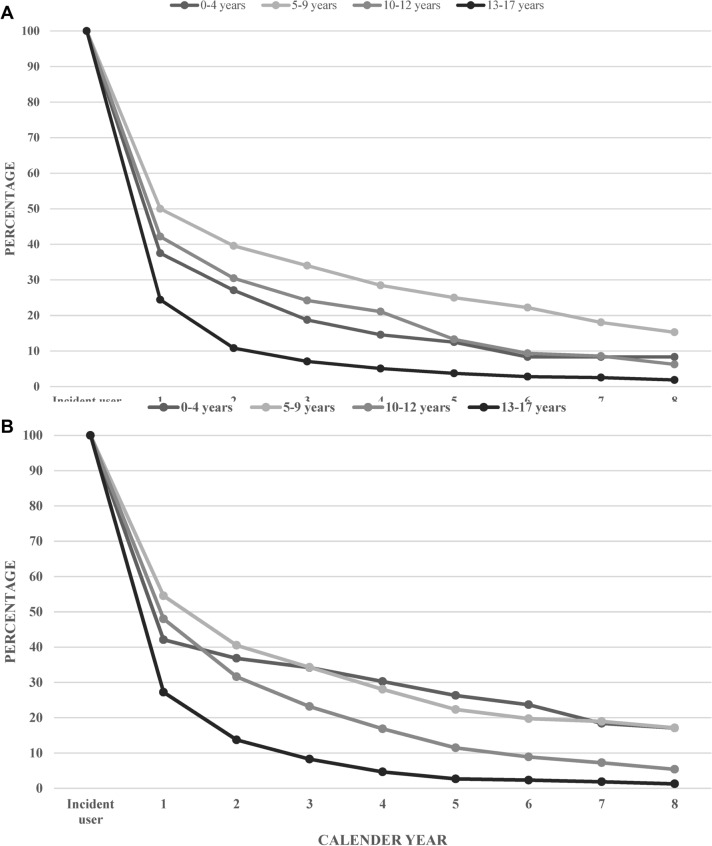
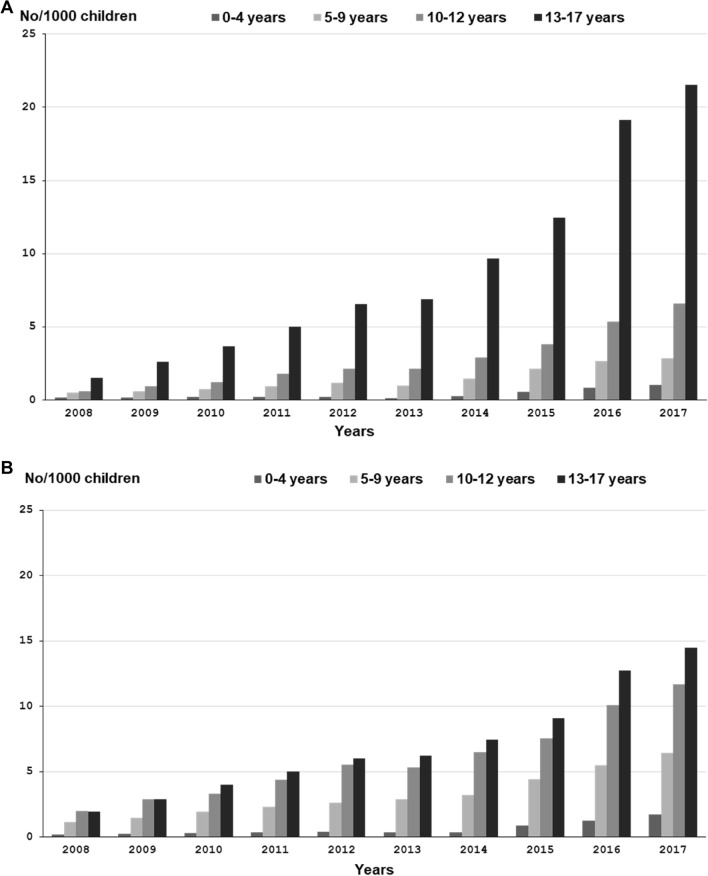
Sleep disturbances are common in the pediatric population and should primarily be treated non-pharmacologically. Most medicines for sleep disturbances are not approved for pediatric use and data on long-term safety is scarce. In Sweden, melatonin is classified as a prescription medicine. The aim of the present study was to characterize the prevalence and incidence of dispensed melatonin prescriptions, long-term treatment, concomitant dispensation of psychotropic medication, and psychiatric comorbidity, in children and adolescents aged 0-17 years living in Sweden during 2006-2017. Data was retrieved by linking the national population-based registers, the Swedish Prescribed Drug register and the National Patient register. In 2017, nearly 2% of the pediatric population 0-17 years was dispensed at least one prescription of melatonin, which was more than a 15-fold increase for girls and a 20-fold increase for boys, when compared to 2006. Among the children in the age group 5-9 who initiated a melatonin treatment in 2009, 15% of girls and 17% of boys were found to be continuously prescribed melatonin 8 years later. Nearly 80% of all children with dispensed melatonin had concomitant dispensations of psychotropic medications. The most common combination was melatonin together with centrally acting sympathomimetic medicines (23% of girls and 43% of boys). About half of the children (47% of girls and 50% of boys) had at least one registered diagnosis of mental or behavioral disorders. The most common diagnosis was attention deficit hyperactive disorder, across all age groups and genders. The continuous increase of use of melatonin in children, often concomitant with other psychotropic medications, together with a high proportion of younger children with prescriptions of melatonin on a long-term basis, suggests the need for further structured follow up studies, in particular of long-term use.
儿童群体中常见睡眠障碍,且主要应采取非药物治疗。大多数治疗睡眠障碍的药物尚未获准用于儿科,且长期安全性数据有限。在瑞典,褪黑素被归类为处方药。本研究旨在描述 2006-2017 年期间瑞典 0-17 岁儿童和青少年人群中褪黑素处方的配发率、发病率、长期治疗、同时配发精神类药物和精神共病情况。通过链接全国基于人群的登记处、瑞典处方药物登记处和国家患者登记处来获取数据。2017 年,0-17 岁儿童人群中近 2%至少配发了一张褪黑素处方,与 2006 年相比,女孩增加了 15 倍,男孩增加了 20 倍。在 2009 年开始接受褪黑素治疗的 5-9 岁儿童中,15%的女孩和 17%的男孩在 8 年后仍持续接受褪黑素治疗。近 80%的配发褪黑素的儿童同时配发精神类药物。最常见的组合是褪黑素与中枢作用拟交感神经药物合用(女孩占 23%,男孩占 43%)。约一半的儿童(女孩占 47%,男孩占 50%)至少有一个精神或行为障碍的登记诊断。最常见的诊断是注意缺陷多动障碍,所有年龄组和性别均如此。儿童中褪黑素的使用持续增加,通常与其他精神类药物同时使用,且长期服用褪黑素的低龄儿童比例较高,这表明需要进一步开展有组织的随访研究,特别是长期使用的研究。