Department of Nephrology, Affiliated Hospital of Nantong University, Nantong, Jiangsu 226001, P.R. China.
Department of Nephrology, Wuxi No. 2 People's Hospital, Wuxi, Jiangsu 214000, P.R. China.
Mol Med Rep. 2020 Oct;22(4):2887-2895. doi: 10.3892/mmr.2020.11353. Epub 2020 Jul 23.
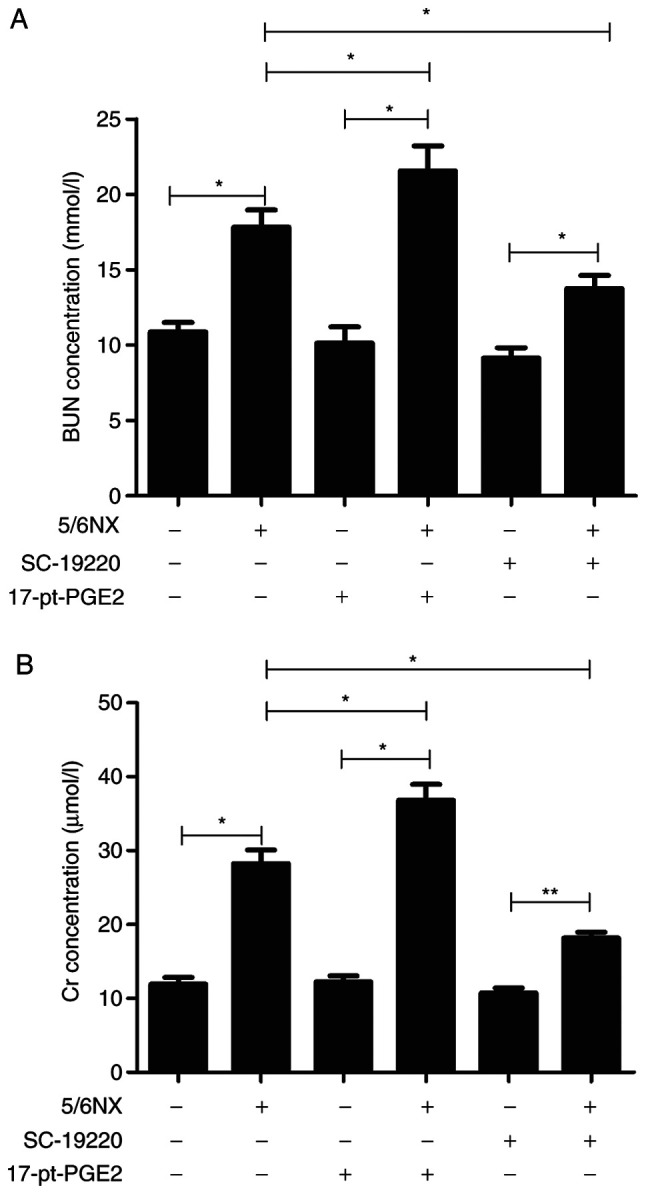
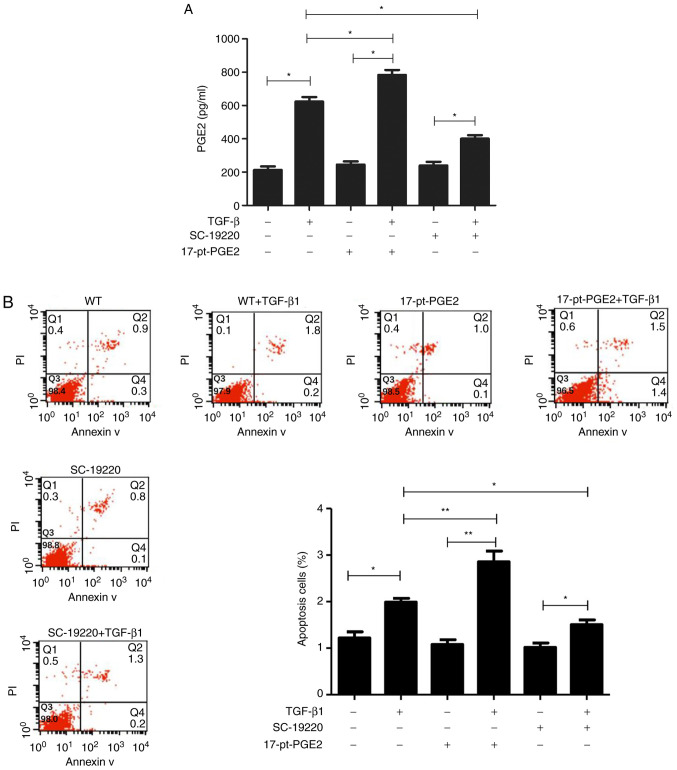
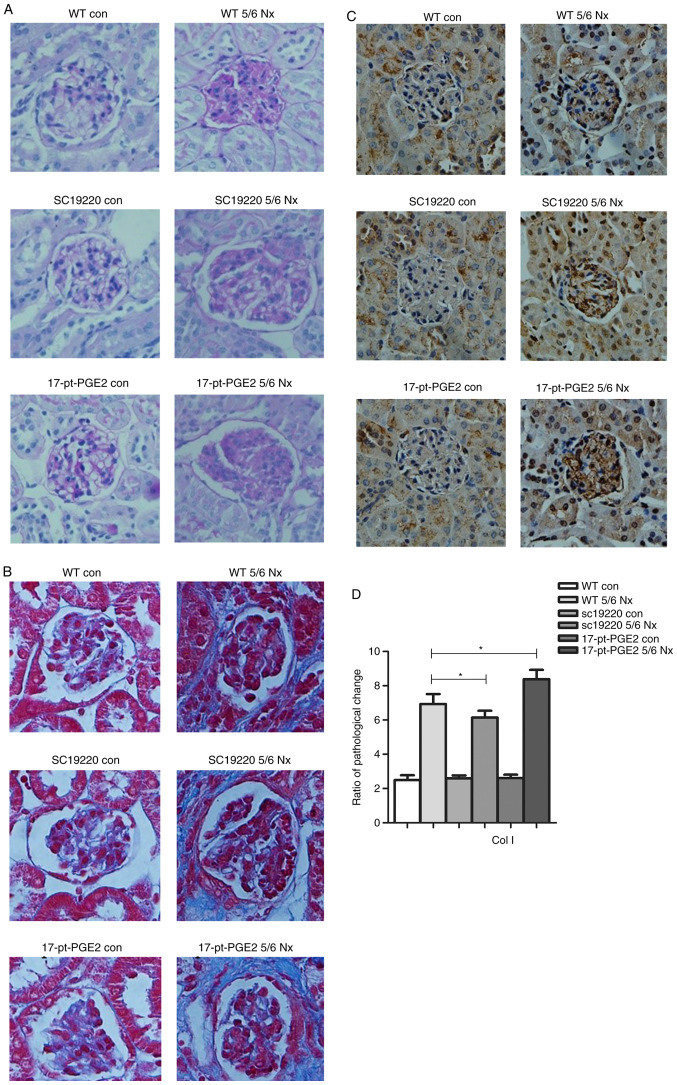
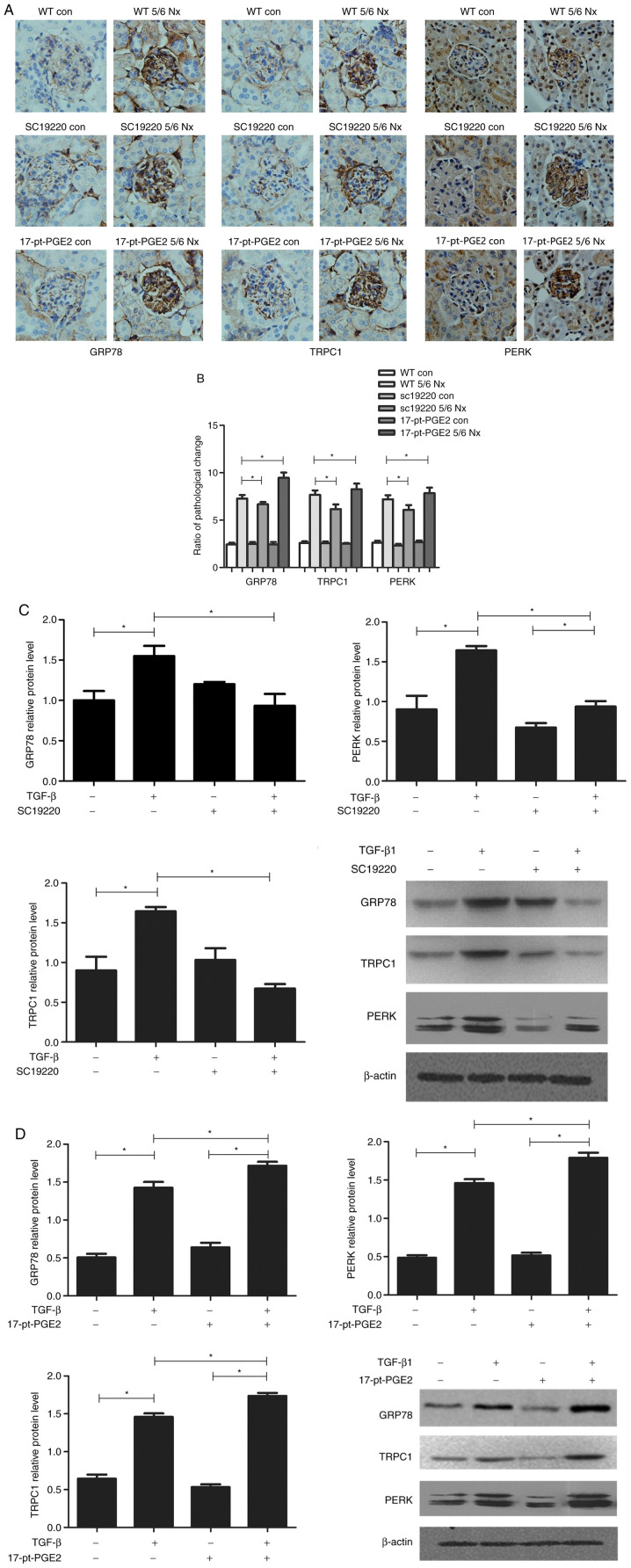
Prostaglandin E2 (PGE2) is involved in numerous physiological and pathological processes of the kidney via its four receptors. A previous study has suggested that a defect in the PGE2 receptor 1 (EP1) gene markedly suppressed the transforming growth factor‑β1 (TGF‑β1)‑induced mesangial cell (MC) proliferation and extracellular matrix aggregation. Therefore, the present study aimed to adopt a pharmacological method of specifically suppressing or activating the EP1 receptor to further verify and demonstrate these results. The EP1 receptor antagonist SC‑19220 and EP1 receptor agonist 17‑phenyl‑trinor‑PGE2 ethyl amide (17‑pt‑PGE2) were selectively used to treat five‑sixths nephrectomy renal fibrosis model mice and TGF‑β1‑stimulated MCs. An Alpha screen PGE2 assay kit, flow cytometry, western blotting and immunohistochemical techniques were adopted to perform in vivo and in vitro experiments. The present results suggested that compared with the control group, the selective EP1 receptor antagonist SC‑19220 improved renal function, markedly reduced the plasma blood urea nitrogen and creatinine levels (P<0.05) and alleviated glomerulosclerosis (P<0.05). By contrast, the EP1 receptor agonist 17‑pt‑PGE2 aggravated renal dysfunction and glomerulosclerosis (P<0.05). To verify the renal protection mechanisms mediated by suppression of the EP1 receptor, the expression levels of endoplasmic reticulum stress (ERS)‑related proteins, including chaperone glucose‑regulated protein 78 (GRP78), transient receptor potential channel 1 (TRPC1) and protein kinase R‑like endoplasmic reticulum kinase (PERK), were further evaluated histologically. The expression of GRP78, TRPC1 and PERK in the antagonist treatment group were markedly downregulated (P<0.05), whereas those in the agonist treatment group were upregulated (P<0.05). The present in vitro experiments demonstrated that, compared with the control group, the EP1 receptor antagonist suppressed the expression of GRP78, TRPC1 and PERK (P<0.05), reduced the production of PGE2 (P<0.05) and decreased the MC apoptosis rate (P<0.05), thus alleviating TGF‑β1‑stimulated MC injury. Consequently, consistent with previous results, selectively antagonizing the EP1 receptor improved renal function and mitigated glomerulosclerosis, and its potential mechanism might be associated with the suppression of ERS.
前列腺素 E2(PGE2)通过其四个受体参与肾脏的许多生理和病理过程。先前的研究表明,PGE2 受体 1(EP1)基因的缺陷显着抑制了转化生长因子-β1(TGF-β1)诱导的系膜细胞(MC)增殖和细胞外基质聚集。因此,本研究旨在采用药理学方法特异性抑制或激活 EP1 受体来进一步验证和证明这些结果。EP1 受体拮抗剂 SC-19220 和 EP1 受体激动剂 17-苯基-三诺-PGE2 乙基酰胺(17-pt-PGE2)被选择性地用于治疗六分之五肾切除术肾纤维化模型小鼠和 TGF-β1 刺激的 MCs。采用 Alpha 屏幕 PGE2 测定试剂盒、流式细胞术、western blot 和免疫组织化学技术进行体内和体外实验。本研究结果表明,与对照组相比,选择性 EP1 受体拮抗剂 SC-19220 改善了肾功能,显着降低了血浆血尿素氮和肌酐水平(P<0.05)并减轻了肾小球硬化(P<0.05)。相比之下,EP1 受体激动剂 17-pt-PGE2 加重了肾功能障碍和肾小球硬化(P<0.05)。为了验证通过抑制 EP1 受体介导的肾脏保护机制,进一步评估了内质网应激(ERS)相关蛋白的表达水平,包括伴侣蛋白葡萄糖调节蛋白 78(GRP78)、瞬时受体电位通道 1(TRPC1)和蛋白激酶 R 样内质网激酶(PERK)。拮抗剂治疗组中 GRP78、TRPC1 和 PERK 的表达明显下调(P<0.05),而激动剂治疗组中这些蛋白的表达上调(P<0.05)。本体外实验表明,与对照组相比,EP1 受体拮抗剂抑制了 GRP78、TRPC1 和 PERK 的表达(P<0.05),减少了 PGE2 的产生(P<0.05),降低了 MC 凋亡率(P<0.05),从而减轻了 TGF-β1 刺激的 MC 损伤。因此,与先前的结果一致,选择性拮抗 EP1 受体改善了肾功能并减轻了肾小球硬化,其潜在机制可能与 ERS 的抑制有关。