Faraj May
Cardiovascular and Metabolic Disease Division, Montreal Clinical Research Institute, Montréal, Québec H2W 1R7, Canada;Department of Nutrition, Faculty of Medicine, University of Montréal, Montréal, Québec H3C 3J7, Canada;Montréal Diabetes Research Center, Montréal, Québec H2X 0A9, Canada.
J Biomed Res. 2020 Mar 12;34(4):251-259. doi: 10.7555/JBR.34.20190124.
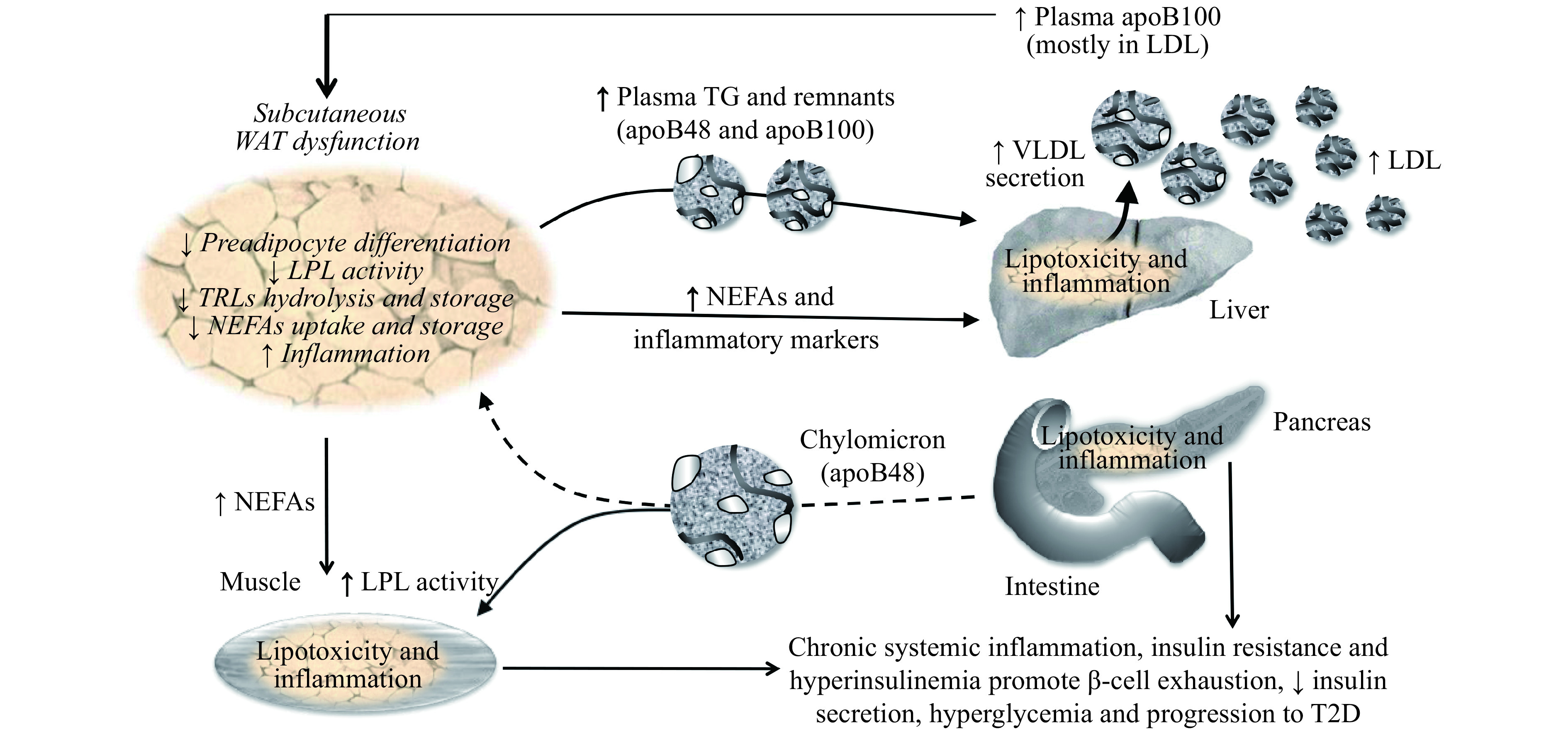
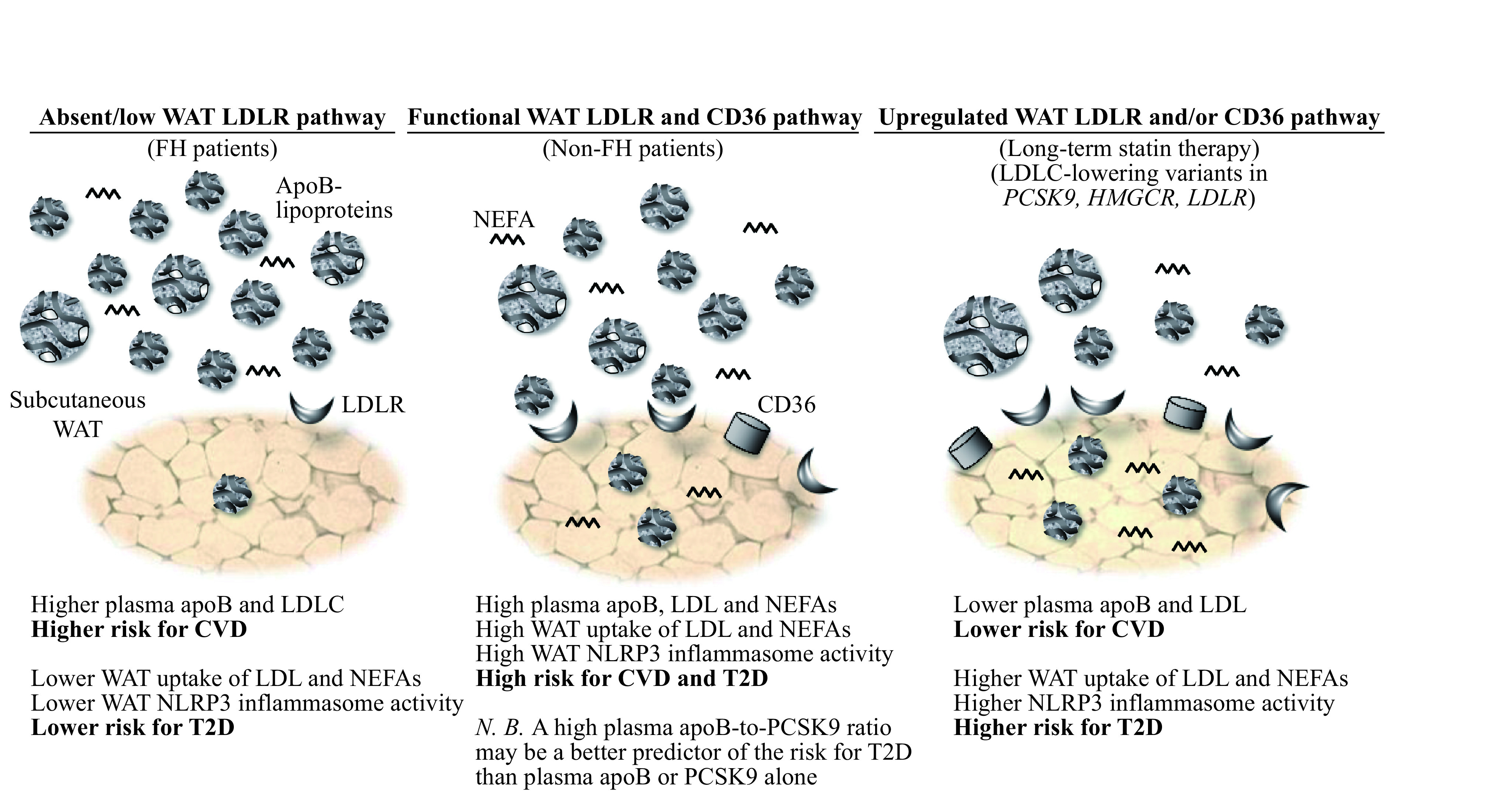
Type 2 diabetes (T2D) and cardiovascular disease (CVD) share many risk factors such as obesity, unhealthy lifestyle, and metabolic syndrome, whose accumulation over years leads to disease onset. However, while lowering plasma low-density lipoprotein cholesterol (LDLC) is cardio-protective, novel evidence have recognised a role for common LDLC-lowering variants ( in , , and ) and widely used hypocholesterolemic drugs that mimic the effects of some of these variants (statins) in higher risk for T2D. As these conditions decrease plasma LDLC by increasing tissue-uptake of LDL, a role for LDL receptor (LDLR) pathway was proposed. While underlying mechanisms remain to be fully elucidated, work from our lab reported that native LDL directly provoke the dysfunction of human white adipose tissue (WAT) and the activation of WAT NLRP3 (Nucleotide-binding domain and Leucine-rich repeat Receptor, containing a Pyrin domain 3) inflammasome, which play a major role in the etiology of T2D. However, while elevated plasma numbers of apolipoprotein B (apoB)-containing lipoproteins (measured as apoB, mostly as LDL) is associated with WAT dysfunction and related risk factors for T2D in our cohort, this relation was strengthened in regression analysis by lower plasma proprotein convertase subtilisin/kexin type 9 (PCSK9). This supports a central role for upregulated pathway of LDLR and/or other receptors regulated by PCSK9 such as cluster of differentiation 36 (CD36) in LDL-induced anomalies. Targeting receptor-mediated uptake of LDL into WAT may reduce WAT inflammation, WAT dysfunction, and related risk for T2D without increasing the risk for CVD.
2型糖尿病(T2D)和心血管疾病(CVD)有许多共同的危险因素,如肥胖、不健康的生活方式和代谢综合征,这些因素多年来的累积会导致疾病发作。然而,虽然降低血浆低密度脂蛋白胆固醇(LDLC)具有心脏保护作用,但新的证据表明,常见的降低LDLC的变异(在[具体基因名称1]、[具体基因名称2]和[具体基因名称3]中)以及广泛使用的模拟其中一些变异作用的降胆固醇药物(他汀类药物)会增加患T2D的风险。由于这些情况通过增加组织对低密度脂蛋白(LDL)的摄取来降低血浆LDLC,因此有人提出低密度脂蛋白受体(LDLR)途径发挥了作用。虽然潜在机制仍有待充分阐明,但我们实验室的研究报告称,天然LDL直接引发人类白色脂肪组织(WAT)功能障碍以及WAT NLRP3(含pyrin结构域3的核苷酸结合寡聚化结构域样受体蛋白3)炎性小体的激活,这在T2D的病因中起主要作用。然而,虽然在我们的队列中,血浆中含载脂蛋白B(apoB)的脂蛋白数量升高(以apoB衡量,主要是LDL)与WAT功能障碍及T2D相关危险因素有关,但在回归分析中,较低的血浆前蛋白转化酶枯草溶菌素/kexin 9型(PCSK9)会加强这种关系。这支持了LDLR上调途径和/或其他受PCSK9调节的受体(如分化簇36,CD36)在LDL诱导异常中发挥核心作用。靶向受体介导的LDL摄取进入WAT可能会减少WAT炎症、WAT功能障碍以及T2D相关风险,而不会增加CVD风险。