Gianotti Raffaele, Recalcati Sebastiano, Fantini Fabrizio, Riva Cristina, Milani Mario, Dainese Emanuele, Boggio Francesca
UOC Dermatology, Department of Pathophysiology and Transplantation, Università degli Studi di Milano, Foundation IRCCS, Cà Granda Ospedale Maggiore Policlinico, Milan, Italy.
Departments of Dermatology, and.
Am J Dermatopathol. 2020 Aug;42(8):564-570. doi: 10.1097/DAD.0000000000001707.
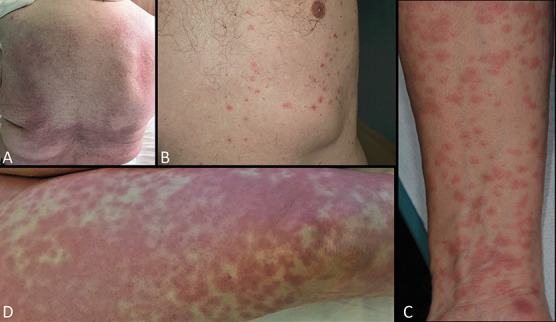
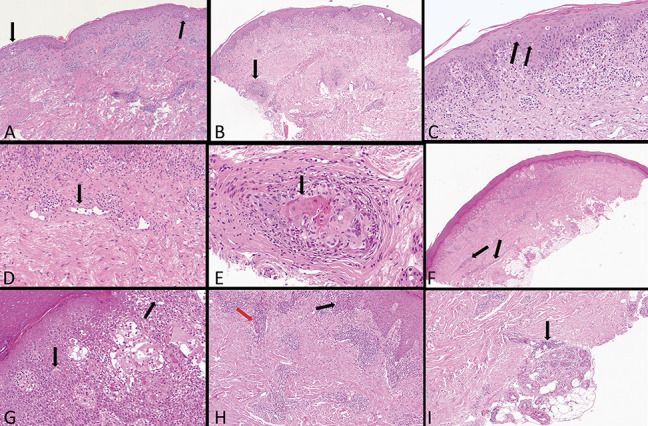
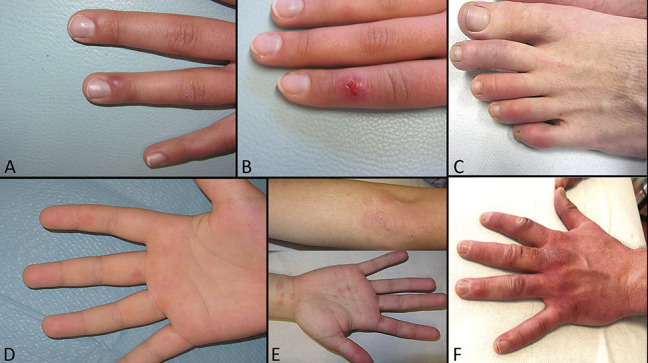
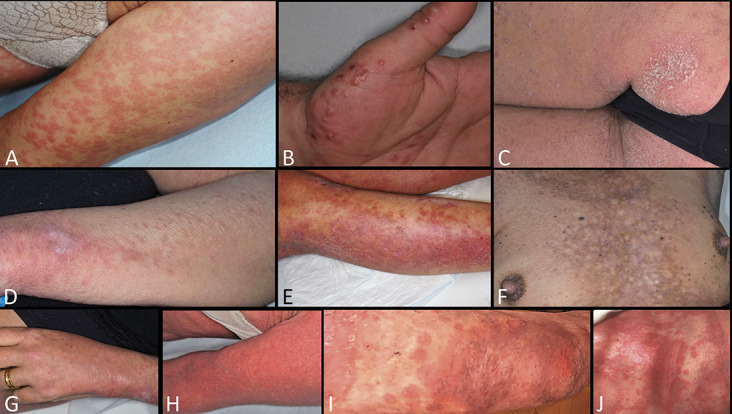
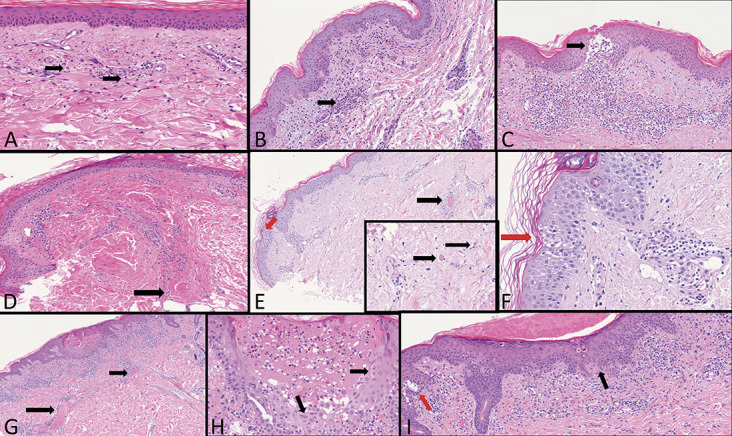
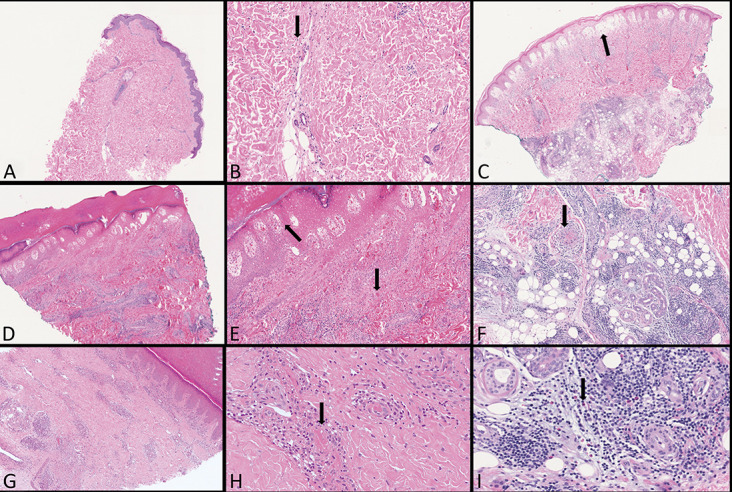
Skin manifestations of COVID-19 infections are diverse and are new to the dermatology community. We had the opportunity to examine the clinical and histopathological features of several patients who were divided into 3 groups. The first group included 8 COVID-19-positive patients who were hospitalized and quarantined at home. The second group included children and young adults who presented with chilblain erythema, erythema multiforme, and urticaria-like lesions. This group of patients was negative for the COVID-19 gene sequences by polymerase chain reaction but had a high risk of COVID-19 infection. The third group included clinically heterogeneous and challenging lesions. These patients were not subject to either polymerase chain reaction tests or serological analyses because they sought dermatological attention only for a dermatosis. The histopathological analysis of these cases showed a wide spectrum of histopathological patterns. What appears to be constant in all skin biopsies was the presence of prominent dilated blood vessels with a swollen endothelial layer, vessels engulfed with red blood cells, and perivascular infiltrates, consisting mainly of cytotoxic CD8+ lymphocytes and eosinophils. In 2 cases, there was diffuse coagulopathy in the cutaneous vascular plexus. In the early phases of the disease, there were numerous collections of Langerhans cells in the epidermis after being activated by the virus. The presence of urticarial lesions, chilblains, targetoid lesions (erythema multiforme-like lesions), exanthema, maculohemorrhagic rash, or chickenpox-like lesions associated with the histopathological features mentioned previously should cause clinical dermatologists to suspect the possibility of COVID-19 infection, especially in patients with fever and cough.
新型冠状病毒肺炎(COVID-19)感染的皮肤表现多种多样,对皮肤科领域来说是新情况。我们有机会检查了分为3组的几名患者的临床和组织病理学特征。第一组包括8名住院并居家隔离的COVID-19阳性患者。第二组包括出现冻疮样红斑、多形红斑和荨麻疹样皮疹的儿童和年轻人。这组患者经聚合酶链反应检测COVID-19基因序列为阴性,但感染COVID-19的风险很高。第三组包括临床上异质性且具有挑战性的皮损。这些患者未接受聚合酶链反应检测或血清学分析,因为他们仅因皮肤病而寻求皮肤科诊治。这些病例的组织病理学分析显示出广泛的组织病理学模式。在所有皮肤活检中似乎都存在的特征是有明显扩张的血管,内皮细胞层肿胀,血管内充满红细胞,以及血管周围浸润,主要由细胞毒性CD8 +淋巴细胞和嗜酸性粒细胞组成。在2例病例中,皮肤血管丛存在弥漫性凝血障碍。在疾病早期,病毒激活后表皮中有大量朗格汉斯细胞聚集。出现荨麻疹样皮疹、冻疮、靶样皮损(多形红斑样皮损)、皮疹、斑疹出血性皮疹或水痘样皮疹,并伴有上述组织病理学特征,应使临床皮肤科医生怀疑COVID-19感染的可能性,尤其是对伴有发热和咳嗽的患者。