Department of Biomedical Engineering, Johns Hopkins University School of Medicine, Baltimore, MD 21205, USA.
Department of Ophthalmology and the Wilmer Eye Institute, Johns Hopkins University School of Medicine, Baltimore, MD 21205, USA.
Int J Mol Sci. 2020 Jul 21;21(14):5142. doi: 10.3390/ijms21145142.
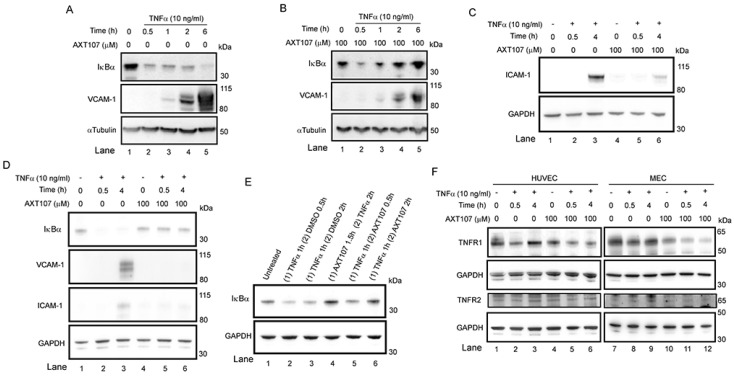
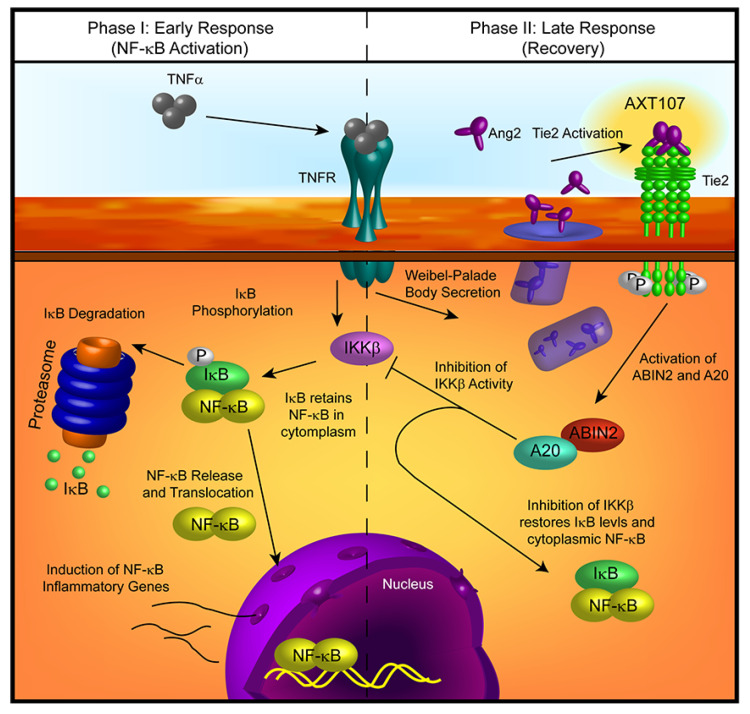
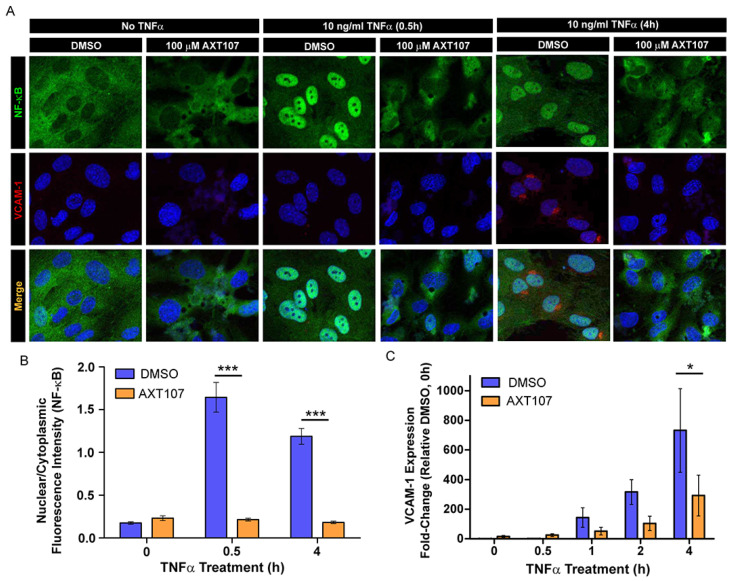
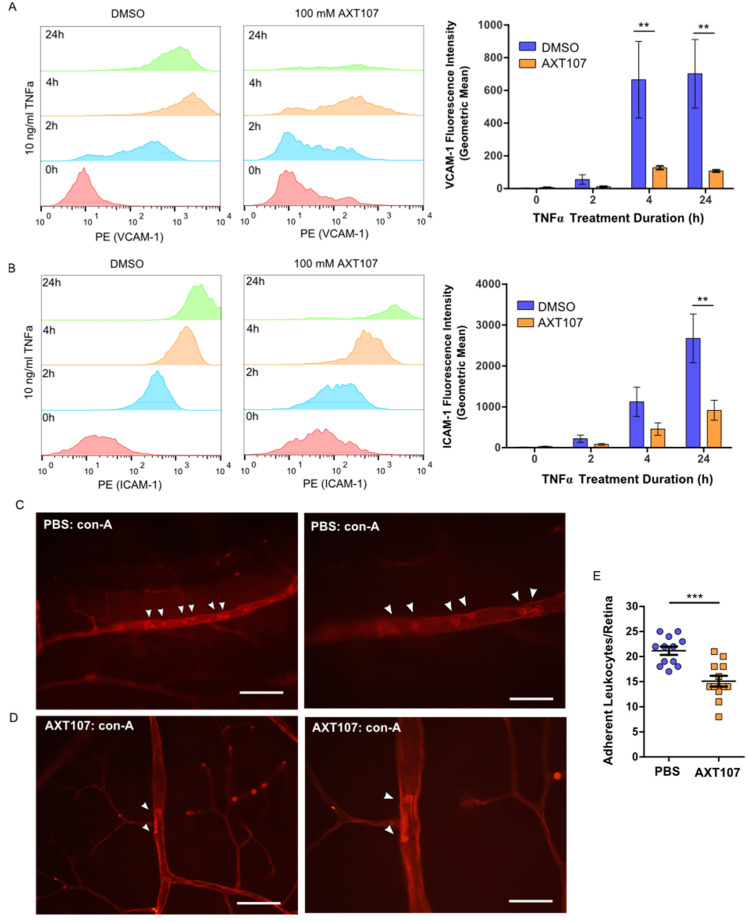
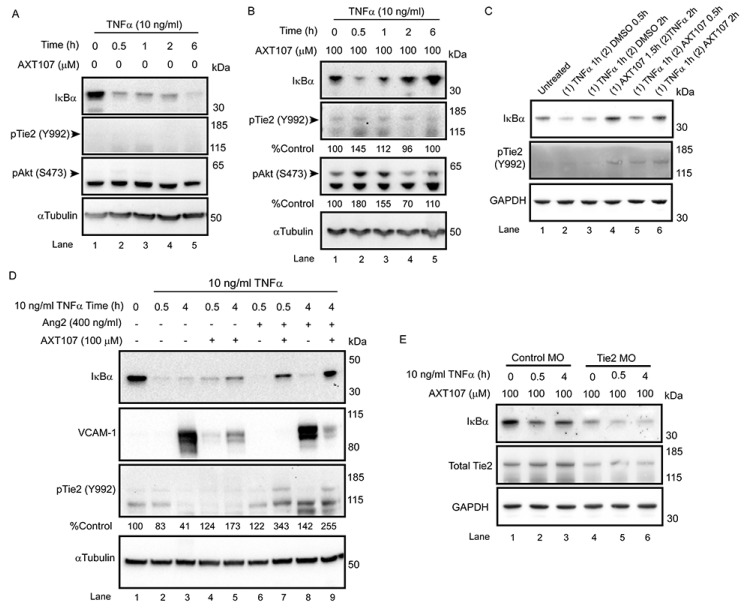
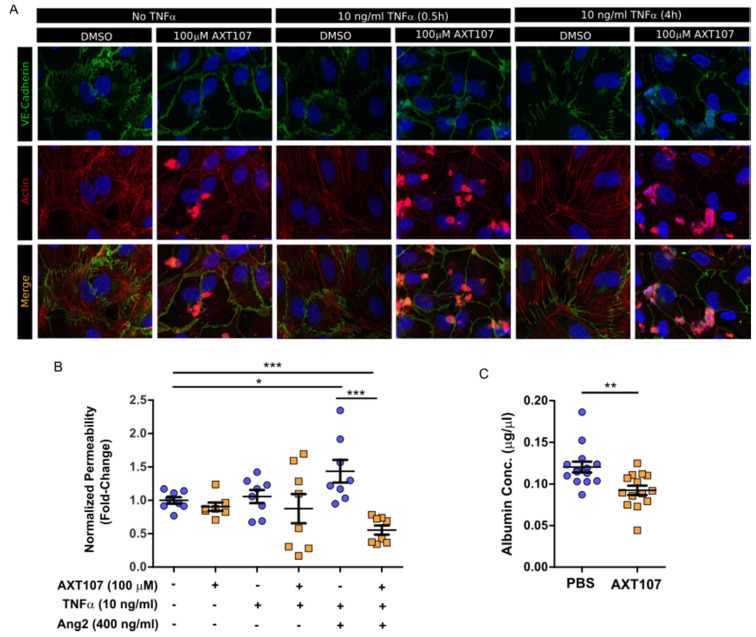
Persistent inflammation is a complication associated with many ocular diseases. Changes in ocular vessels can amplify disease responses and contribute to vision loss by influencing the delivery of leukocytes to the eye, vascular leakage, and perfusion. Here, we report the anti-inflammatory activity for AXT107, a non-RGD, 20-mer αvβ3 and α5β1 integrin-binding peptide that blocks vascular endothelial growth factor (VEGF)-signaling and activates tyrosine kinase with immunoglobulin and EGF-like domains 2 (Tie2) using the normally inhibitory ligand angiopoietin 2 (Ang2). Tumor necrosis factor α (TNFα), a central inflammation mediator, induces Ang2 release from endothelial cells to enhance its stimulation of inflammation and vascular leakage. AXT107 resolves TNFα-induced vascular inflammation in endothelial cells by converting the endogenously released Ang2 into an agonist of Tie2 signaling, thereby disrupting both the synergism between TNFα and Ang2 while also preventing inhibitor of nuclear factor-κB α (IκBα) degradation directly through Tie2 signaling. This recovery of IκBα prevents nuclear factor kappa-light-chain-enhancer of activated B cells (NF-κB) nuclear localization, thereby blocking NF-κB-induced inflammatory responses, including the production of VCAM-1 and ICAM-1, leukostasis, and vascular leakage in cell and mouse models. AXT107 also decreased the levels of pro-inflammatory TNF receptor 1 (TNFR1) without affecting levels of the more protective TNFR2. These data suggest that AXT107 may provide multiple benefits in the treatment of retinal/choroidal and other vascular diseases by suppressing inflammation and promoting vascular stabilization.
持续性炎症是许多眼部疾病的并发症。眼部血管的变化可以通过影响白细胞向眼部的输送、血管渗漏和灌注来放大疾病反应并导致视力丧失。在这里,我们报告了 AXT107 的抗炎活性,AXT107 是一种非 RGD、20 肽的 αvβ3 和 α5β1 整合素结合肽,可阻断血管内皮生长因子(VEGF)信号并激活酪氨酸激酶免疫球蛋白和表皮生长因子样结构域 2(Tie2),使用正常抑制配体血管生成素 2(Ang2)。肿瘤坏死因子-α(TNFα)是一种中心炎症介质,可诱导内皮细胞释放 Ang2,以增强其对炎症和血管渗漏的刺激。AXT107 通过将内源性释放的 Ang2 转化为 Tie2 信号的激动剂,从而破坏 TNFα 和 Ang2 之间的协同作用,同时通过 Tie2 信号直接防止核因子-κB 抑制物-α(IκBα)降解,解决 TNFα 诱导的内皮细胞血管炎症。这种 IκBα 的恢复阻止了核因子 kappa-轻链增强子的 B 细胞(NF-κB)核定位,从而阻断了 NF-κB 诱导的炎症反应,包括 VCAM-1 和 ICAM-1 的产生、白细胞停滞和细胞和小鼠模型中的血管渗漏。AXT107 还降低了促炎 TNF 受体 1(TNFR1)的水平,而不影响更具保护作用的 TNFR2 的水平。这些数据表明,AXT107 通过抑制炎症和促进血管稳定,可能为治疗视网膜/脉络膜和其他血管疾病提供多种益处。